
- 분류 전체보기 (1058)

- Linguistics (고급 영어학) (10)
- Stylistics (6)
- Etymology & Word Building (15)
- Philosophy Meets Grammar (6)
- Collection of Famous Quotes (22)
- English Mechanism (276)
- The Language Beyond Grammar (279)
- Living English (81)
- Miso’s Life Notes (18)
- My English Journey and Refl.. (16)
- Philosophy (132)
- Video Clip (16)
- Airline English (항공 영어) (47)
- Creative Corner (35)
- Sally & Sia (1)
| 일 | 월 | 화 | 수 | 목 | 금 | 토 |
|---|---|---|---|---|---|---|
| 1 | 2 | 3 | 4 | |||
| 5 | 6 | 7 | 8 | 9 | 10 | 11 |
| 12 | 13 | 14 | 15 | 16 | 17 | 18 |
| 19 | 20 | 21 | 22 | 23 | 24 | 25 |
| 26 | 27 | 28 | 29 | 30 |
- MisoEnglish#철학입문 #Philosophy #윤리학 #Ethics #도덕철학 #철학공부 #칸트 #공리주의 #교육콘텐츠 #철학시리즈
- MisoEnglish#도교철학 #Taoism #도덕경 #TaoTeChing #무위자연 #WuWei #노자 #Laozi #장자 #YinYang
- 영어문법
- 영국사 #영국역사 #세계사 #역사연재 #브리튼에서영국까지
- 감성영어
- Basic English Verbs
- everyday English
- MisoEnglish#유교철학 #Confucianism #성리학 #NeoConfucianism #인의예지 #Virtue #맹자 #Mencius #실학 #KoreanScholarship
- MisoEnglish#불교철학 #BuddhismPhilosophy #사성제 #FourNobleTruths #공사상 #Emptiness #명상 #Mindfulness #열반 #EasternWisdom
- 영문법
- AirlineOpsEnglish
- English Speaking Practice
- 영어공부
- 영어접속사
- 인도철학 #동양철학 #인문학 #요가 #명상 #힌두교 #불교 #간디 #타고르 #정통6파 #철학공부 #마음공부 #MisoEnglish #인문학영어
- MisoEnglish#철학입문 #Philosophy #과학철학 #PhilosophyOfScience #철학공부 #포퓨퍼 #쿠hn #과학방법론 #교육콘텐츠 #철학시리즈
- misoenglish
- MisoEnglish#철학입문 #Philosophy #형이상학 #Metaphysics #철학공부 #존재론 #실재론 #PhilosophyForBeginners #교육콘텐츠 #철학시리즈
- MisoEnglish#한국철학 #KoreanPhilosophy #홍익인간 #Hongik #화랑도 #Hwarang #단군 #Dangun #풍류도 #ThreeKingdoms#동양철학
- ticketing
- MisoEnglish#철학입문 #Philosophy #정치철학 #PoliticalPhilosophy #철학공부 #정의론 #자유주의 #PhilosophyForBeginners #교육콘텐츠 #철학시리즈
- MisoEnglish#철학입문 #Philosophy #심리철학 #PhilosophyOfMind #철학공부 #의식 #마음 #PhilosophyForBeginners #교육콘텐츠 #철학시리즈
- 영어회화
- EnglishWriting #AcademicWriting #Grammar #EnglishLanguage #EssayWriting #ParagraphStructure #SentenceStructure #BusinessEnglish #EnglishTips #WritingSkills #Linguistics #ESL
- pnr
- English in English
- English for Korean Learners
- 🌿 English with Heart
- 동양정치철학 #시리즈완결 #아시아적가치 #동서양비교 #유교 #민주주의 #정치사상 #인문학 #비교철학 #글로벌정치 #문화다양성 #2500년철학사
- MisoEnglish#철학입문 #Philosophy #종교철학 #PhilosophyOfReligion #철학공부 #신존재증명 #악의문제 #PhilosophyForBeginners #교육콘텐츠 #철학시리즈
- Today
- Total
MisoEnglish
4편. 복숭아나무 아래서 맺은 약속 — 유비·관우·장비의 도원결의 본문
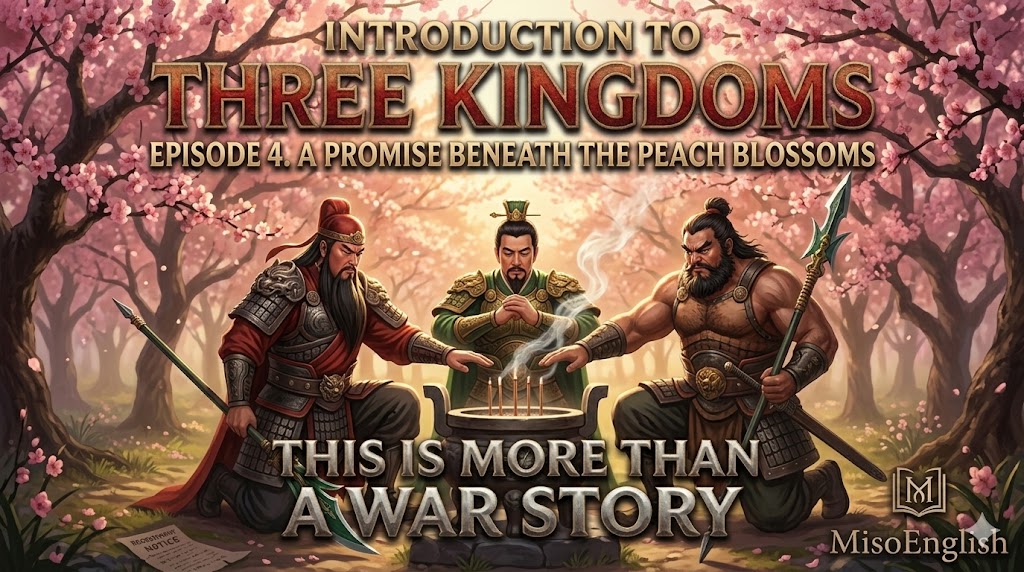
4편. 복숭아나무 아래서 맺은 약속 — 유비·관우·장비의 도원결의
삼국지에서 가장 유명한 장면을 하나만 꼽으라면, 많은 사람들이 이 장면을 떠올려요. 세 남자가 복숭아나무 꽃이 흐드러지게 핀 정원에서 무릎을 꿇고 하늘에 맹세하는 장면 — **도원결의(桃園結義)**입니다. 전쟁도, 책략도 아닌 그냥 약속 하나인데, 왜 이 장면이 1,800년이 지난 지금까지도 사람들의 마음을 울릴까요?
세 사람은 어떻게 만났을까
때는 황건적의 난이 한창이던 184년이에요. 한나라 조정이 지방 호족들에게 자체적으로 군사를 모아 반란을 진압하라는 명령을 내리던 시절이죠.
**유비(劉備)**는 이름만 황실 후손이지, 실제로는 돗자리와 짚신을 팔아 먹고사는 가난한 청년이었어요. 하지만 그 안에는 천하를 품은 야망과, 사람을 끌어당기는 묘한 매력이 있었습니다. 의병을 모집하는 방을 보고 한숨을 내쉬는 유비 앞에, 덩치 크고 우렁찬 목소리의 사내가 불쑥 나타나요. **장비(張飛)**였죠. 그리고 곧이어 또 한 명의 사내가 합류합니다. 키가 크고 눈빛이 형형한 **관우(關羽)**였어요.
셋은 처음 만났지만 이상하리만치 마음이 통했어요. 같은 시대를 걱정하고, 같은 뜻을 품고 있었거든요.
복숭아나무 아래서의 맹세
장비의 집 뒤편에 복숭아나무가 가득한 정원이 있었어요. 세 사람은 그곳에서 향을 피우고 하늘에 맹세합니다.
"우리 세 사람은 비록 성은 다르지만, 형제의 의를 맺어 한마음 한뜻으로 살겠습니다. 위로는 나라에 보답하고, 아래로는 백성을 편안하게 하겠습니다. 같은 해 같은 달 같은 날에 태어나지는 못했지만, 같은 해 같은 달 같은 날에 죽기를 원합니다."
유비가 맏형, 관우가 둘째, 장비가 막내가 됐어요. 피를 나누진 않았지만 그 어떤 형제보다 깊은 유대를 맺은 순간이었습니다.
(도원결의는 소설 삼국지연의에서 극적으로 묘사된 장면이에요. 정사에는 세 사람이 형제처럼 지냈다는 기록은 있지만, 복숭아나무 정원 맹세 장면은 소설적 창작에 가깝습니다. 그럼에도 이 장면이 삼국지의 상징이 된 건, 그만큼 세 사람의 우정이 실제로도 특별했기 때문이에요.)
세 사람은 어떤 인물이었을까
유비는 덕망과 인품으로 사람을 모으는 타입이었어요. 전쟁터에서 특별히 뛰어난 무장은 아니었지만, 사람들이 그를 따르고 싶게 만드는 힘이 있었죠. 한나라 황실의 후손이라는 명분도 훗날 큰 무기가 됩니다.
관우는 무예와 충의를 함께 갖춘 인물이었어요. 긴 수염에 붉은 얼굴, 청룡언월도를 든 모습은 삼국지 하면 가장 먼저 떠오르는 이미지 중 하나죠. 의리를 목숨보다 중요하게 여겼고, 실제로 그 의리 때문에 목숨을 잃게 됩니다.
장비는 거칠고 직선적인 무장이었어요. 술을 좋아하고 성격이 불같았지만, 유비를 향한 충성심만큼은 한 번도 흔들린 적이 없었죠. 전장에서의 용맹함은 여포와 견줄 만했다는 평가도 있어요.
도원결의가 특별한 이유
세 사람의 맹세는 단순한 우정의 표현이 아니었어요. 난세 속에서 뜻을 함께하는 동지를 만났다는 선언이었죠. 유비에게는 이 두 사람이 있었기에 아무리 어려운 상황에서도 포기하지 않을 수 있었어요. 관우와 장비도 유비라는 구심점이 있었기에 흔들리지 않았고요.
삼국지 전체를 통틀어, 이 세 사람의 우정만큼 변하지 않는 관계는 없었어요. 조조의 모사들도, 손권의 장수들도 결국엔 서로 갈등하고 배신하는 장면이 나오거든요. 그런데 유비·관우·장비는 끝까지 함께했습니다. 그래서 이 장면이 1,800년이 지나도 감동적인 거예요.
맺음말
도원결의 이후 세 사람은 함께 황건적 진압에 나서며 첫 발을 내딛습니다. 아직은 작고 보잘것없는 세력이지만, 이 세 사람의 이름은 조금씩 세상에 알려지기 시작해요. 그리고 같은 시기, 또 다른 영웅이 조용히 자신의 기반을 다지고 있었습니다 — 바로 **조조(曹操)**였죠.
다음 편 예고: 영웅을 알아보는 눈을 가진 남자, 조조. 그는 어떻게 난세의 간웅이 됐을까요? 단순한 악당이 아닌, 조조의 진짜 얼굴을 5편에서 만나요!
Episode 4. A Promise Beneath the Peach Blossoms — The Oath of the Peach Garden
If you had to pick the single most iconic moment in the entire Three Kingdoms saga, this might be it. Three men kneeling beneath a canopy of blooming peach blossoms, swearing an oath to heaven — the Oath of the Peach Garden (桃園結義). No battle, no strategy, just a promise. So why has this scene moved people for 1,800 years?
How Did the Three Meet?
It's 184 AD, and the Yellow Turban Rebellion is in full swing. The Han court has ordered local strongmen across the country to raise their own armies and put down the uprising.
Liu Bei (劉備) was, at least on paper, a descendant of the Han imperial family. In practice, he was a young man selling straw sandals and woven mats to get by. But beneath the poverty was something harder to define — a quiet magnetism that drew people to him, and an ambition that reached far beyond his circumstances. He's standing in front of a recruitment notice, lost in thought, when a loud, barrel-chested man approaches him. That's Zhang Fei (張飛). And shortly after, a third man joins them — tall, sharp-eyed, carrying himself with an unmistakable gravity. Guan Yu (關羽).
Three strangers — and yet something clicked immediately. They shared the same worries about the age they were living in, and the same sense of what needed to be done about it.
The Oath Beneath the Blossoms
Behind Zhang Fei's house was a garden full of peach trees in full bloom. The three men went there, lit incense, and swore their oath to heaven:
"We three, though born of different families, swear to become brothers in heart and soul. We will work together to serve our country and protect its people. We did not ask to be born on the same day — but we vow to die on the same day."
Liu Bei became the eldest brother, Guan Yu the second, Zhang Fei the youngest. No shared blood — but a bond deeper than most brothers ever manage.
(The Oath of the Peach Garden is dramatized in the novel Romance of the Three Kingdoms. The historical record confirms that the three were extraordinarily close — like brothers — but the peach garden scene itself is largely a literary creation. The reason it became the symbol of their relationship is that their real-life bond was genuinely that remarkable.)
Who Were These Three Men?
Liu Bei led through virtue and personal warmth. He wasn't the most fearsome fighter on the battlefield, but he had a rare ability to make people want to follow him. His claim to the Han imperial bloodline would also become a powerful political card later on.
Guan Yu was the complete package — supreme martial skill combined with an unshakeable code of honor. The long beard, the crimson face, the iconic Green Dragon Crescent Blade — it's one of the most enduring images in all of Chinese culture. He valued loyalty above his own life, and in the end, that loyalty would cost him exactly that.
Zhang Fei was raw, fierce, and blunt. He loved to drink and had a famously short fuse — but his devotion to Liu Bei never wavered for a single moment. On the battlefield, some accounts rated his courage on a level with Lü Bu himself.
Why the Oath Still Matters
The oath wasn't just a declaration of friendship. It was a declaration that in the middle of total chaos, these three men had found each other. Liu Bei could keep going through the worst of times because he had these two beside him. And Guan Yu and Zhang Fei had Liu Bei as their anchor.
Throughout the entire Three Kingdoms period, no relationship holds like theirs does. Cao Cao's advisors clash and scheme against each other. Sun Quan's generals fall into rivalry and suspicion. But Liu Bei, Guan Yu, and Zhang Fei — they stay together until the very end. That's why this scene still hits the way it does, nearly two thousand years later.
Closing
After the oath, the three brothers joined the campaign against the Yellow Turbans and took their first steps onto the stage of history. They were still a small, obscure force — but their names were beginning to spread. And at the same time, somewhere else, another man was quietly building his own foundation — Cao Cao (曹操).
Next episode preview: The man with an eye for greatness — Cao Cao. Was he really just a villain, or something far more complicated? We look at the real face of Cao Cao in Episode 5!
⚠️ 저작권 안내
본 블로그(MisoEnglish · slowblooms.tistory.com)의 모든 콘텐츠는 저작권법의 보호를 받습니다. 글, 예시 문장, 분석 내용 등 블로그에 게시된 모든 창작물은 저작자의 동의 없이 무단으로 복사, 복제, 배포, 2차 가공하는 행위를 금지합니다. 출처를 밝히지 않은 전재, SNS·커뮤니티·타 블로그 등에의 무단 게시, 상업적 이용은 모두 금지되며, 무단 불펌 적발 시 저작권법에 따라 법적 조치가 취해질 수 있습니다. 콘텐츠 사용 문의는 slowblooms.tistory.com으로 연락 주세요.
© MisoEnglish · slowblooms.tistory.com. All rights reserved.
━━━━━━━━━━━━━━━━━━━━━━━━━━━━━━━━
⚠️ Copyright Notice
All content published on this blog (MisoEnglish · slowblooms.tistory.com) is protected by copyright law. Copying, reproducing, distributing, or adapting any written posts, example sentences, or analyses without the explicit consent of the author is strictly prohibited. Unauthorised reposting on other blogs, social media, online communities, or any public platform — with or without modification — is not permitted, and may result in legal action under applicable copyright law. For content licensing enquiries, please contact us via slowblooms.tistory.com.
© MisoEnglish · slowblooms.tistory.com. All rights reserved.
'The Language Beyond Grammar' 카테고리의 다른 글
| 6편. 강동의 호랑이 — 손견·손책·손권, 오나라의 씨앗을 뿌리다 (0) | 2026.03.04 |
|---|---|
| 5편. 영웅인가, 간웅인가 — 조조의 성장과 사람을 알아보는 눈 (0) | 2026.03.04 |
| 3편. 아버지를 두 번 버린 남자 — 여포의 배신과 동탁의 최후 (0) | 2026.03.04 |
| 2편. 동탁이 황제를 인질로 삼다 — 낙양을 뒤덮은 공포 (0) | 2026.03.04 |
| 1편. 황제가 환관에게 놀아나던 날 — 한나라의 마지막 불꽃 (0) | 2026.03.03 |


