
- 분류 전체보기 (1058)

- Linguistics (고급 영어학) (10)
- Stylistics (6)
- Etymology & Word Building (15)
- Philosophy Meets Grammar (6)
- Collection of Famous Quotes (22)
- English Mechanism (276)
- The Language Beyond Grammar (279)
- Living English (81)
- Miso’s Life Notes (18)
- My English Journey and Refl.. (16)
- Philosophy (132)
- Video Clip (16)
- Airline English (항공 영어) (47)
- Creative Corner (35)
- Sally & Sia (1)
| 일 | 월 | 화 | 수 | 목 | 금 | 토 |
|---|---|---|---|---|---|---|
| 1 | 2 | 3 | 4 | |||
| 5 | 6 | 7 | 8 | 9 | 10 | 11 |
| 12 | 13 | 14 | 15 | 16 | 17 | 18 |
| 19 | 20 | 21 | 22 | 23 | 24 | 25 |
| 26 | 27 | 28 | 29 | 30 |
- MisoEnglish#도교철학 #Taoism #도덕경 #TaoTeChing #무위자연 #WuWei #노자 #Laozi #장자 #YinYang
- 🌿 English with Heart
- 동양정치철학 #시리즈완결 #아시아적가치 #동서양비교 #유교 #민주주의 #정치사상 #인문학 #비교철학 #글로벌정치 #문화다양성 #2500년철학사
- MisoEnglish#철학입문 #Philosophy #형이상학 #Metaphysics #철학공부 #존재론 #실재론 #PhilosophyForBeginners #교육콘텐츠 #철학시리즈
- everyday English
- AirlineOpsEnglish
- 영국사 #영국역사 #세계사 #역사연재 #브리튼에서영국까지
- MisoEnglish#한국철학 #KoreanPhilosophy #홍익인간 #Hongik #화랑도 #Hwarang #단군 #Dangun #풍류도 #ThreeKingdoms#동양철학
- Basic English Verbs
- 영어회화
- 영어공부
- English in English
- MisoEnglish#철학입문 #Philosophy #심리철학 #PhilosophyOfMind #철학공부 #의식 #마음 #PhilosophyForBeginners #교육콘텐츠 #철학시리즈
- 영문법
- 인도철학 #동양철학 #인문학 #요가 #명상 #힌두교 #불교 #간디 #타고르 #정통6파 #철학공부 #마음공부 #MisoEnglish #인문학영어
- 영어접속사
- English for Korean Learners
- MisoEnglish#불교철학 #BuddhismPhilosophy #사성제 #FourNobleTruths #공사상 #Emptiness #명상 #Mindfulness #열반 #EasternWisdom
- MisoEnglish#유교철학 #Confucianism #성리학 #NeoConfucianism #인의예지 #Virtue #맹자 #Mencius #실학 #KoreanScholarship
- 영어문법
- English Speaking Practice
- MisoEnglish#철학입문 #Philosophy #윤리학 #Ethics #도덕철학 #철학공부 #칸트 #공리주의 #교육콘텐츠 #철학시리즈
- MisoEnglish#철학입문 #Philosophy #과학철학 #PhilosophyOfScience #철학공부 #포퓨퍼 #쿠hn #과학방법론 #교육콘텐츠 #철학시리즈
- misoenglish
- 감성영어
- MisoEnglish#철학입문 #Philosophy #정치철학 #PoliticalPhilosophy #철학공부 #정의론 #자유주의 #PhilosophyForBeginners #교육콘텐츠 #철학시리즈
- ticketing
- EnglishWriting #AcademicWriting #Grammar #EnglishLanguage #EssayWriting #ParagraphStructure #SentenceStructure #BusinessEnglish #EnglishTips #WritingSkills #Linguistics #ESL
- pnr
- MisoEnglish#철학입문 #Philosophy #종교철학 #PhilosophyOfReligion #철학공부 #신존재증명 #악의문제 #PhilosophyForBeginners #교육콘텐츠 #철학시리즈
- Today
- Total
MisoEnglish
6편. 강동의 호랑이 — 손견·손책·손권, 오나라의 씨앗을 뿌리다 본문
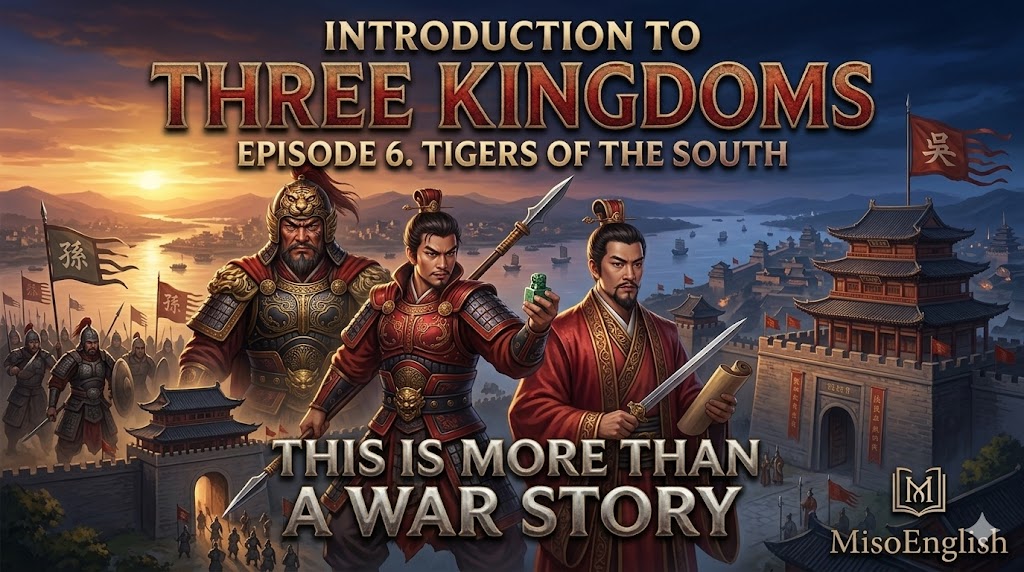
6편. 강동의 호랑이 — 손견·손책·손권, 오나라의 씨앗을 뿌리다
조조가 북방을 장악하고, 유비가 떠돌며 기회를 엿보는 동안 — 중국의 남쪽, 양쯔강 아래 강동(江東) 땅에서는 또 다른 세력이 조용히 자라고 있었어요. 바로 **손씨 일가(孫氏)**입니다. 삼국지의 세 축 중 하나인 오나라는 한 사람이 만든 게 아니에요. 아버지, 큰아들, 작은아들 — 3대에 걸쳐 피와 땀으로 쌓아 올린 나라였습니다.
첫 번째 호랑이 — 손견
손씨 일가의 시작은 **손견(孫堅)**이에요. 강동 출신의 무장으로, 황건적의 난 때 혁혁한 공을 세우며 이름을 알렸죠. 용맹함이 워낙 뛰어나서 **"강동의 호랑이"**라는 별명을 얻었어요. 싸움이라면 앞장서서 뛰어드는 스타일이었는데, 그게 강점이자 약점이었습니다.
반동탁 연합군에 참가했을 때도 손견은 가장 적극적으로 싸운 장수였어요. 낙양 근처에서 동탁군을 상대로 혼자 분전하며 연합군 중 가장 많은 전과를 올렸죠. 이때 손견은 폐허가 된 낙양의 우물 속에서 **한나라 황실의 옥새(玉璽)**를 발견합니다. 천하를 다스리는 자의 상징인 옥새 — 손견은 이걸 몰래 품고 강동으로 돌아가요. 훗날 이 옥새는 엄청난 파장을 불러일으키죠.
하지만 손견의 시대는 너무 짧았어요. 192년, 형주의 군벌 **유표(劉表)**와의 전투에서 매복에 걸려 전사하고 맙니다. 강동의 호랑이는 너무 이르게 세상을 떠났고, 그 뒤를 이어 아들 **손책(孫策)**이 나섭니다.
두 번째 호랑이 — 손책, 강동을 평정하다
손견이 죽었을 때 손책의 나이는 고작 열일곱이었어요. 하지만 이 젊은이는 아버지 못지않은 기백을 갖고 있었습니다. 그는 아버지의 구슬(옥새)을 담보로 **원술(袁術)**에게서 병사를 빌려, 강동 땅을 하나씩 평정해 나갑니다.
손책의 전투 스타일은 아버지를 빼닮았어요. 언제나 선봉에서 싸웠고, 강동의 여러 군벌들을 차례로 격파하며 불과 몇 년 만에 강동 전체를 손에 넣었죠. 그의 용맹함이 얼마나 대단했는지, 사람들은 그를 "소패왕(小霸王)" — 작은 패왕 항우 — 에 빗댔어요.
손책 곁에는 절친한 친구이자 최고의 모사 **주유(周瑜)**가 있었어요. 둘은 어릴 때부터 함께 자란 사이로, 서로를 누구보다 잘 이해하는 환상의 콤비였습니다. 주유는 훗날 적벽대전의 주인공이 되는 인물이에요.
그런데 손책도 운명이 짧았어요. 200년, 자객의 습격을 받아 얼굴에 중상을 입고 얼마 후 세상을 떠납니다. 겨우 스물여섯의 나이였어요. 죽기 전 손책은 동생 **손권(孫權)**을 불러 이렇게 말했다고 해요.
"강동을 지키고 천하의 기회를 노리는 것은 네가 나보다 낫다."
세 번째 호랑이 — 손권, 나라를 세우다
손권은 형과는 달랐어요. 직접 칼을 들고 싸우는 스타일이 아니라, 사람을 모으고 세력을 조율하는 능력이 탁월했습니다. 조조도 손권을 두고 이런 말을 남겼어요.
"아들을 낳으려면 손권 같은 아들을 낳아야 한다."
강적 조조에게서 이런 평가를 받았으니, 손권이 얼마나 대단한 인물인지 짐작이 가죠?
손권은 형이 닦아놓은 강동의 기반 위에 인재를 끌어모으고, 조조·유비와의 관계를 영리하게 조율하며 오나라의 기틀을 완성합니다. 그의 시대에 일어나는 적벽대전은 삼국지 최대의 전투가 되죠. 손권은 결국 229년 황제를 칭하며 오나라를 정식으로 건국합니다.
손씨 3대가 특별한 이유
손견·손책·손권의 이야기가 감동적인 건, 단순히 강한 군벌의 성공 스토리가 아니기 때문이에요. 아버지가 씨앗을 뿌리고, 큰아들이 땅을 갈고, 작은아들이 열매를 맺는 — 3대에 걸친 릴레이였거든요. 각자 다른 방식으로 뛰어났고, 각자의 자리에서 최선을 다했습니다.
조조가 타고난 재능으로 천하를 노렸다면, 손씨 일가는 대를 이어 쌓아 올린 끈기와 유산으로 천하의 한 축을 차지했어요.
맺음말
손권이 강동을 굳건히 다지는 동안, 북방에서는 조조가 마지막 강적들을 하나씩 무너뜨리고 있었어요. 그중 가장 큰 싸움이 바로 **관도대전(官渡之戰)**입니다. 조조 대 원소 — 북방의 패권을 건 이 결전에서 과연 누가 웃었을까요?
다음 편 예고: 열 배의 병력 차이를 뒤집은 조조의 기적 — 관도대전. 삼국지 최고의 역전극을 7편에서 만나요!
Episode 6. Tigers of the South — Sun Jian, Sun Ce, and Sun Quan Build the Foundation of Wu
While Cao Cao was hammering the north into shape and Liu Bei was still searching for his foothold — far to the south, below the Yangtze River, in the land known as Jiangdong (江東), another power was quietly taking root. The Sun family (孫氏). The kingdom of Wu, one of the three pillars of the Three Kingdoms era, wasn't built by one man. It was built across three generations — a father, an eldest son, and a younger son — each carrying the torch a little further than the last.
The First Tiger — Sun Jian
The story begins with Sun Jian (孫堅). A fierce military commander from Jiangdong, he made his name during the Yellow Turban Rebellion and quickly earned a reputation as one of the most fearless fighters of his generation. People called him "The Tiger of Jiangdong" — and he earned it. He was the kind of man who led from the front, always first into the fight. That was both his greatest strength and the thing that would eventually kill him.
When the anti-Dong Zhuo coalition formed, Sun Jian was the one who actually fought. While other warlords hung back and watched each other, Sun Jian was smashing through Dong Zhuo's forces near Luoyang. It was in the ruins of the burned capital that he made a startling discovery — at the bottom of a well, he found the Imperial Jade Seal (玉璽), the ancient symbol of the right to rule all of China. Sun Jian quietly pocketed it and carried it back south. That seal would cause enormous ripples for years to come.
But Sun Jian's time was short. In 192 AD, he was killed in an ambush during a campaign against the warlord Liu Biao (劉表) of Jing Province. The Tiger of Jiangdong fell far too soon — and the burden passed to his son, Sun Ce (孫策).
The Second Tiger — Sun Ce Conquers Jiangdong
Sun Ce was seventeen years old when his father died. Seventeen — and already carrying the weight of a dynasty in the making. He had his father's fire and then some. Using the jade seal as collateral to borrow troops from the warlord Yuan Shu (袁術), Sun Ce launched a campaign to bring all of Jiangdong under his control.
His fighting style was pure Sun Jian — always at the front, always the one charging in first. He swept through one rival warlord after another, and within just a few years, Jiangdong was his. People started calling him "The Little Conqueror (小霸王)" — a comparison to the legendary warrior-king Xiang Yu. That's not a nickname you earn lightly.
By his side through all of it was his closest friend and most brilliant strategist, Zhou Yu (周瑜). The two had grown up together and understood each other completely — a partnership that would later be at the center of one of the greatest battles in Chinese history.
But Sun Ce's fate was cruel. In 200 AD, he was ambushed by assassins and suffered a severe wound to his face. He died shortly after, at just twenty-six years old. Before he passed, he called his younger brother Sun Quan (孫權) to his side and said:
"When it comes to holding Jiangdong and watching for the opportunities of the age — in that, you are better than me."
The Third Tiger — Sun Quan Builds a Kingdom
Sun Quan was cut from different cloth. Where his father and brother had been warriors first, Sun Quan's genius was in gathering people and managing power. He had a talent for holding complex, competing personalities together and pointing them in the same direction. Even Cao Cao — who didn't hand out compliments easily — once said of him:
"If I am to have a son, let him be like Sun Quan."
Getting that kind of praise from your most dangerous rival says everything.
Sun Quan built on the foundation his brother had laid, attracted brilliant talent from across the south, and navigated the treacherous relationship between Cao Cao and Liu Bei with remarkable skill. The great Battle of Red Cliffs happened on his watch — and we'll get to that soon. He formally declared himself emperor of Wu in 229 AD, completing what his father had started.
Why Three Generations Matter
What makes the Sun family story so compelling isn't just that they succeeded — it's how they succeeded. Sun Jian planted the seed. Sun Ce broke the ground. Sun Quan harvested the fruit. Three men, three completely different kinds of strength, each one essential to what came next.
Where Cao Cao seized the world through sheer individual brilliance, the Sun family built their piece of it through continuity, sacrifice, and inherited purpose — passing the dream from father to son to son until it finally became real.
Closing
While Sun Quan was consolidating Jiangdong, Cao Cao in the north was closing in on his greatest rival yet. The showdown for control of northern China was coming — and it would be one of the most dramatic reversals in military history.
Next episode preview: Outnumbered ten to one — and Cao Cao still won. The Battle of Guandu, the moment Cao Cao became the undisputed master of the north. See you in Episode 7!
⚠️ 저작권 안내
본 블로그(MisoEnglish · slowblooms.tistory.com)의 모든 콘텐츠는 저작권법의 보호를 받습니다. 글, 예시 문장, 분석 내용 등 블로그에 게시된 모든 창작물은 저작자의 동의 없이 무단으로 복사, 복제, 배포, 2차 가공하는 행위를 금지합니다. 출처를 밝히지 않은 전재, SNS·커뮤니티·타 블로그 등에의 무단 게시, 상업적 이용은 모두 금지되며, 무단 불펌 적발 시 저작권법에 따라 법적 조치가 취해질 수 있습니다. 콘텐츠 사용 문의는 slowblooms.tistory.com으로 연락 주세요.
© MisoEnglish · slowblooms.tistory.com. All rights reserved.
━━━━━━━━━━━━━━━━━━━━━━━━━━━━━━━━
⚠️ Copyright Notice
All content published on this blog (MisoEnglish · slowblooms.tistory.com) is protected by copyright law. Copying, reproducing, distributing, or adapting any written posts, example sentences, or analyses without the explicit consent of the author is strictly prohibited. Unauthorised reposting on other blogs, social media, online communities, or any public platform — with or without modification — is not permitted, and may result in legal action under applicable copyright law. For content licensing enquiries, please contact us via slowblooms.tistory.com.
© MisoEnglish · slowblooms.tistory.com. All rights reserved.
'The Language Beyond Grammar' 카테고리의 다른 글
| 8편. 같은 하늘 아래 살 수 없는 두 사람 — 유비와 조조, 서로 다른 길 (0) | 2026.03.05 |
|---|---|
| 7편. 열 배의 적을 이긴 남자 — 관도대전, 조조가 북방을 장악하다 (0) | 2026.03.05 |
| 5편. 영웅인가, 간웅인가 — 조조의 성장과 사람을 알아보는 눈 (0) | 2026.03.04 |
| 4편. 복숭아나무 아래서 맺은 약속 — 유비·관우·장비의 도원결의 (0) | 2026.03.04 |
| 3편. 아버지를 두 번 버린 남자 — 여포의 배신과 동탁의 최후 (0) | 2026.03.04 |


