
- 분류 전체보기 (1053)

- Linguistics (고급 영어학) (10)
- Stylistics (6)
- Etymology & Word Building (15)
- Philosophy Meets Grammar (6)
- Collection of Famous Quotes (22)
- English Mechanism (276)
- The Language Beyond Grammar (274)
- Living English (81)
- Miso’s Life Notes (18)
- My English Journey and Refl.. (16)
- Philosophy (132)
- Video Clip (16)
- Airline English (항공 영어) (47)
- Creative Corner (35)
- Sally & Sia (1)
| 일 | 월 | 화 | 수 | 목 | 금 | 토 |
|---|---|---|---|---|---|---|
| 1 | 2 | 3 | 4 | |||
| 5 | 6 | 7 | 8 | 9 | 10 | 11 |
| 12 | 13 | 14 | 15 | 16 | 17 | 18 |
| 19 | 20 | 21 | 22 | 23 | 24 | 25 |
| 26 | 27 | 28 | 29 | 30 |
- 영어회화
- MisoEnglish#불교철학 #BuddhismPhilosophy #사성제 #FourNobleTruths #공사상 #Emptiness #명상 #Mindfulness #열반 #EasternWisdom
- MisoEnglish#도교철학 #Taoism #도덕경 #TaoTeChing #무위자연 #WuWei #노자 #Laozi #장자 #YinYang
- MisoEnglish#철학입문 #Philosophy #형이상학 #Metaphysics #철학공부 #존재론 #실재론 #PhilosophyForBeginners #교육콘텐츠 #철학시리즈
- 영문법
- 영어공부
- 🌿 English with Heart
- Basic English Verbs
- 영어접속사
- misoenglish
- 동양정치철학 #시리즈완결 #아시아적가치 #동서양비교 #유교 #민주주의 #정치사상 #인문학 #비교철학 #글로벌정치 #문화다양성 #2500년철학사
- MisoEnglish#철학입문 #Philosophy #과학철학 #PhilosophyOfScience #철학공부 #포퓨퍼 #쿠hn #과학방법론 #교육콘텐츠 #철학시리즈
- EnglishWriting #AcademicWriting #Grammar #EnglishLanguage #EssayWriting #ParagraphStructure #SentenceStructure #BusinessEnglish #EnglishTips #WritingSkills #Linguistics #ESL
- 감성영어
- MisoEnglish#철학입문 #Philosophy #심리철학 #PhilosophyOfMind #철학공부 #의식 #마음 #PhilosophyForBeginners #교육콘텐츠 #철학시리즈
- AirlineOpsEnglish
- pnr
- English for Korean Learners
- ticketing
- MisoEnglish#철학입문 #Philosophy #윤리학 #Ethics #도덕철학 #철학공부 #칸트 #공리주의 #교육콘텐츠 #철학시리즈
- 인도철학 #동양철학 #인문학 #요가 #명상 #힌두교 #불교 #간디 #타고르 #정통6파 #철학공부 #마음공부 #MisoEnglish #인문학영어
- English Speaking Practice
- MisoEnglish#유교철학 #Confucianism #성리학 #NeoConfucianism #인의예지 #Virtue #맹자 #Mencius #실학 #KoreanScholarship
- 영국사 #영국역사 #세계사 #역사연재 #브리튼에서영국까지
- MisoEnglish#철학입문 #Philosophy #정치철학 #PoliticalPhilosophy #철학공부 #정의론 #자유주의 #PhilosophyForBeginners #교육콘텐츠 #철학시리즈
- MisoEnglish#철학입문 #Philosophy #종교철학 #PhilosophyOfReligion #철학공부 #신존재증명 #악의문제 #PhilosophyForBeginners #교육콘텐츠 #철학시리즈
- everyday English
- MisoEnglish#한국철학 #KoreanPhilosophy #홍익인간 #Hongik #화랑도 #Hwarang #단군 #Dangun #풍류도 #ThreeKingdoms#동양철학
- 영어문법
- English in English
- Today
- Total
MisoEnglish
7편. 열 배의 적을 이긴 남자 — 관도대전, 조조가 북방을 장악하다 본문
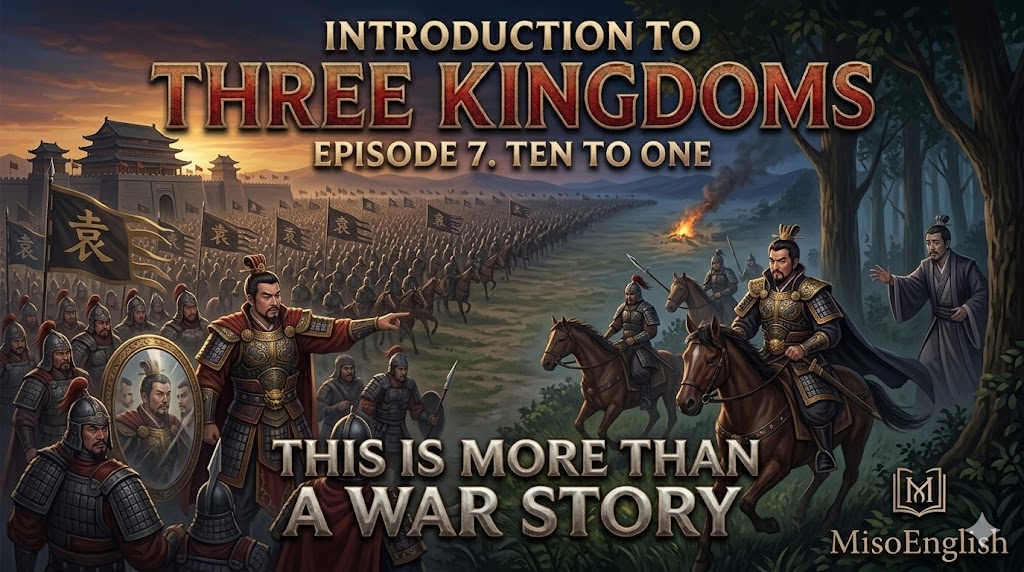
7편. 열 배의 적을 이긴 남자 — 관도대전, 조조가 북방을 장악하다
200년, 북방의 패권을 건 역사적인 대결이 펼쳐집니다. 한쪽은 원소(袁紹) — 당시 중국 최대의 군벌로, 70만 대군을 거느렸다는 기록이 있을 만큼 압도적인 세력을 자랑했어요. 다른 한쪽은 조조(曹操) — 병력은 원소의 10분의 1 수준이었지만, 머리 하나만큼은 천하 최고였죠. 이 싸움의 결과는 누가 봐도 뻔해 보였어요. 그런데 역사는 전혀 다른 방향으로 흘러갑니다.
원소는 어떤 인물이었을까
원소는 명문 귀족 원씨 가문 출신이에요. 4대에 걸쳐 삼공(三公)을 배출한 집안이니, 당시 중국에서 이보다 더 화려한 배경은 없었죠. 반동탁 연합군의 맹주였고, 황건적의 난 이후 북방의 대부분을 장악하며 천하 제일의 군벌로 군림했습니다.
겉으로 보면 원소는 완벽한 승자의 조건을 갖추고 있었어요. 병력도 많고, 영토도 넓고, 명분도 있었죠. 하지만 결정적인 약점이 있었어요. 바로 우유부단함이었습니다. 좋은 모사들이 옳은 조언을 해도 귀를 막았고, 쓸모없는 아첨꾼의 말을 더 잘 들었죠. 전쟁터에서 기회가 와도 결단을 못 내렸어요. 이게 결국 원소를 무너뜨리는 원인이 됩니다.
조조의 고민 — 싸워야 할까, 피해야 할까
사실 조조도 이 싸움이 두려웠어요. 병력 차이가 너무 컸거든요. 조조 진영 내부에서도 "원소와 정면으로 맞서는 건 무리다"는 의견이 많았습니다. 하지만 조조의 핵심 모사 **순욱(荀彧)**과 **곽가(郭嘉)**는 달랐어요. 이들은 원소의 약점을 정확히 짚어냈죠.
"원소는 병력은 많지만 결단력이 없습니다. 겉은 강해 보여도 속은 비어 있어요. 지금이 기회입니다."
조조는 결국 싸우기로 합니다. 그리고 그 선택이 역사를 바꿨어요.
관도대전의 시작
두 군대는 황하 남쪽의 **관도(官渡)**에서 맞붙습니다. 초반에는 예상대로 조조군이 고전했어요. 병력도 부족하고, 군량도 부족했죠. 조조는 허도로 퇴각할 생각까지 했다는 기록이 있어요. 그때 순욱이 편지를 보냈습니다.
"지금 물러서면 모든 게 끝납니다. 반드시 버티십시오."
조조는 이를 악물고 버텼어요. 그리고 결정적인 순간이 찾아옵니다.
전쟁의 판도를 바꾼 한 남자 — 허유의 배신
원소의 모사 중 **허유(許攸)**라는 인물이 있었어요. 그런데 허유는 원소에게 불만이 쌓여 있었고, 어느 날 밤 조조 진영으로 몰래 넘어옵니다. 그가 가져온 정보는 어마어마했어요.
*"원소의 군량 창고가 **오소(烏巢)*에 있습니다. 지금 당장 기습하면 됩니다."
조조는 망설이지 않았어요. 직접 정예 기병을 이끌고 오소를 기습해 원소의 군량 창고를 불태워버립니다. 군량이 사라지자 원소의 대군은 순식간에 무너졌어요. 70만 대군이 군량 하나 때문에 와르르 무너진 거예요.
원소는 간신히 목숨만 건져 도망쳤고, 2년 후 울화병으로 세상을 떠납니다. 그의 아들들이 뒤를 이었지만, 조조는 차례로 모두 제압하며 북방 전체를 손에 넣었습니다.
관도대전이 남긴 것
관도대전은 단순한 전투의 승패가 아니었어요. 이 전투 하나로 북방의 지도가 완전히 바뀌었습니다. 조조는 중원의 실질적인 지배자가 됐고, 이제 천하 통일을 향한 다음 단계로 나아가게 되죠.
하지만 조조의 진짜 시험은 이제부터였어요. 남쪽에는 손권이 버티고 있었고, 아직 자기 땅 하나 없이 떠돌던 유비도 서서히 운명의 실마리를 풀어가고 있었거든요. 조조가 천하를 통일하려면 이 두 사람을 넘어야 했습니다.
맺음말
관도대전 이후 조조는 명실상부 북방의 패자가 됩니다. 하지만 권력이 커질수록 그를 경계하는 눈도 많아졌어요. 유비는 이 시기 어디서 무엇을 하고 있었을까요? 그리고 두 사람의 길은 어떻게 엇갈리게 될까요?
다음 편 예고: 조조의 그늘 아래 숨어 지내던 유비, 드디어 자신만의 길을 찾기 시작합니다. 서로 다른 꿈을 가진 두 영웅의 엇갈린 운명을 8편에서 만나요!
Episode 7. Ten to One — The Battle of Guandu and Cao Cao's Conquest of the North
In the year 200 AD, the battle for control of northern China finally arrives. In one corner: Yuan Shao (袁紹) — the most powerful warlord in the land, commanding an army so vast that historical accounts put it at 700,000 strong. In the other: Cao Cao (曹操) — outnumbered by roughly ten to one, but possessed of a mind that more than made up the difference. On paper, there was no contest. History, as it so often does, had other ideas.
Who Was Yuan Shao?
Yuan Shao came from the most prestigious aristocratic family in China. The Yuan clan had produced high ministers across four consecutive generations — in the social hierarchy of the Han Dynasty, it didn't get more establishment than that. He had led the anti-Dong Zhuo coalition, consolidated most of northern China after the chaos, and stood at the top of the warlord pecking order.
From the outside, Yuan Shao looked like a man who couldn't lose. He had the numbers, the territory, and the prestige. But he had one fatal flaw: indecision. His most capable advisors would lay out the right course of action, and he'd wave them off. His most useless flatterers would tell him what he wanted to hear, and he'd listen carefully. When opportunities appeared on the battlefield, he hesitated. That habit was going to cost him everything.
Cao Cao's Dilemma — Fight or Fall Back?
Cao Cao wasn't feeling confident going into this. The gap in numbers was simply too large to ignore, and plenty of voices in his camp were saying the same thing: taking on Yuan Shao directly was suicide. But his two sharpest strategists, Xun Yu (荀彧) and Guo Jia (郭嘉), saw the situation differently.
"Yuan Shao has armies but no decisiveness. He looks powerful on the outside, but there's nothing holding it together on the inside. This is the moment."
Cao Cao chose to fight. That decision changed the course of Chinese history.
The Battle Begins
The two armies met at Guandu (官渡), south of the Yellow River. The early going went about as badly as feared — Cao Cao's forces were stretched thin, supplies were running low, and there are accounts suggesting Cao Cao actually contemplated retreating to his base at Xu. It was Xun Yu who talked him out of it, sending a letter that cut straight to the point:
"If you retreat now, it's over. Hold your ground."
Cao Cao held. And then the moment that changed everything arrived.
The Man Who Turned the War — Xu You's Defection
Among Yuan Shao's advisors was a man named Xu You (許攸). He had grievances with Yuan Shao that had been building for a while, and one night he slipped out of the Yuan camp and walked straight into Cao Cao's headquarters. What he brought with him was priceless intelligence:
"Yuan Shao's entire grain supply is stored at Wuchao (烏巢). Hit it now and the whole army collapses."
Cao Cao didn't hesitate for a second. He personally led a elite cavalry force on a night raid to Wuchao and burned Yuan Shao's supply depot to the ground. Without food, an army of 700,000 is just 700,000 hungry people. Yuan Shao's massive force disintegrated almost overnight.
Yuan Shao fled with barely his life. He died two years later, consumed by illness and humiliation. His sons tried to hold things together, but Cao Cao picked them off one by one, and within a few years, the entire north was his.
What Guandu Changed
The Battle of Guandu wasn't just a military victory — it was a complete redrawing of the map. Cao Cao went from being one powerful warlord among several to being the undisputed master of northern China. The road to reunification seemed to be opening up in front of him.
But the real tests were still ahead. To the south, Sun Quan held Jiangdong in an iron grip. And somewhere in between, a wandering warlord named Liu Bei — still without a territory to call his own — was quietly finding his footing. To unite all of China, Cao Cao would have to go through both of them.
Closing
After Guandu, Cao Cao stands alone at the top of the north. But the bigger his power grows, the more eyes are watching him with unease. What has Liu Bei been doing all this time — living under Cao Cao's shadow? And how do these two men's very different paths finally pull them apart?
Next episode preview: Liu Bei steps out from Cao Cao's shadow and begins searching for his own road. Two heroes, two visions, two destinies — the parting of ways in Episode 8!
⚠️ 저작권 안내
본 블로그(MisoEnglish · slowblooms.tistory.com)의 모든 콘텐츠는 저작권법의 보호를 받습니다. 글, 예시 문장, 분석 내용 등 블로그에 게시된 모든 창작물은 저작자의 동의 없이 무단으로 복사, 복제, 배포, 2차 가공하는 행위를 금지합니다. 출처를 밝히지 않은 전재, SNS·커뮤니티·타 블로그 등에의 무단 게시, 상업적 이용은 모두 금지되며, 무단 불펌 적발 시 저작권법에 따라 법적 조치가 취해질 수 있습니다. 콘텐츠 사용 문의는 slowblooms.tistory.com으로 연락 주세요.
© MisoEnglish · slowblooms.tistory.com. All rights reserved.
━━━━━━━━━━━━━━━━━━━━━━━━━━━━━━━━
⚠️ Copyright Notice
All content published on this blog (MisoEnglish · slowblooms.tistory.com) is protected by copyright law. Copying, reproducing, distributing, or adapting any written posts, example sentences, or analyses without the explicit consent of the author is strictly prohibited. Unauthorised reposting on other blogs, social media, online communities, or any public platform — with or without modification — is not permitted, and may result in legal action under applicable copyright law. For content licensing enquiries, please contact us via slowblooms.tistory.com.
© MisoEnglish · slowblooms.tistory.com. All rights reserved.
'The Language Beyond Grammar' 카테고리의 다른 글
| 9편. 천하를 바꾼 하룻밤의 불꽃 — 적벽대전, 삼국 분열의 시작 (0) | 2026.03.05 |
|---|---|
| 8편. 같은 하늘 아래 살 수 없는 두 사람 — 유비와 조조, 서로 다른 길 (0) | 2026.03.05 |
| 6편. 강동의 호랑이 — 손견·손책·손권, 오나라의 씨앗을 뿌리다 (0) | 2026.03.04 |
| 5편. 영웅인가, 간웅인가 — 조조의 성장과 사람을 알아보는 눈 (0) | 2026.03.04 |
| 4편. 복숭아나무 아래서 맺은 약속 — 유비·관우·장비의 도원결의 (0) | 2026.03.04 |


