
- 분류 전체보기 (1058)

- Linguistics (고급 영어학) (10)
- Stylistics (6)
- Etymology & Word Building (15)
- Philosophy Meets Grammar (6)
- Collection of Famous Quotes (22)
- English Mechanism (276)
- The Language Beyond Grammar (279)
- Living English (81)
- Miso’s Life Notes (18)
- My English Journey and Refl.. (16)
- Philosophy (132)
- Video Clip (16)
- Airline English (항공 영어) (47)
- Creative Corner (35)
- Sally & Sia (1)
| 일 | 월 | 화 | 수 | 목 | 금 | 토 |
|---|---|---|---|---|---|---|
| 1 | 2 | 3 | 4 | |||
| 5 | 6 | 7 | 8 | 9 | 10 | 11 |
| 12 | 13 | 14 | 15 | 16 | 17 | 18 |
| 19 | 20 | 21 | 22 | 23 | 24 | 25 |
| 26 | 27 | 28 | 29 | 30 |
- pnr
- MisoEnglish#철학입문 #Philosophy #심리철학 #PhilosophyOfMind #철학공부 #의식 #마음 #PhilosophyForBeginners #교육콘텐츠 #철학시리즈
- 영어접속사
- MisoEnglish#철학입문 #Philosophy #윤리학 #Ethics #도덕철학 #철학공부 #칸트 #공리주의 #교육콘텐츠 #철학시리즈
- MisoEnglish#철학입문 #Philosophy #종교철학 #PhilosophyOfReligion #철학공부 #신존재증명 #악의문제 #PhilosophyForBeginners #교육콘텐츠 #철학시리즈
- 감성영어
- 인도철학 #동양철학 #인문학 #요가 #명상 #힌두교 #불교 #간디 #타고르 #정통6파 #철학공부 #마음공부 #MisoEnglish #인문학영어
- everyday English
- 영국사 #영국역사 #세계사 #역사연재 #브리튼에서영국까지
- Basic English Verbs
- MisoEnglish#도교철학 #Taoism #도덕경 #TaoTeChing #무위자연 #WuWei #노자 #Laozi #장자 #YinYang
- MisoEnglish#철학입문 #Philosophy #형이상학 #Metaphysics #철학공부 #존재론 #실재론 #PhilosophyForBeginners #교육콘텐츠 #철학시리즈
- 🌿 English with Heart
- MisoEnglish#불교철학 #BuddhismPhilosophy #사성제 #FourNobleTruths #공사상 #Emptiness #명상 #Mindfulness #열반 #EasternWisdom
- MisoEnglish#철학입문 #Philosophy #과학철학 #PhilosophyOfScience #철학공부 #포퓨퍼 #쿠hn #과학방법론 #교육콘텐츠 #철학시리즈
- English for Korean Learners
- EnglishWriting #AcademicWriting #Grammar #EnglishLanguage #EssayWriting #ParagraphStructure #SentenceStructure #BusinessEnglish #EnglishTips #WritingSkills #Linguistics #ESL
- English Speaking Practice
- MisoEnglish#한국철학 #KoreanPhilosophy #홍익인간 #Hongik #화랑도 #Hwarang #단군 #Dangun #풍류도 #ThreeKingdoms#동양철학
- 영어공부
- 영어문법
- MisoEnglish#철학입문 #Philosophy #정치철학 #PoliticalPhilosophy #철학공부 #정의론 #자유주의 #PhilosophyForBeginners #교육콘텐츠 #철학시리즈
- ticketing
- 동양정치철학 #시리즈완결 #아시아적가치 #동서양비교 #유교 #민주주의 #정치사상 #인문학 #비교철학 #글로벌정치 #문화다양성 #2500년철학사
- 영어회화
- AirlineOpsEnglish
- misoenglish
- 영문법
- MisoEnglish#유교철학 #Confucianism #성리학 #NeoConfucianism #인의예지 #Virtue #맹자 #Mencius #실학 #KoreanScholarship
- English in English
- Today
- Total
MisoEnglish
1편. 황제가 환관에게 놀아나던 날 — 한나라의 마지막 불꽃 본문
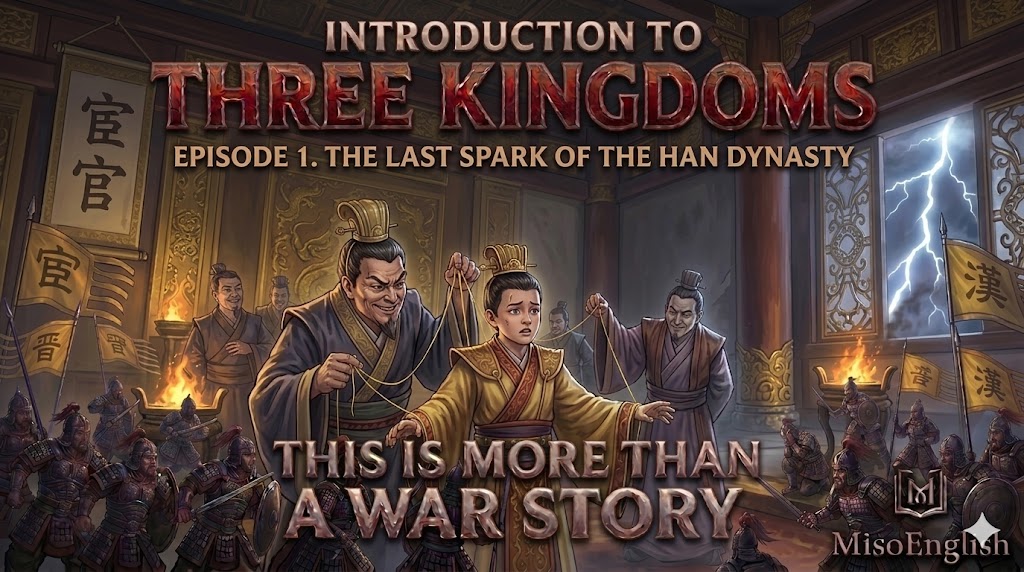
1편. 황제가 환관에게 놀아나던 날 — 한나라의 마지막 불꽃
삼국지 이야기는 사실 전쟁보다 먼저 시작돼요. 조조도, 유비도, 손권도 아직 무대에 오르기 전 — 한나라라는 거대한 제국이 서서히 무너지는 장면부터 시작하거든요. 400년 넘게 이어온 왕조가 왜 갑자기 흔들렸을까요? 그 답은 황제가 아닌 환관들의 손에서 찾아야 해요.
환관이 나라를 먹다
한나라 말기, 황제들은 하나같이 어린 나이에 즉위하거나 정치에 무관심한 경우가 많았어요. 그 틈을 파고든 게 바로 환관(宦官) 집단이었죠. 황제 곁에서 시중을 드는 내시들인데, 어느 순간 이들이 나라의 실권을 쥐어버린 거예요. 관직을 팔고, 뇌물을 받고, 반대하는 신하들은 죽이거나 쫓아냈죠. 백성들의 삶은 갈수록 피폐해졌고, 세금은 무거워졌으며, 곳곳에서 굶어 죽는 사람이 속출했어요.
나라가 이 모양이니 민심이 폭발하는 건 시간문제였습니다.
장각, 하늘의 뜻을 빌리다
그 분노에 불을 붙인 사람이 **장각(張角)**이에요. 그는 도교 계통의 종교인이었는데, 병을 고쳐주고 민심을 얻으면서 엄청난 추종자를 모았죠. 그의 메시지는 간단했어요.
"푸른 하늘(한나라)은 이미 죽었다. 이제 황천(黃天)이 세상을 다스릴 것이다!"
추종자들은 머리에 노란 두건을 둘렀어요. 그래서 이들의 반란을 **황건적의 난(黃巾之亂)**이라고 부르죠. 184년, 전국 각지에서 동시다발적으로 봉기가 일어납니다. 수십만 명이 들고일어났고, 한나라 조정은 순식간에 패닉 상태에 빠집니다.
조정의 대응 — 군벌의 씨앗을 뿌리다
문제는 한나라 중앙군이 이 규모의 반란을 혼자 감당하기 어려웠다는 거예요. 결국 조정은 지방 호족들에게 군사를 모아 스스로 진압하라는 명령을 내립니다. 이게 나중에 엄청난 부메랑이 돼요. 각 지방에서 독자적인 군사력을 키운 호족들이 황건적을 진압하고 나서도 군대를 해산하지 않거든요. 이게 바로 삼국시대 군벌들의 출발점입니다.
이때 조조는 기도위로 참전해 이름을 알리기 시작했고, 유비도 이 전쟁에서 관우·장비와 함께 첫 발을 내딛습니다.
황건적은 지지만, 한나라도 끝나간다
1~2년 만에 황건적의 주력은 진압됩니다. 장각은 병으로 죽었고, 두 동생도 전사했죠. 반란은 실패로 끝났지만, 한나라가 치른 대가는 너무 컸어요. 지방 군벌들은 이미 자기 군대를 갖게 됐고, 중앙 권력은 껍데기만 남은 상태였죠. 황건적의 난은 실패한 혁명이었지만, 삼국지라는 거대한 이야기의 방아쇠를 당긴 사건이었습니다.
맺음말
한나라는 황건적의 난 이후 이름만 겨우 유지하는 상태가 됩니다. 진짜 권력은 이제 지방 군벌들의 손으로 넘어가기 시작하죠. 그리고 그 혼란 속에서 가장 빠르게 치고 올라온 인물이 있으니 — 바로 서량의 군벌 **동탁(董卓)**입니다.
다음 편 예고: 황제를 인질로 삼고 낙양을 공포로 물들인 남자, 동탁. 그는 어떻게 천하를 손에 넣었고, 왜 모두의 적이 됐을까요? 2편에서 이어집니다!
Episode 1. The Day the Emperor Danced to the Eunuchs' Tune — The Last Spark of the Han Dynasty
The story of the Three Kingdoms doesn't actually begin with war. Before Cao Cao, Liu Bei, or Sun Quan ever step onto the stage, we first have to watch a great empire slowly fall apart. The Han Dynasty had lasted over 400 years — so why did it suddenly start to crack? The answer isn't with the emperor. It's with the eunuchs.
When the Eunuchs Ate the Empire Alive
In the final years of the Han Dynasty, emperors were constantly ascending the throne as children, or simply had no interest in governing. That created a vacuum — and the eunuchs rushed right in to fill it. These were the men who served directly at the emperor's side, and somehow, they ended up running the entire country. They sold government positions, pocketed bribes, and anyone who dared push back got purged or exiled. Life for ordinary people got harder by the year — taxes piled up, harvests failed, and people were starving in the streets.
With the country in that kind of shape, it was only a matter of time before everything exploded.
Zhang Jue Calls on Heaven
The man who lit the fuse was Zhang Jue (張角). He was a religious figure rooted in Taoist traditions, and he'd built up a massive following by traveling the countryside and healing the sick. His message was simple:
"The blue sky of Han is already dead. The Yellow Heaven will now rule the world!"
His followers tied yellow scarves around their heads — which is exactly how this uprising got its name: the Yellow Turban Rebellion (黃巾之亂). In 184 AD, revolts erupted simultaneously across the country. Hundreds of thousands rose up, and the Han court went into full-on panic mode.
The Court's Response — Planting the Seeds of the Warlords
The problem was that the Han central army simply wasn't equipped to handle a rebellion this massive on its own. So the court did something that would come back to haunt them: they ordered local gentry clans to raise their own troops and put down the rebellion themselves. Once those local strongmen built up their own armies and crushed the Yellow Turbans, they didn't disband. Why would they? That military power was now theirs to keep. This is where the warlords of the Three Kingdoms era are truly born.
This is also when Cao Cao first made a name for himself, serving as a military officer in the campaign. And Liu Bei took his very first steps onto the battlefield — alongside Guan Yu and Zhang Fei.
The Yellow Turbans Fall — But So Does the Han
Within a year or two, the main Yellow Turban forces were crushed. Zhang Jue died of illness, and his two brothers were killed in battle. The rebellion failed. But the cost to the Han Dynasty was enormous. Local warlords now had armies of their own, and the central government was hollow at its core. The Yellow Turban Rebellion was a revolution that didn't succeed — but it pulled the trigger on the epic story we call the Three Kingdoms.
Closing
After the rebellion, the Han Dynasty survived in name only. Real power was already slipping into the hands of regional warlords. And one man moved faster than anyone else to grab it — a warlord from the western frontier named Dong Zhuo (董卓).
Next episode preview: A man who treated the emperor like a hostage and turned the capital into a city of fear — Dong Zhuo. How did he seize control of the empire, and how did he manage to make an enemy of absolutely everyone? See you in Episode 2!
⚠️ 저작권 안내
본 블로그(MisoEnglish · slowblooms.tistory.com)의 모든 콘텐츠는 저작권법의 보호를 받습니다. 글, 예시 문장, 분석 내용 등 블로그에 게시된 모든 창작물은 저작자의 동의 없이 무단으로 복사, 복제, 배포, 2차 가공하는 행위를 금지합니다. 출처를 밝히지 않은 전재, SNS·커뮤니티·타 블로그 등에의 무단 게시, 상업적 이용은 모두 금지되며, 무단 불펌 적발 시 저작권법에 따라 법적 조치가 취해질 수 있습니다. 콘텐츠 사용 문의는 slowblooms.tistory.com으로 연락 주세요.
© MisoEnglish · slowblooms.tistory.com. All rights reserved.
━━━━━━━━━━━━━━━━━━━━━━━━━━━━━━━━
⚠️ Copyright Notice
All content published on this blog (MisoEnglish · slowblooms.tistory.com) is protected by copyright law. Copying, reproducing, distributing, or adapting any written posts, example sentences, or analyses without the explicit consent of the author is strictly prohibited. Unauthorised reposting on other blogs, social media, online communities, or any public platform — with or without modification — is not permitted, and may result in legal action under applicable copyright law. For content licensing enquiries, please contact us via slowblooms.tistory.com.
© MisoEnglish · slowblooms.tistory.com. All rights reserved.
'The Language Beyond Grammar' 카테고리의 다른 글
| 3편. 아버지를 두 번 버린 남자 — 여포의 배신과 동탁의 최후 (0) | 2026.03.04 |
|---|---|
| 2편. 동탁이 황제를 인질로 삼다 — 낙양을 뒤덮은 공포 (0) | 2026.03.04 |
| 이것은 단순한 전쟁 이야기가 아니다 — 삼국지 20편 시리즈를 시작하며 (0) | 2026.03.03 |
| 신들의 이야기, 그리고 우리의 이야기 — 그리스 로마 신화 (1) | 2026.03.03 |
| 성좌 신화: 카시오페이아와 큰곰자리, 별빛에 새겨진 영원한 약속 (0) | 2026.03.03 |


