
- 분류 전체보기 (1053)

- Linguistics (고급 영어학) (10)
- Stylistics (6)
- Etymology & Word Building (15)
- Philosophy Meets Grammar (6)
- Collection of Famous Quotes (22)
- English Mechanism (276)
- The Language Beyond Grammar (274)
- Living English (81)
- Miso’s Life Notes (18)
- My English Journey and Refl.. (16)
- Philosophy (132)
- Video Clip (16)
- Airline English (항공 영어) (47)
- Creative Corner (35)
- Sally & Sia (1)
| 일 | 월 | 화 | 수 | 목 | 금 | 토 |
|---|---|---|---|---|---|---|
| 1 | 2 | 3 | 4 | |||
| 5 | 6 | 7 | 8 | 9 | 10 | 11 |
| 12 | 13 | 14 | 15 | 16 | 17 | 18 |
| 19 | 20 | 21 | 22 | 23 | 24 | 25 |
| 26 | 27 | 28 | 29 | 30 |
- 영어회화
- MisoEnglish#철학입문 #Philosophy #형이상학 #Metaphysics #철학공부 #존재론 #실재론 #PhilosophyForBeginners #교육콘텐츠 #철학시리즈
- misoenglish
- everyday English
- EnglishWriting #AcademicWriting #Grammar #EnglishLanguage #EssayWriting #ParagraphStructure #SentenceStructure #BusinessEnglish #EnglishTips #WritingSkills #Linguistics #ESL
- MisoEnglish#철학입문 #Philosophy #심리철학 #PhilosophyOfMind #철학공부 #의식 #마음 #PhilosophyForBeginners #교육콘텐츠 #철학시리즈
- AirlineOpsEnglish
- MisoEnglish#철학입문 #Philosophy #과학철학 #PhilosophyOfScience #철학공부 #포퓨퍼 #쿠hn #과학방법론 #교육콘텐츠 #철학시리즈
- pnr
- MisoEnglish#한국철학 #KoreanPhilosophy #홍익인간 #Hongik #화랑도 #Hwarang #단군 #Dangun #풍류도 #ThreeKingdoms#동양철학
- MisoEnglish#불교철학 #BuddhismPhilosophy #사성제 #FourNobleTruths #공사상 #Emptiness #명상 #Mindfulness #열반 #EasternWisdom
- Basic English Verbs
- English Speaking Practice
- 영국사 #영국역사 #세계사 #역사연재 #브리튼에서영국까지
- MisoEnglish#도교철학 #Taoism #도덕경 #TaoTeChing #무위자연 #WuWei #노자 #Laozi #장자 #YinYang
- 영문법
- MisoEnglish#철학입문 #Philosophy #정치철학 #PoliticalPhilosophy #철학공부 #정의론 #자유주의 #PhilosophyForBeginners #교육콘텐츠 #철학시리즈
- MisoEnglish#철학입문 #Philosophy #윤리학 #Ethics #도덕철학 #철학공부 #칸트 #공리주의 #교육콘텐츠 #철학시리즈
- ticketing
- 인도철학 #동양철학 #인문학 #요가 #명상 #힌두교 #불교 #간디 #타고르 #정통6파 #철학공부 #마음공부 #MisoEnglish #인문학영어
- MisoEnglish#유교철학 #Confucianism #성리학 #NeoConfucianism #인의예지 #Virtue #맹자 #Mencius #실학 #KoreanScholarship
- 영어공부
- 동양정치철학 #시리즈완결 #아시아적가치 #동서양비교 #유교 #민주주의 #정치사상 #인문학 #비교철학 #글로벌정치 #문화다양성 #2500년철학사
- MisoEnglish#철학입문 #Philosophy #종교철학 #PhilosophyOfReligion #철학공부 #신존재증명 #악의문제 #PhilosophyForBeginners #교육콘텐츠 #철학시리즈
- English in English
- 영어문법
- 영어접속사
- 감성영어
- English for Korean Learners
- 🌿 English with Heart
- Today
- Total
MisoEnglish
13편. 한나라의 불꽃을 다시 — 촉한 건국과 제갈량의 출사표 본문
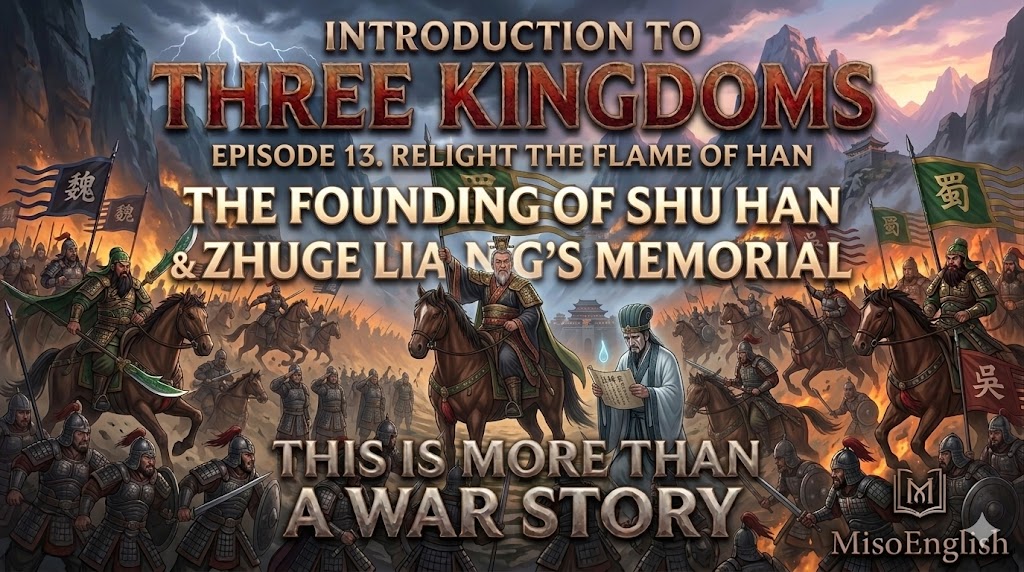
13편. 한나라의 불꽃을 다시 — 촉한 건국과 제갈량의 출사표
221년, 유비는 마침내 황제를 선포합니다. 나라 이름은 한(漢) — 무너진 한나라를 자신이 다시 세운다는 뜻이었어요. 역사에서는 이를 **촉한(蜀漢)**이라고 부르죠. 돗자리 팔던 청년이, 도원결의를 맺은 지 수십 년 만에 황제가 된 거예요. 하지만 기쁨은 오래가지 않았어요. 황제가 된 지 불과 2년 만에 유비는 세상을 떠났고, 촉한의 모든 짐은 제갈량의 어깨 위로 떨어졌습니다.
유비, 황제가 되다
유비가 황제를 선포한 건 220년 조조의 아들 **조비(曹丕)**가 헌제를 폐위하고 스스로 황제를 선포한 것이 결정적인 계기였어요. 한나라가 공식적으로 끝나버린 거죠. 유비 입장에서는 더 이상 기다릴 이유가 없었어요.
"한나라 황실의 후손으로서, 무너진 나라를 다시 세우는 것은 나의 의무입니다."
유비는 성도(成都)에서 즉위식을 올렸어요. 제갈량은 승상(丞相)이 됐고, 관우·장비·조자룡 등이 주요 직책을 맡았죠. 촉한이라는 나라가 공식적으로 탄생한 순간이었습니다.
하지만 유비의 마음속에는 기쁨보다 슬픔이 컸어요. 바로 그 전해에 관우가 죽었거든요. 믿었던 의형제의 죽음 앞에 유비는 황제 자리도, 새로 세운 나라도 아무 의미가 없었어요. 유비는 즉위하자마자 손권을 향해 복수의 칼을 갈기 시작합니다. 그리고 그 복수전이 촉한의 운명을 크게 흔들어놓게 되죠. 이 이야기는 15편에서 자세히 다룰게요.
유비의 마지막 유언 — 백제성 탁고
이릉대전에서 손권에게 대패한 유비는 백제성(白帝城)으로 물러납니다. 그리고 그곳에서 병이 깊어져 다시는 일어나지 못했어요. 223년, 유비는 죽음을 앞두고 제갈량을 불렀습니다. 삼국지에서 가장 유명한 장면 중 하나인 백제성 탁고(白帝城 託孤) — 고아를 맡기는 장면이에요.
유비는 제갈량의 손을 잡고 말했어요.
"그대의 재주는 조비의 열 배요. 반드시 나라를 안정시키고 대업을 이룰 것이오. 만약 내 아들이 보좌할 만하면 보좌해 주고, 만약 그릇이 못 된다면 — 그대가 직접 취하시오."
제갈량은 눈물을 흘리며 대답했어요.
"신은 목숨을 다해 충성을 다하고, 죽음으로써 절개를 지키겠습니다."
이 장면은 단순한 임종 장면이 아니에요. 군주와 신하 사이의 절대적인 신뢰, 그리고 제갈량이 평생 촉한을 위해 모든 것을 바치겠다고 스스로에게 맹세한 순간이었습니다. 제갈량은 이후 죽는 날까지 이 약속을 지켰어요.
제갈량의 시대 — 남만 정벌
유비가 죽고 열일곱 살의 **유선(劉禪)**이 황제가 됩니다. 역사에서 **아두(阿斗)**라는 이름으로도 불리는 인물이에요. 유선은 총명하지 않았고, 나라를 이끌 능력도 부족했어요. 사실상 촉한의 모든 것은 제갈량이 이끌었습니다.
제갈량이 가장 먼저 한 일은 남만(南蠻) 정벌이었어요. 촉한의 남쪽, 지금의 윈난성 일대에 살던 이민족 세력이 반란을 일으켰거든요. 북벌을 하려면 후방이 안전해야 했습니다.
이 전투에서 나온 유명한 이야기가 **칠종칠금(七縱七擒)**이에요. 남만의 수장 **맹획(孟獲)**을 일곱 번 잡았다가 일곱 번 놓아줬다는 거예요. 제갈량은 힘으로 정복하는 것보다 마음으로 복종시키는 게 더 오래 간다고 믿었어요. 일곱 번째로 풀려난 맹획은 결국 스스로 무릎을 꿇었어요.
"승상은 하늘의 위엄을 가졌습니다. 남만은 다시는 반란을 일으키지 않겠습니다."
제갈량의 남만 정벌은 단순한 군사적 승리가 아니었어요. 이후 촉한이 북벌에 집중하는 동안 남쪽이 안정을 유지할 수 있었던 건 이 정벌 덕분이었습니다.
출사표 — 역사상 가장 유명한 편지
남만을 평정한 제갈량은 이제 숙원이었던 **북벌(北伐)**을 준비합니다. 227년, 제갈량은 군대를 이끌고 북쪽으로 출발하면서 황제 유선에게 한 통의 편지를 올렸어요. 바로 **출사표(出師表)**입니다.
출사표는 단순한 출정 보고서가 아니에요. 제갈량이 나라를 위해 평생을 바치겠다는 마음, 유비에 대한 그리움, 어린 황제에 대한 걱정, 그리고 반드시 한나라를 회복하겠다는 결의가 담긴 — 한 인간의 진심 어린 고백이었어요.
그중 가장 유명한 구절은 이거예요.
"신은 본래 평민으로, 남양에서 몸소 밭을 갈며 살았습니다. 난세에 목숨만 보전하면 된다고 생각했고, 제후들 사이에서 이름을 날리려 하지 않았습니다. 선제(유비)께서 신을 비천하다 여기지 않으시고, 몸소 세 번씩이나 찾아오셔서 세상 돌아가는 일을 물으셨습니다. 이에 감격하여 선제를 위해 헌신하기로 했습니다."
중국에서는 예로부터 이런 말이 전해져요.
"출사표를 읽고 눈물을 흘리지 않는 자는 충신이 아니다."
1,800년이 지난 지금도 이 글을 읽으면 가슴이 먹먹해지는 이유는, 제갈량의 마음이 단 한 글자도 꾸밈없이 담겨 있기 때문이에요.
제갈량이 짊어진 것
출사표를 올린 제갈량의 어깨 위에는 어마어마한 짐이 있었어요. 유비의 유언, 촉한의 미래, 한나라 회복의 명분 — 이 모든 것을 혼자 짊어지고 북쪽으로 출발한 거예요.
촉한은 셋 중 가장 작은 나라였어요. 인구도 적고, 영토도 작고, 경제력도 부족했습니다. 그런데 제갈량은 이 불리한 조건을 알면서도 북벌을 강행했어요. 왜였을까요?
제갈량은 알고 있었을 거예요. 가만히 있으면 촉한은 천천히 쇠약해진다는 걸. 공격이 최선의 방어였고, 북벌은 촉한이 살아남을 수 있는 유일한 길이었어요. 그래서 제갈량은 성공 가능성이 낮다는 걸 알면서도, 끝까지 출정을 멈추지 않았습니다.
맺음말
출사표를 뒤로하고 북쪽으로 떠난 제갈량. 그는 살아서 돌아오지 못할 수도 있다는 걸 알았을까요? 아마 알았을 거예요. 그래도 갔습니다. 그게 제갈량이라는 사람이었으니까요.
다음 편 예고: 손권의 외교 전략 — 위와 손을 잡을까, 촉과 손을 잡을까? 천하의 균형 위에서 줄타기를 한 손권의 선택을 14편에서 만나요!
Episode 13. Relight the Flame of Han — The Founding of Shu Han and Zhuge Liang's Memorial
In 221 AD, Liu Bei finally declared himself emperor. The kingdom he founded was called Han (漢) — a deliberate statement that he was restoring the dynasty that had collapsed, not starting something new. History calls it Shu Han (蜀漢). The man who had once sold straw sandals, who had sworn his oath beneath peach blossoms decades ago, was now emperor. But the joy didn't last. Within two years, Liu Bei was dead — and everything Shu Han was or could ever be came to rest on the shoulders of one man.
Liu Bei Becomes Emperor
The immediate trigger for Liu Bei's proclamation was the news from the north: in 220 AD, Cao Cao's son Cao Pi (曹丕) had formally deposed Emperor Xian and declared himself the first emperor of a new dynasty — Wei (魏). The Han Dynasty was officially over. For Liu Bei, there was no longer any reason to wait.
"As a descendant of the Han imperial family, restoring what has been lost is not ambition — it is obligation."
He held his enthronement ceremony in Chengdu. Zhuge Liang was named Chancellor. Guan Yu, Zhang Fei, Zhao Yun, and the others took up their positions. Shu Han existed.
But Liu Bei's heart was heavier than the occasion deserved. The year before, Guan Yu had been killed. The death of his sworn brother — the man he had stood beside since the peach garden — cast a shadow over everything. Liu Bei was emperor, but all he wanted was revenge. That decision would shake Shu Han to its foundations. We'll get to that in Episode 15.
Liu Bei's Dying Words — The Bequest at White Emperor City
After being crushed by Sun Quan at the Battle of Yiling, Liu Bei retreated to White Emperor City (白帝城). He never recovered. In 223 AD, as death approached, he summoned Zhuge Liang to his bedside. What followed is one of the most emotionally charged scenes in the Three Kingdoms — the Bequest at White Emperor City (白帝城託孤).
Liu Bei took Zhuge Liang's hand and spoke:
"Your ability surpasses Cao Pi's tenfold. You will surely stabilize the kingdom and complete the great work. If my son proves worthy of support, then support him. If he proves unworthy — then take the throne yourself."
Zhuge Liang wept and answered:
"I will exhaust my loyalty and uphold my devotion until death."
This scene is more than a deathbed exchange. It is the moment of absolute trust between a ruler and his minister — and the moment Zhuge Liang made a private vow that he kept until his last breath.
Zhuge Liang Takes Charge — The Southern Campaign
Liu Bei died, and his seventeen-year-old son Liu Shan (劉禪) — also known by his childhood name A Dou (阿斗) — became emperor. Liu Shan was not a gifted ruler. Shu Han, in practice, was Zhuge Liang's to run.
His first major act was the Southern Campaign — a military expedition against tribal forces in the south, in what is now Yunnan province, who had risen in rebellion. Before Zhuge Liang could look north, he needed a stable rear.
The campaign produced one of the most famous stories in all of the Three Kingdoms: Seven Captures and Seven Releases (七縱七擒). The tribal leader Meng Huo (孟獲) was captured seven times and released seven times. Zhuge Liang believed that genuine submission — won through repeated demonstrations of magnanimity — would outlast anything that could be achieved through force alone. On the seventh release, Meng Huo knelt voluntarily.
"The Chancellor possesses the authority of heaven itself. The southern tribes will never rebel again."
It wasn't just a military victory. It was the reason Shu Han's southern flank stayed quiet while Zhuge Liang spent the rest of his life pushing north.
The Memorial to the Throne — The Most Famous Letter in Chinese History
With the south pacified, Zhuge Liang turned to what he had always considered the true mission: the Northern Expeditions (北伐). In 227 AD, as he prepared to march his army north, he submitted a document to Emperor Liu Shan. It is called the Memorial on Dispatching the Army (出師表).
This was not a routine military report. It was a deeply personal statement — grief for Liu Bei, worry for the young emperor, resolve to honor the promise he had made at White Emperor City, and an unwavering declaration that he would spend whatever remained of his life trying to restore the Han.
The most remembered passage:
"Your servant was originally a commoner, farming in Nanyang, seeking only to survive the chaos of the age, not to make a name among the lords. It was the Late Emperor who did not consider me lowly, who came three times in person to my humble cottage to ask about the affairs of the world. Moved by his trust, I gave him everything I had."
There is a saying in China that has been passed down for centuries:
"Whoever reads the Memorial and does not weep is no loyal subject."
Nearly two thousand years later, the writing still lands. Because every word of it is true, and none of it is performed.
The Weight Zhuge Liang Carried
When Zhuge Liang rode north after submitting that memorial, he carried everything on his back. Liu Bei's dying wish. The survival of Shu Han. The dream of restoring a dynasty. And he knew the odds.
Shu Han was the smallest of the three kingdoms — the least populous, the least wealthy, the most geographically constrained. Zhuge Liang knew all of this. And he marched north anyway. Why?
Because he understood that standing still was its own kind of death. A small kingdom that stopped pushing would simply grow weaker until it collapsed. The Northern Expeditions weren't just idealism — they were strategy. Offense as the only viable defense. He went knowing he might never come back. He went anyway. That was who Zhuge Liang was.
Closing
The memorial submitted, the army assembled, Zhuge Liang rode north into a campaign he knew might never end. Did he know he wouldn't come back? Probably. He went regardless. That tells you everything about the man.
Next episode preview: While Shu Han pushes north, how is Sun Quan playing the game? Ally with Shu, align with Wei, or walk his own road entirely? The master of江东's calculated diplomacy takes center stage in Episode 14!
⚠️ 저작권 안내
본 블로그(MisoEnglish · slowblooms.tistory.com)의 모든 콘텐츠는 저작권법의 보호를 받습니다. 글, 예시 문장, 분석 내용 등 블로그에 게시된 모든 창작물은 저작자의 동의 없이 무단으로 복사, 복제, 배포, 2차 가공하는 행위를 금지합니다. 출처를 밝히지 않은 전재, SNS·커뮤니티·타 블로그 등에의 무단 게시, 상업적 이용은 모두 금지되며, 무단 불펌 적발 시 저작권법에 따라 법적 조치가 취해질 수 있습니다. 콘텐츠 사용 문의는 slowblooms.tistory.com으로 연락 주세요.
© MisoEnglish · slowblooms.tistory.com. All rights reserved.
━━━━━━━━━━━━━━━━━━━━━━━━━━━━━━━━
⚠️ Copyright Notice
All content published on this blog (MisoEnglish · slowblooms.tistory.com) is protected by copyright law. Copying, reproducing, distributing, or adapting any written posts, example sentences, or analyses without the explicit consent of the author is strictly prohibited. Unauthorised reposting on other blogs, social media, online communities, or any public platform — with or without modification — is not permitted, and may result in legal action under applicable copyright law. For content licensing enquiries, please contact us via slowblooms.tistory.com.
© MisoEnglish · slowblooms.tistory.com. All rights reserved.
'The Language Beyond Grammar' 카테고리의 다른 글
| 15편. 무너지는 삼국의 균형 — 관우의 최후와 연쇄적인 비극 (1) | 2026.03.06 |
|---|---|
| 14편. 줄타기의 달인 — 손권의 선택, 위와의 동맹 혹은 대립 (0) | 2026.03.06 |
| 12편. 천하의 목줄을 잡아라 — 한중 쟁탈전과 조조·유비의 정면 충돌 (0) | 2026.03.06 |
| 11편. 서쪽으로 간 유비 — 익주 입성과 촉한의 기반 형성 (0) | 2026.03.05 |
| 10편. 모두가 탐낸 땅 — 형주를 둘러싼 싸움과 관우의 활약 (0) | 2026.03.05 |


