
- 분류 전체보기 (1053)

- Linguistics (고급 영어학) (10)
- Stylistics (6)
- Etymology & Word Building (15)
- Philosophy Meets Grammar (6)
- Collection of Famous Quotes (22)
- English Mechanism (276)
- The Language Beyond Grammar (274)
- Living English (81)
- Miso’s Life Notes (18)
- My English Journey and Refl.. (16)
- Philosophy (132)
- Video Clip (16)
- Airline English (항공 영어) (47)
- Creative Corner (35)
- Sally & Sia (1)
| 일 | 월 | 화 | 수 | 목 | 금 | 토 |
|---|---|---|---|---|---|---|
| 1 | 2 | 3 | 4 | |||
| 5 | 6 | 7 | 8 | 9 | 10 | 11 |
| 12 | 13 | 14 | 15 | 16 | 17 | 18 |
| 19 | 20 | 21 | 22 | 23 | 24 | 25 |
| 26 | 27 | 28 | 29 | 30 |
- MisoEnglish#불교철학 #BuddhismPhilosophy #사성제 #FourNobleTruths #공사상 #Emptiness #명상 #Mindfulness #열반 #EasternWisdom
- MisoEnglish#철학입문 #Philosophy #과학철학 #PhilosophyOfScience #철학공부 #포퓨퍼 #쿠hn #과학방법론 #교육콘텐츠 #철학시리즈
- MisoEnglish#철학입문 #Philosophy #심리철학 #PhilosophyOfMind #철학공부 #의식 #마음 #PhilosophyForBeginners #교육콘텐츠 #철학시리즈
- ticketing
- MisoEnglish#철학입문 #Philosophy #종교철학 #PhilosophyOfReligion #철학공부 #신존재증명 #악의문제 #PhilosophyForBeginners #교육콘텐츠 #철학시리즈
- Basic English Verbs
- 영어접속사
- pnr
- AirlineOpsEnglish
- everyday English
- 영어공부
- 영국사 #영국역사 #세계사 #역사연재 #브리튼에서영국까지
- MisoEnglish#유교철학 #Confucianism #성리학 #NeoConfucianism #인의예지 #Virtue #맹자 #Mencius #실학 #KoreanScholarship
- 영어회화
- English for Korean Learners
- misoenglish
- 🌿 English with Heart
- EnglishWriting #AcademicWriting #Grammar #EnglishLanguage #EssayWriting #ParagraphStructure #SentenceStructure #BusinessEnglish #EnglishTips #WritingSkills #Linguistics #ESL
- MisoEnglish#한국철학 #KoreanPhilosophy #홍익인간 #Hongik #화랑도 #Hwarang #단군 #Dangun #풍류도 #ThreeKingdoms#동양철학
- English in English
- 영어문법
- MisoEnglish#도교철학 #Taoism #도덕경 #TaoTeChing #무위자연 #WuWei #노자 #Laozi #장자 #YinYang
- 동양정치철학 #시리즈완결 #아시아적가치 #동서양비교 #유교 #민주주의 #정치사상 #인문학 #비교철학 #글로벌정치 #문화다양성 #2500년철학사
- 감성영어
- MisoEnglish#철학입문 #Philosophy #정치철학 #PoliticalPhilosophy #철학공부 #정의론 #자유주의 #PhilosophyForBeginners #교육콘텐츠 #철학시리즈
- MisoEnglish#철학입문 #Philosophy #윤리학 #Ethics #도덕철학 #철학공부 #칸트 #공리주의 #교육콘텐츠 #철학시리즈
- MisoEnglish#철학입문 #Philosophy #형이상학 #Metaphysics #철학공부 #존재론 #실재론 #PhilosophyForBeginners #교육콘텐츠 #철학시리즈
- 인도철학 #동양철학 #인문학 #요가 #명상 #힌두교 #불교 #간디 #타고르 #정통6파 #철학공부 #마음공부 #MisoEnglish #인문학영어
- 영문법
- English Speaking Practice
- Today
- Total
MisoEnglish
15편. 무너지는 삼국의 균형 — 관우의 최후와 연쇄적인 비극 본문
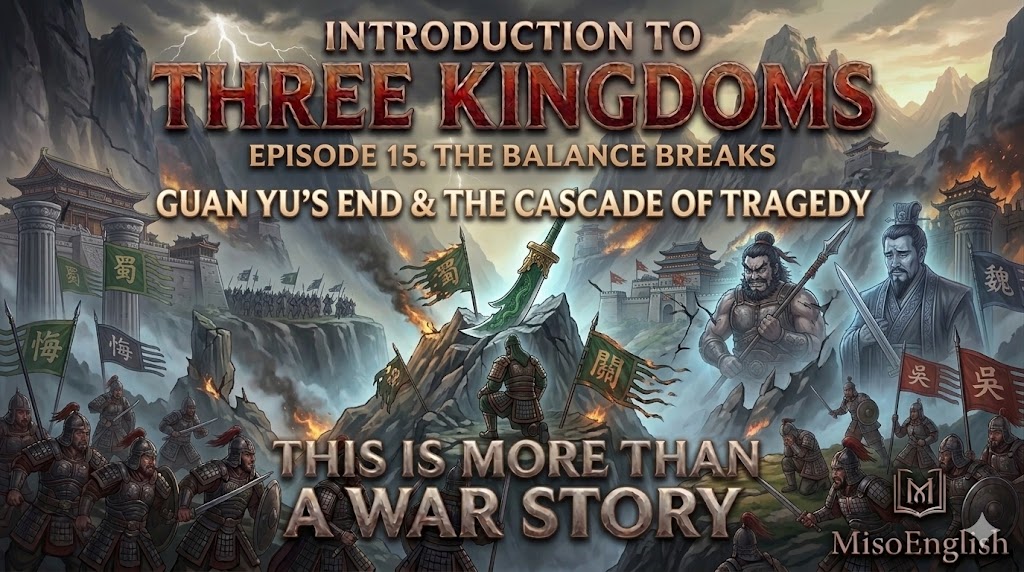
15편. 무너지는 삼국의 균형 — 관우의 최후와 연쇄적인 비극
삼국지에서 가장 가슴 아픈 시간이 찾아옵니다. 219년부터 223년까지, 불과 4년 사이에 촉한의 기둥이었던 세 사람이 차례로 쓰러졌어요. 관우, 장비, 그리고 유비 — 도원결의에서 손을 맞잡았던 세 형제가 연달아 세상을 떠난 거예요. 삼국지를 읽으면서 이 부분에서 책을 덮어버렸다는 사람이 한둘이 아닐 거예요. 그만큼 이 시간은 삼국지 전체에서 가장 비극적인 챕터입니다.
관우의 고립과 최후
10편에서 이야기했듯, 관우는 형주에서 북쪽으로 출병해 조조군을 상대로 눈부신 활약을 펼쳤어요. 수엄칠군으로 우금의 군대를 수장시키고, 조조를 압박하며 천하를 뒤흔들었죠. 하지만 그 순간이 관우의 정점이었어요.
손권의 장수 여몽이 형주를 기습하고, 관우의 군사들이 하나둘 떠나가면서 관우는 급격히 고립됩니다. 관우는 맥성(麥城)이라는 작은 성으로 물러나 버텼어요. 유비에게 구원을 요청했지만, 연락은 닿지 않았죠.
결국 관우는 맥성을 탈출하려다 손권의 군대에 붙잡힙니다. 219년 말, 관우는 아들 **관평(關平)**과 함께 처형됩니다. 청룡언월도를 휘두르며 천하를 호령하던 관우의 최후였어요.
손권은 관우의 목을 조조에게 보냈어요. 조조와 유비 사이를 이간질하려는 의도였죠. 조조는 관우의 목을 받아들고 후하게 장사를 치러줬다고 해요. 적이었지만, 조조도 관우의 인물됨을 인정했던 거예요.
관우가 죽은 후 그는 신격화됐어요. 지금도 중국·대만·홍콩은 물론, 전 세계 화교 사회에서 **관성제군(關聖帝君)**으로 추앙받고 있습니다. 의리와 충성의 상징으로요.
장비의 최후 — 분노가 부른 비극
관우의 죽음은 장비에게 엄청난 충격이었어요. 둘은 도원결의 때부터 함께한 사이였으니까요. 장비는 슬픔과 분노를 주체하지 못했습니다. 부하들에게 흰 상복을 입히라고 명령하고, 조금이라도 늦거나 잘못하면 가혹하게 처벌했어요.
그러던 222년 어느 날 밤, 장비의 부하 **범강(范疆)**과 **장달(張達)**이 잠든 장비의 목을 베었습니다. 혹독한 처벌이 두려웠던 부하들의 배신이었어요. 두 사람은 장비의 목을 들고 손권에게 투항했죠.
장비의 죽음은 관우의 죽음과는 다른 방식으로 비극이었어요. 외부의 적이 아니라, 분노를 다스리지 못한 자신 때문에 자초한 죽음이었거든요. 장비의 거칠고 불같은 성격이 결국 자신의 목숨을 앗아간 겁니다.
유비는 관우의 소식에 이어 장비의 소식을 들었을 때 이렇게 말했다고 해요.
"아, 장비가 죽었구나."
슬픔인지 체념인지 모를 이 한마디가, 유비가 얼마나 지쳐 있었는지를 보여줍니다.
유비의 복수전 — 이릉대전의 비극
관우도, 장비도 잃은 유비는 이성을 잃었어요. 제갈량과 조자룡이 필사적으로 말렸지만 유비는 듣지 않았습니다. 222년, 유비는 직접 대군을 이끌고 손권을 향해 진격했어요.
처음에는 기세가 좋았어요. 오나라의 변경 지역을 차례로 점령하며 깊숙이 파고들었죠. 하지만 육손이 총사령관을 맡으면서 전세가 달라졌어요. 육손은 싸우지 않고 버티는 전략을 택했고, 유비군은 험준한 산악 지대에서 길게 늘어선 채 지쳐갔습니다.
그해 여름, 육손은 화공을 감행했어요. 유비군의 수십 개 진영이 동시에 불타올랐습니다. 유비는 간신히 말에 올라 도망쳤어요. **이릉대전(夷陵之戰)**의 대패였습니다.
유비는 백제성으로 물러났어요. 그리고 다시는 일어나지 못했습니다.
유비의 죽음 — 백제성에서 진 별
223년, 유비는 백제성에서 눈을 감았습니다. 향년 63세였어요. 죽기 전 제갈량에게 어린 아들 유선을 부탁하며 남긴 유언은 13편에서 이미 나왔죠.
유비의 죽음은 단순히 한 군주의 죽음이 아니었어요. 도원결의에서 시작된 세 형제의 이야기가 완전히 끝나는 순간이었습니다. 관우, 장비, 유비 — 세 사람이 복숭아나무 아래서 맺은 약속, "같은 날 죽자"는 그 맹세는 지켜지지 않았어요. 하지만 세 사람이 거의 비슷한 시기에 세상을 떠난 건, 어쩌면 운명이 나름의 방식으로 약속을 지킨 게 아닐까요.
삼국 균형의 붕괴
관우·장비·유비가 차례로 사라지면서 삼국의 균형도 흔들렸어요. 촉한은 최고의 무장들과 군주를 한꺼번에 잃었고, 이릉대전의 패배로 군사력도 크게 약해졌습니다. 이제 촉한의 모든 것은 제갈량 혼자 짊어지게 됐어요.
조조도 220년에 세상을 떠났어요. 그의 아들 조비가 위나라 황제가 됐죠. 삼국지를 이끌었던 1세대 영웅들이 모두 무대에서 내려오고, 이제 2세대의 시대가 시작됩니다.
맺음말
세 형제가 사라진 자리에 남은 건 — 혼자서 모든 짐을 진 제갈량이었어요. 그는 약속을 지키기 위해 끝없이 북쪽을 향해 달려갔습니다. 이길 수 없을지도 모른다는 걸 알면서도요.
다음 편 예고: 제갈량의 북벌 — 다섯 번의 출정, 끝없는 도전, 그리고 오장원의 별이 지다. 천재의 마지막 싸움을 16편에서 만나요!
Episode 15. The Balance Breaks — Guan Yu's End and the Cascade of Tragedy
The most heartbreaking stretch of the Three Kingdoms story arrives now. Between 219 and 223 AD — just four years — three of Shu Han's greatest pillars fell one after another. Guan Yu, Zhang Fei, and Liu Bei himself. The three brothers who had sworn their oath beneath the peach blossoms were all gone within the same brief window of time. There are readers who put the book down at this point and can't pick it back up for a while. That's how much this sequence hits.
Guan Yu's Isolation and End
As we covered in Episode 10, Guan Yu had ridden north from Jing Province and delivered one of the most stunning performances of the entire war — drowning Yu Jin's seven armies and pushing Cao Cao to the brink. But that was the peak.
When Lü Meng seized Jing Province from behind and Guan Yu's soldiers began slipping away to be with their captured families, Guan Yu's force dissolved around him with terrifying speed. He fell back to a small outpost called Maicheng (麥城) and tried to hold on, sending word to Liu Bei for reinforcements. The message never got through in time.
Guan Yu attempted to break out of Maicheng and was captured by Sun Quan's forces. In late 219 AD, he was executed alongside his son Guan Ping (關平). The man who had carried the Green Dragon Crescent Blade across a generation of war was gone.
Sun Quan sent Guan Yu's head to Cao Cao — hoping to shift any blame for the killing onto someone else. Cao Cao reportedly received it and arranged a proper burial. Even an enemy could recognize what Guan Yu was.
In the centuries that followed, Guan Yu was deified. He is worshipped today across China, Taiwan, Hong Kong, and Chinese communities around the world as Guan Sheng Dijun (關聖帝君) — the divine embodiment of loyalty and righteousness.
Zhang Fei's End — Rage as Its Own Undoing
Guan Yu's death shattered Zhang Fei. The two had been side by side since the peach garden. Zhang Fei's grief came out as fury — he ordered his soldiers into mourning whites and began punishing any infraction, however small, with brutal severity.
Then one night in 222 AD, two of his subordinates — Fan Jiang (范疆) and Zhang Da (張達) — crept into his tent while he slept and killed him. They had been living in fear of his rages, and they chose murder over continued service. They took his head to Sun Quan.
Zhang Fei's death was a different kind of tragedy from Guan Yu's. No enemy defeated him. His own uncontrolled anger created the conditions for his end. The fire that made him so ferocious on the battlefield was the same fire that killed him in his sleep.
When Liu Bei received the news — coming so soon after Guan Yu's death — he reportedly said only:
"Ah. Zhang Fei is gone."
Not a cry. Not an outburst. Just those words. They say more about Liu Bei's exhaustion and grief than any lament could.
Liu Bei's Revenge Campaign — The Disaster at Yiling
With both sworn brothers dead, Liu Bei stopped listening to reason. Zhuge Liang argued against it. Zhao Yun argued against it. Liu Bei didn't hear any of it. In 222 AD, he personally led a massive army into Wu territory — driven by nothing but grief and fury.
The early stages went well enough. Wu's frontier positions fell, and Liu Bei pushed deep into enemy territory. Then Lu Xun took command for Sun Quan, and everything changed. Lu Xun refused to engage, letting Liu Bei's extended supply lines grow thinner and his troops grow wearier through months of inaction.
When summer arrived and Liu Bei's forces had moved their camps into the forests and along the riverbanks to escape the heat, Lu Xun struck — fire, again, sweeping through dozens of camps simultaneously. The army that had marched south in anger was consumed in a night. Liu Bei barely escaped on horseback. The Battle of Yiling (夷陵之戰) was the worst defeat Shu Han ever suffered — and it came from a war that never should have been fought.
Liu Bei retreated to White Emperor City. He never left.
Liu Bei's Death — A Star Sets at White Emperor City
In 223 AD, Liu Bei died at White Emperor City. He was 63. His bequest to Zhuge Liang — "if my son is worthy, support him; if not, take the throne yourself" — we already heard in Episode 13.
But it's worth sitting with what his death meant beyond the political. The story that had begun in that peach garden — three men, one oath, one promise to live and die together — was over. They hadn't died on the same day, as the oath had promised. But all three had gone within a few years of each other. Maybe that's the closest fate could manage.
The Balance Collapses
With Guan Yu, Zhang Fei, and Liu Bei gone — and Shu Han's army broken at Yiling — the equilibrium of the Three Kingdoms shifted permanently. Shu Han had lost its finest warriors and its founding emperor in a single terrible season.
Cao Cao had also died in 220 AD, his son Cao Pi taking the throne of Wei. The first generation of the Three Kingdoms — the men who had built the world — had all left the stage. What came next belonged to their successors. And one man above all others would define that next era: Zhuge Liang, now carrying everything alone.
Closing
When the three brothers were gone, what remained was a single man with an impossible promise to keep — marching north again and again toward a goal that grew more distant with every passing year, knowing he might never reach it, going anyway.
Next episode preview: Five expeditions north. An endless road. And a final night under the stars at Wuzhang Plains. Zhuge Liang's last campaign — and the moment the light goes out — in Episode 16!
⚠️ 저작권 안내
본 블로그(MisoEnglish · slowblooms.tistory.com)의 모든 콘텐츠는 저작권법의 보호를 받습니다. 글, 예시 문장, 분석 내용 등 블로그에 게시된 모든 창작물은 저작자의 동의 없이 무단으로 복사, 복제, 배포, 2차 가공하는 행위를 금지합니다. 출처를 밝히지 않은 전재, SNS·커뮤니티·타 블로그 등에의 무단 게시, 상업적 이용은 모두 금지되며, 무단 불펌 적발 시 저작권법에 따라 법적 조치가 취해질 수 있습니다. 콘텐츠 사용 문의는 slowblooms.tistory.com으로 연락 주세요.
© MisoEnglish · slowblooms.tistory.com. All rights reserved.
━━━━━━━━━━━━━━━━━━━━━━━━━━━━━━━━
⚠️ Copyright Notice
All content published on this blog (MisoEnglish · slowblooms.tistory.com) is protected by copyright law. Copying, reproducing, distributing, or adapting any written posts, example sentences, or analyses without the explicit consent of the author is strictly prohibited. Unauthorised reposting on other blogs, social media, online communities, or any public platform — with or without modification — is not permitted, and may result in legal action under applicable copyright law. For content licensing enquiries, please contact us via slowblooms.tistory.com.
© MisoEnglish · slowblooms.tistory.com. All rights reserved.
'The Language Beyond Grammar' 카테고리의 다른 글
| 17편. 인내가 천재를 이기다 — 사마의의 부상과 위나라 권력 이동 (0) | 2026.03.07 |
|---|---|
| 16편. 끝없는 길 — 제갈량의 북벌과 오장원의 별 (0) | 2026.03.06 |
| 14편. 줄타기의 달인 — 손권의 선택, 위와의 동맹 혹은 대립 (0) | 2026.03.06 |
| 13편. 한나라의 불꽃을 다시 — 촉한 건국과 제갈량의 출사표 (0) | 2026.03.06 |
| 12편. 천하의 목줄을 잡아라 — 한중 쟁탈전과 조조·유비의 정면 충돌 (0) | 2026.03.06 |


