
- 분류 전체보기 (1053)

- Linguistics (고급 영어학) (10)
- Stylistics (6)
- Etymology & Word Building (15)
- Philosophy Meets Grammar (6)
- Collection of Famous Quotes (22)
- English Mechanism (276)
- The Language Beyond Grammar (274)
- Living English (81)
- Miso’s Life Notes (18)
- My English Journey and Refl.. (16)
- Philosophy (132)
- Video Clip (16)
- Airline English (항공 영어) (47)
- Creative Corner (35)
- Sally & Sia (1)
| 일 | 월 | 화 | 수 | 목 | 금 | 토 |
|---|---|---|---|---|---|---|
| 1 | 2 | 3 | 4 | |||
| 5 | 6 | 7 | 8 | 9 | 10 | 11 |
| 12 | 13 | 14 | 15 | 16 | 17 | 18 |
| 19 | 20 | 21 | 22 | 23 | 24 | 25 |
| 26 | 27 | 28 | 29 | 30 |
- MisoEnglish#유교철학 #Confucianism #성리학 #NeoConfucianism #인의예지 #Virtue #맹자 #Mencius #실학 #KoreanScholarship
- English Speaking Practice
- ticketing
- 영어접속사
- 영문법
- English in English
- 영어문법
- MisoEnglish#한국철학 #KoreanPhilosophy #홍익인간 #Hongik #화랑도 #Hwarang #단군 #Dangun #풍류도 #ThreeKingdoms#동양철학
- MisoEnglish#철학입문 #Philosophy #심리철학 #PhilosophyOfMind #철학공부 #의식 #마음 #PhilosophyForBeginners #교육콘텐츠 #철학시리즈
- MisoEnglish#철학입문 #Philosophy #정치철학 #PoliticalPhilosophy #철학공부 #정의론 #자유주의 #PhilosophyForBeginners #교육콘텐츠 #철학시리즈
- 영어공부
- English for Korean Learners
- MisoEnglish#철학입문 #Philosophy #형이상학 #Metaphysics #철학공부 #존재론 #실재론 #PhilosophyForBeginners #교육콘텐츠 #철학시리즈
- misoenglish
- 영국사 #영국역사 #세계사 #역사연재 #브리튼에서영국까지
- 동양정치철학 #시리즈완결 #아시아적가치 #동서양비교 #유교 #민주주의 #정치사상 #인문학 #비교철학 #글로벌정치 #문화다양성 #2500년철학사
- 인도철학 #동양철학 #인문학 #요가 #명상 #힌두교 #불교 #간디 #타고르 #정통6파 #철학공부 #마음공부 #MisoEnglish #인문학영어
- EnglishWriting #AcademicWriting #Grammar #EnglishLanguage #EssayWriting #ParagraphStructure #SentenceStructure #BusinessEnglish #EnglishTips #WritingSkills #Linguistics #ESL
- MisoEnglish#철학입문 #Philosophy #종교철학 #PhilosophyOfReligion #철학공부 #신존재증명 #악의문제 #PhilosophyForBeginners #교육콘텐츠 #철학시리즈
- 🌿 English with Heart
- MisoEnglish#불교철학 #BuddhismPhilosophy #사성제 #FourNobleTruths #공사상 #Emptiness #명상 #Mindfulness #열반 #EasternWisdom
- MisoEnglish#도교철학 #Taoism #도덕경 #TaoTeChing #무위자연 #WuWei #노자 #Laozi #장자 #YinYang
- MisoEnglish#철학입문 #Philosophy #과학철학 #PhilosophyOfScience #철학공부 #포퓨퍼 #쿠hn #과학방법론 #교육콘텐츠 #철학시리즈
- pnr
- 감성영어
- everyday English
- MisoEnglish#철학입문 #Philosophy #윤리학 #Ethics #도덕철학 #철학공부 #칸트 #공리주의 #교육콘텐츠 #철학시리즈
- Basic English Verbs
- AirlineOpsEnglish
- 영어회화
- Today
- Total
MisoEnglish
17편. 인내가 천재를 이기다 — 사마의의 부상과 위나라 권력 이동 본문
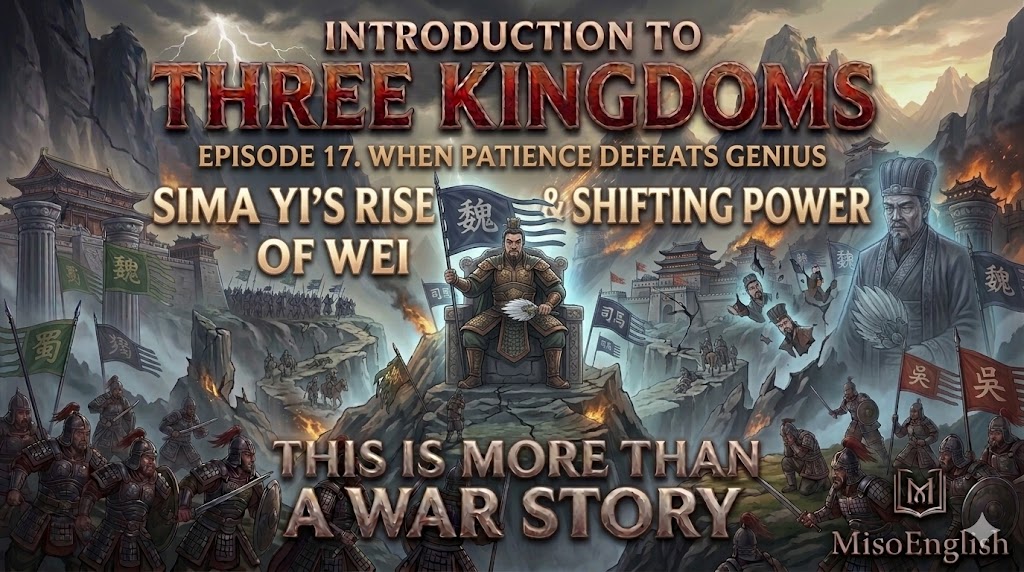
17편. 인내가 천재를 이기다 — 사마의의 부상과 위나라 권력 이동
삼국지에서 가장 오래 살아남은 인물을 꼽으라면 단연 **사마의(司馬懿)**예요. 조조, 유비, 손권, 제갈량 — 삼국지를 이끈 모든 영웅들이 하나씩 사라지는 동안, 사마의는 끝까지 살아남았습니다. 그것도 그냥 살아남은 게 아니라, 위나라의 모든 권력을 손에 쥐었어요. 화려한 천재성도, 뜨거운 카리스마도 아닌 — 오직 인내와 냉철한 계산으로 천하를 손에 넣은 인물, 사마의의 이야기입니다.
사마의는 어떤 인물이었을까
사마의는 179년, 지금의 하남성 일대에서 태어났어요. 명문 사대부 가문 출신으로, 어릴 때부터 총명하다는 평가를 받았죠. 조조가 처음 사마의를 불렀을 때, 사마의는 병을 핑계로 거절했어요. 조조 같은 인물 밑에서 일하는 건 위험하다고 판단했던 거죠.
그런데 조조는 집요했어요. 두 번째 소환 때 "이번에도 안 오면 잡아 가두겠다"고 했고, 사마의는 결국 출사했습니다. 조조는 사마의를 쓰면서도 항상 경계했어요. 사마의에게 **"이리와 같은 눈빛(狼顧之相)"**이 있다며 아들 조비에게 조심하라고 했죠.
"사마의는 신하로 머물 인물이 아니다. 반드시 우리 집안일에 간섭할 것이다."
조조의 예언은 결국 맞았습니다.
조비, 조예 — 두 황제를 섬기다
조조가 죽고 **조비(曹丕)**가 위나라 황제가 됐을 때, 사마의는 핵심 참모로 자리를 잡았어요. 조비는 사마의의 능력을 높이 샀고, 사마의는 조비를 충실히 보좌했습니다. 이 시기 사마의는 철저히 충신의 모습을 유지했어요.
조비가 죽고 **조예(曹叡)**가 즉위했을 때도 마찬가지였어요. 조예는 사마의를 대장군으로 임명하며 군사권을 맡겼는데, 이게 사마의에게 엄청난 기회가 됐습니다. 제갈량의 북벌을 막는 임무를 맡으면서, 사마의는 군대에서 절대적인 신망을 쌓아갔거든요.
제갈량이 아무리 도발해도 나오지 않던 사마의의 전략 — 그 인내가 결국 제갈량을 오장원에서 쓰러지게 만들었어요. 사마의는 천재를 상대하는 법을 알았습니다. 맞서지 않는 것, 그게 답이었어요.
조상과의 권력 다툼 — 병든 척, 숨죽이다
조예가 239년에 죽고 어린 **조방(曹芳)**이 즉위하면서, 위나라 권력은 **조상(曹爽)**이라는 인물이 장악했어요. 조상은 황족 출신으로, 황제의 후견인 역할을 맡으며 실권을 휘둘렀죠. 사마의는 형식적인 직함만 가진 채 밀려났습니다.
조상은 사마의를 경계했어요. 완전히 제거하고 싶었지만, 사마의의 명망이 너무 높아 함부로 할 수 없었죠. 그래서 직접 찾아가 상태를 확인했습니다. 사마의는 침대에 누워 기침을 연신 했고, 죽어가는 노인의 모습을 완벽하게 연기했어요.
"저는 이미 다 됐습니다. 머지않아 죽을 것 같소이다."
조상은 안심하고 돌아갔어요. 사마의는 그때부터 조용히 때를 기다렸습니다. 숨죽이고, 기다리고, 준비했어요.
고평릉 정변 — 하룻밤에 권력을 뒤집다
249년, 기회가 왔어요. 조상이 어린 황제 조방을 데리고 선황의 능묘인 **고평릉(高平陵)**으로 제사를 지내러 나간 거예요. 낙양 성안에 조상의 핵심 세력이 없는 순간이었죠.
사마의는 즉시 움직였어요. 70세가 넘은 노인이 그날 보여준 행동력은 놀라울 정도였습니다. 직접 군대를 이끌고 낙양의 무기고와 성문을 장악했어요. 그리고 황태후의 명령을 빌려 조상을 역적으로 몰았죠.
조상은 완전히 허를 찔렸어요. 참모들이 "황제를 볼모로 삼아 저항하자"고 했지만 조상은 결단을 내리지 못했습니다.
"사마의가 나를 죽이지는 않겠지. 그냥 항복하면 평민으로는 살 수 있을 거야."
조상은 순순히 항복했어요. 사마의는 항복을 받아들이는 척했다가 — 조상과 그 일파를 삼족을 멸하는 형벌로 처단했습니다. 조상은 너무 늦게 깨달았어요. 사마의는 처음부터 살려줄 생각이 없었다는 걸.
고평릉 정변은 하룻밤 만에 위나라의 권력 구도를 완전히 뒤집어놓았습니다. 이제 위나라는 사마의의 나라가 됐어요.
사마의의 죽음 — 하지만 씨앗은 남았다
고평릉 정변 이후 사마의는 위나라의 실질적인 지배자가 됐어요. 하지만 오래가지 않았습니다. 251년, 사마의는 세상을 떠났어요. 향년 73세였습니다.
사마의는 죽었지만, 그가 심어놓은 씨앗은 남았어요. 아들 **사마사(司馬師)**와 **사마소(司馬昭)**가 아버지의 권력을 이어받았고, 위나라를 더욱 강하게 장악했습니다. 사마소는 "사마소의 마음은 길 가는 사람도 다 안다(司馬昭之心, 路人皆知)"는 말이 생길 만큼 노골적으로 황제 자리를 노렸어요.
그리고 사마소의 아들 **사마염(司馬炎)**이 결국 위나라를 무너뜨리고 새 왕조를 세우게 됩니다. 그 이야기는 19편에서 나와요.
사마의가 남긴 것
사마의를 어떻게 평가해야 할까요? 그는 분명 충신이 아니었어요. 조조의 예언대로, 결국 위나라를 집어삼켰으니까요. 하지만 단순한 야심가라고 하기도 어려워요.
사마의는 제갈량이라는 천재와 맞서 끝내 살아남았어요. 조조·조비·조예·조상이라는 네 명의 위나라 권력자를 차례로 섬기며 — 혹은 버티며 — 마지막에 웃었습니다. 화려한 천재성 없이, 오직 인내와 때를 기다리는 능력으로 삼국지의 최후 승자에 가장 가까운 인물이 됐어요.
삼국지가 우리에게 주는 교훈 중 하나가 여기 있는지도 모릅니다.
"때로는 가장 오래 버티는 자가 이긴다."
맺음말
사마의가 씨앗을 뿌려놓은 권력은 이제 그의 후손들에게로 넘어갑니다. 그리고 그 권력이 자라는 동안, 촉한과 오나라는 서서히 쇠퇴의 길을 걷기 시작해요. 삼국지의 마지막 장이 조금씩 넘어가고 있습니다.
다음 편 예고: 제갈량 없는 촉한, 손권 없는 오나라 — 세 영웅 세력의 내리막길. 삼국이 서서히 저물어가는 이야기를 18편에서 만나요!
#삼국지 #삼국지17편 #사마의 #고평릉정변 #조상 #위나라 #사마사 #사마소 #사마염 #인내 #중국역사 #역사블로그
Episode 17. When Patience Defeats Genius — Sima Yi's Rise and the Shifting Power of Wei
If you had to name the last man standing in the Three Kingdoms, it would be Sima Yi (司馬懿) — and it wouldn't be a close contest. Cao Cao, Liu Bei, Sun Quan, Zhuge Liang — one by one, every great figure of the age left the stage. Sima Yi remained. Not just surviving, but ending up with everything. Not through dazzling brilliance or battlefield glory — through patience, cold calculation, and an almost inhuman ability to wait for the right moment. This is his story.
Who Was Sima Yi?
Sima Yi was born in 179 AD into a prominent aristocratic family in what is now Henan province. He was recognized as exceptionally gifted from childhood. When Cao Cao first summoned him to service, Sima Yi refused — claiming illness. Working for someone like Cao Cao, he calculated, was dangerous.
Cao Cao was not easily refused. The second summons came with a threat: come, or be arrested. Sima Yi came. Cao Cao used him — but never entirely trusted him. He noticed what he described as a "wolf's gaze" (狼顧之相) in Sima Yi, and warned his son Cao Pi directly:
"Sima Yi is not the kind of man who will remain a subject. He will eventually interfere in our family's affairs."
Cao Cao's instinct was correct in every detail.
Serving Two Emperors — Building Power in Plain Sight
When Cao Cao died and Cao Pi (曹丕) became the first emperor of Wei, Sima Yi settled in as a core advisor. Cao Pi valued him highly, and Sima Yi served with conspicuous loyalty. He gave no one a reason to move against him.
When Cao Pi died and Cao Rui (曹叡) took the throne, Sima Yi was appointed as a top military commander — which turned out to be the opportunity that changed everything. He was given responsibility for defending Wei against Zhuge Liang's Northern Expeditions. Five times Zhuge Liang came north, and five times Sima Yi held the line by refusing to be drawn into a decisive engagement.
His strategy against Zhuge Liang was pure patience — absorb the pressure, don't fight, let the supply lines do the work. The genius kept pushing. The patient man kept waiting. When Zhuge Liang died at Wuzhang Plains, Sima Yi had won without ever needing to win a battle.
Cao Shuang and the Performance of a Dying Man
Cao Rui died in 239 AD, leaving behind a child emperor, Cao Fang (曹芳). Real power passed to a regent named Cao Shuang (曹爽) — an imperial clansman who quickly consolidated control and pushed Sima Yi to the margins, leaving him with an impressive title and no real authority.
Cao Shuang was wary of Sima Yi but couldn't move against him outright — Sima Yi's reputation and prestige were too great. So he came to check on him personally. What he found was a frail, coughing old man barely able to sit up in bed — a man who seemed to have one foot already in the grave.
"I'm finished, I'm afraid. I don't expect to last much longer."
Cao Shuang left reassured. Sima Yi had given the performance of his life. And from that moment, he went quiet — watching, waiting, and preparing.
The Gaopingling Coup — One Night Changes Everything
In 249 AD, the moment arrived. Cao Shuang took the young emperor out of the capital to perform ancestral rites at the Gaopingling (高平陵) mausoleum. For one day, his inner circle was outside Luoyang.
Sima Yi moved immediately. The old man who had been playing invalid showed a ferocity of action that left people stunned. He personally led troops to seize the capital's armories and gates, then invoked the empress dowager's authority to declare Cao Shuang a traitor.
Cao Shuang was caught completely flat-footed. His advisors urged him to use the emperor as leverage and fight back. Cao Shuang couldn't bring himself to act decisively — the very flaw that had always made him a lesser man than he appeared.
"Sima Yi won't actually kill me. If I surrender, at least I'll live as a commoner."
He surrendered. Sima Yi accepted the surrender graciously — and then had Cao Shuang and his entire faction executed, extending the punishment to three generations of their families. Cao Shuang realized too late what Sima Yi had been from the very beginning. He had never had any intention of letting him live.
The Gaopingling Coup overturned Wei's entire power structure in a single night. Wei now belonged to Sima Yi.
Sima Yi's Death — But the Seed Remained
After the coup, Sima Yi was the uncontested master of Wei. He didn't live long to enjoy it. In 251 AD, he died at the age of 73.
But the power he had built didn't die with him. His sons Sima Shi (司馬師) and Sima Zhao (司馬昭) inherited his position and tightened the family's grip on Wei even further. Sima Zhao became so nakedly ambitious that a saying circulated through the capital: "Sima Zhao's intentions are known to every passerby (司馬昭之心, 路人皆知)" — meaning he wasn't even bothering to hide his designs on the throne anymore.
It would be Sima Zhao's son, Sima Yan (司馬炎), who finally completed what the family had been building across three generations — dismantling Wei and founding a new dynasty entirely. That story comes in Episode 19.
What Sima Yi Left Behind
How should we judge Sima Yi? He was certainly not loyal in any conventional sense — Cao Cao's warning proved entirely accurate. But he's hard to dismiss as a simple opportunist either.
He faced Zhuge Liang — one of the most brilliant strategic minds in Chinese history — and outlasted him. He served four successive Wei rulers, navigating the treacherous politics of each transition, and emerged from all of it holding every card. Without battlefield genius or personal charisma of the Liu Bei variety, he became the closest thing to a final winner the Three Kingdoms produced.
There's a lesson somewhere in that. Maybe this one:
"Sometimes the one who lasts the longest is the one who wins."
Closing
The seed Sima Yi planted was growing fast. His sons would water it. His grandson would harvest it. And while all of that was happening, the kingdoms of Shu and Wu were quietly entering their long decline — the final chapters of the Three Kingdoms turning slowly toward their end.
Next episode preview: Shu Han without Zhuge Liang. Wu without Sun Quan. The three kingdoms begin their long fade — and the curtain of the Three Kingdoms era slowly descends. See you in Episode 18!
⚠️ 저작권 안내
본 블로그(MisoEnglish · slowblooms.tistory.com)의 모든 콘텐츠는 저작권법의 보호를 받습니다. 글, 예시 문장, 분석 내용 등 블로그에 게시된 모든 창작물은 저작자의 동의 없이 무단으로 복사, 복제, 배포, 2차 가공하는 행위를 금지합니다. 출처를 밝히지 않은 전재, SNS·커뮤니티·타 블로그 등에의 무단 게시, 상업적 이용은 모두 금지되며, 무단 불펌 적발 시 저작권법에 따라 법적 조치가 취해질 수 있습니다. 콘텐츠 사용 문의는 slowblooms.tistory.com으로 연락 주세요.
© MisoEnglish · slowblooms.tistory.com. All rights reserved.
━━━━━━━━━━━━━━━━━━━━━━━━━━━━━━━━
⚠️ Copyright Notice
All content published on this blog (MisoEnglish · slowblooms.tistory.com) is protected by copyright law. Copying, reproducing, distributing, or adapting any written posts, example sentences, or analyses without the explicit consent of the author is strictly prohibited. Unauthorised reposting on other blogs, social media, online communities, or any public platform — with or without modification — is not permitted, and may result in legal action under applicable copyright law. For content licensing enquiries, please contact us via slowblooms.tistory.com.
© MisoEnglish · slowblooms.tistory.com. All rights reserved.
'The Language Beyond Grammar' 카테고리의 다른 글
| 19편. 천하는 하나로 — 사마씨의 진나라 창업과 삼국의 종말 (0) | 2026.03.07 |
|---|---|
| 18편. 저무는 영웅들의 시대 — 촉과 오의 쇠퇴, 삼국의 황혼 (0) | 2026.03.07 |
| 16편. 끝없는 길 — 제갈량의 북벌과 오장원의 별 (0) | 2026.03.06 |
| 15편. 무너지는 삼국의 균형 — 관우의 최후와 연쇄적인 비극 (1) | 2026.03.06 |
| 14편. 줄타기의 달인 — 손권의 선택, 위와의 동맹 혹은 대립 (0) | 2026.03.06 |


