
- 분류 전체보기 (1053)

- Linguistics (고급 영어학) (10)
- Stylistics (6)
- Etymology & Word Building (15)
- Philosophy Meets Grammar (6)
- Collection of Famous Quotes (22)
- English Mechanism (276)
- The Language Beyond Grammar (274)
- Living English (81)
- Miso’s Life Notes (18)
- My English Journey and Refl.. (16)
- Philosophy (132)
- Video Clip (16)
- Airline English (항공 영어) (47)
- Creative Corner (35)
- Sally & Sia (1)
| 일 | 월 | 화 | 수 | 목 | 금 | 토 |
|---|---|---|---|---|---|---|
| 1 | 2 | 3 | 4 | |||
| 5 | 6 | 7 | 8 | 9 | 10 | 11 |
| 12 | 13 | 14 | 15 | 16 | 17 | 18 |
| 19 | 20 | 21 | 22 | 23 | 24 | 25 |
| 26 | 27 | 28 | 29 | 30 |
- MisoEnglish#철학입문 #Philosophy #정치철학 #PoliticalPhilosophy #철학공부 #정의론 #자유주의 #PhilosophyForBeginners #교육콘텐츠 #철학시리즈
- 영어회화
- MisoEnglish#한국철학 #KoreanPhilosophy #홍익인간 #Hongik #화랑도 #Hwarang #단군 #Dangun #풍류도 #ThreeKingdoms#동양철학
- 🌿 English with Heart
- 영어문법
- MisoEnglish#철학입문 #Philosophy #종교철학 #PhilosophyOfReligion #철학공부 #신존재증명 #악의문제 #PhilosophyForBeginners #교육콘텐츠 #철학시리즈
- 감성영어
- Basic English Verbs
- English in English
- 인도철학 #동양철학 #인문학 #요가 #명상 #힌두교 #불교 #간디 #타고르 #정통6파 #철학공부 #마음공부 #MisoEnglish #인문학영어
- 영국사 #영국역사 #세계사 #역사연재 #브리튼에서영국까지
- MisoEnglish#도교철학 #Taoism #도덕경 #TaoTeChing #무위자연 #WuWei #노자 #Laozi #장자 #YinYang
- EnglishWriting #AcademicWriting #Grammar #EnglishLanguage #EssayWriting #ParagraphStructure #SentenceStructure #BusinessEnglish #EnglishTips #WritingSkills #Linguistics #ESL
- MisoEnglish#철학입문 #Philosophy #윤리학 #Ethics #도덕철학 #철학공부 #칸트 #공리주의 #교육콘텐츠 #철학시리즈
- MisoEnglish#철학입문 #Philosophy #형이상학 #Metaphysics #철학공부 #존재론 #실재론 #PhilosophyForBeginners #교육콘텐츠 #철학시리즈
- 동양정치철학 #시리즈완결 #아시아적가치 #동서양비교 #유교 #민주주의 #정치사상 #인문학 #비교철학 #글로벌정치 #문화다양성 #2500년철학사
- ticketing
- misoenglish
- English for Korean Learners
- MisoEnglish#유교철학 #Confucianism #성리학 #NeoConfucianism #인의예지 #Virtue #맹자 #Mencius #실학 #KoreanScholarship
- MisoEnglish#불교철학 #BuddhismPhilosophy #사성제 #FourNobleTruths #공사상 #Emptiness #명상 #Mindfulness #열반 #EasternWisdom
- MisoEnglish#철학입문 #Philosophy #과학철학 #PhilosophyOfScience #철학공부 #포퓨퍼 #쿠hn #과학방법론 #교육콘텐츠 #철학시리즈
- 영문법
- 영어공부
- MisoEnglish#철학입문 #Philosophy #심리철학 #PhilosophyOfMind #철학공부 #의식 #마음 #PhilosophyForBeginners #교육콘텐츠 #철학시리즈
- 영어접속사
- AirlineOpsEnglish
- everyday English
- English Speaking Practice
- pnr
- Today
- Total
MisoEnglish
19편. 천하는 하나로 — 사마씨의 진나라 창업과 삼국의 종말 본문
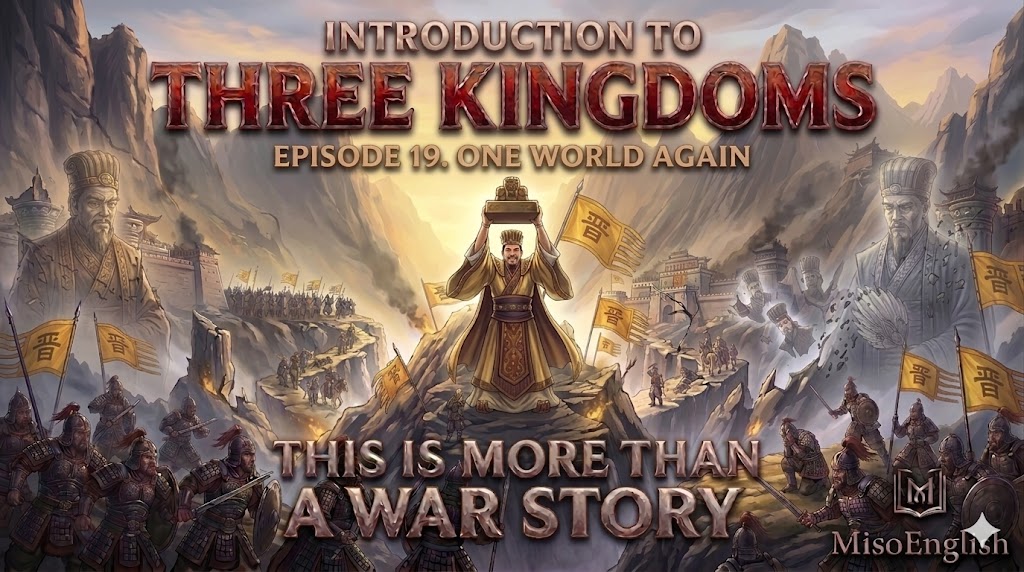
19편. 천하는 하나로 — 사마씨의 진나라 창업과 삼국의 종말
삼국지의 마지막 페이지입니다. 100년 가까이 이어진 난세가 드디어 끝나는 순간이에요. 조조가 꿈꿨던 통일, 유비가 바랐던 한나라의 회복, 손권이 지키려 했던 강남의 독립 — 그 어느 것도 아닌, 전혀 예상치 못한 결말이 기다리고 있었습니다. 무대의 주인공은 이제 **사마염(司馬炎)**이에요. 할아버지 사마의가 씨앗을 뿌리고, 아버지 사마소가 물을 준 권력의 나무 — 사마염이 그 열매를 따는 순간이 왔습니다.
사마소의 야망 — 길 가는 사람도 다 안다
사마의가 고평릉 정변으로 위나라 권력을 장악한 후, 그 권력은 아들 사마사와 사마소에게 차례로 넘어갔어요. 특히 **사마소(司馬昭)**의 야망은 너무 노골적이어서, 당시 사람들이 이런 말을 했습니다.
"사마소의 마음은 길 가는 사람도 다 안다(司馬昭之心, 路人皆知)."
황제 자리를 노린다는 게 너무 뻔히 보인다는 뜻이었어요. 실제로 사마소는 황제를 허수아비로 만들고 모든 실권을 쥐었습니다. 심지어 위나라 황제 **조모(曹髦)**가 "차라리 죽겠다"며 직접 칼을 들고 사마소를 치러 나왔다가 — 사마소의 부하에게 길에서 살해당하는 충격적인 사건도 있었어요. 황제가 길에서 신하에게 죽임을 당하다니 — 위나라는 이미 이름뿐인 나라였습니다.
사마소는 결국 황제 자리에 오르지 못하고 265년에 세상을 떠났어요. 하지만 그가 닦아놓은 길 위에, 아들 사마염이 올라섰습니다.
사마염, 진나라를 세우다
265년, 사마소가 죽자 그 아들 **사마염(司馬炎)**이 권력을 이어받았어요. 사마염은 아버지보다 한 발짝 더 나아갔습니다. 마지막 위나라 황제 **조환(曹奐)**에게 선양(禪讓) — 황제 자리를 자발적으로 넘겨받는 형식 — 을 받아냈어요.
물론 진짜 자발적인 건 아니었어요. 강요에 의한 형식적인 절차였죠. 하지만 이렇게 하면 역사적으로 "찬탈"이 아닌 "정통한 계승"처럼 보일 수 있었거든요. 조비가 한나라 헌제에게 선양을 받은 것처럼요.
265년, 사마염은 진(晉)나라를 건국하고 초대 황제 **무제(武帝)**가 됩니다. 위나라는 역사 속으로 사라졌어요. 조조가 평생을 바쳐 쌓아 올린 위나라가 — 그의 후손이 아닌 사마씨의 손에 넘어간 거예요. 역사의 아이러니가 이보다 클 수 없었습니다.
마지막 남은 오나라
이제 삼국 중 마지막으로 남은 건 오나라였어요. 하지만 오나라는 이미 18편에서 보셨듯이 내부부터 썩어 있었습니다. 마지막 황제 손호의 폭정으로 민심은 완전히 떠났고, 군사력도 예전 같지 않았어요.
사마염은 서두르지 않았어요. 먼저 내부를 안정시키고, 경제를 회복하며, 충분히 준비한 뒤 오나라를 공략했습니다. 280년, 진나라의 대군이 양쯔강을 건넜어요.
오나라의 마지막 방어선은 양쯔강이었어요. 강 위에 쇠사슬을 쳐놓고 적의 함선을 막으려 했죠. 그런데 진나라 장수 **왕준(王濬)**이 기발한 방법을 썼어요. 거대한 뗏목에 불을 붙여 쇠사슬을 녹여버린 거예요. 방어선이 무너지자 진나라 군대는 양쯔강을 넘어 순식간에 오나라 심장부로 진격했습니다.
손호는 스스로 포박하고 항복했어요. 오나라는 멸망했습니다.
280년 — 삼국이 완전히 하나로 합쳐지는 순간이었어요.
손호의 항복 — 씁쓸한 결말
항복한 손호가 사마염 앞에 끌려왔을 때, 사마염이 말했어요.
"짐이 남쪽에 그대를 위한 자리를 오래 비워두었소."
사마염은 손호를 죽이지 않았어요. 귀명후(歸命侯)라는 작위를 주고 살려뒀습니다. 유선이 위나라에서 여생을 보낸 것처럼, 손호도 진나라에서 여생을 보냈어요.
삼국의 세 황제 — 조환, 유선, 손호 — 모두 전쟁이 아닌 항복으로 끝을 맞이했습니다. 영웅들의 시대가 끝나고, 생존의 시대가 된 거예요.
삼국지가 남긴 질문
삼국지는 끝났지만, 이 이야기가 우리에게 던지는 질문은 끝나지 않았어요.
조조는 옳았을까요? 목적을 위해 수단을 가리지 않는 냉혹한 현실주의 — 그게 난세에서 살아남는 유일한 방법이었을까요?
유비는 너무 이상주의적이었을까요? 명분과 의리를 끝까지 붙들었던 그가 결국 이루지 못한 꿈 — 그건 실패였을까요, 아니면 다른 의미의 승리였을까요?
제갈량은 행복했을까요? 이길 수 없는 싸움인 줄 알면서도 끝까지 달려간 그의 삶 — 그건 비극이었을까요, 아니면 숭고함이었을까요?
그리고 사마의 — 모두가 쓰러지는 동안 끝까지 살아남아 결국 천하를 손에 넣은 그 — 그가 진짜 승자였을까요?
삼국지는 이 질문들에 명확한 답을 주지 않아요. 그래서 1,800년이 지난 지금도, 사람마다 다른 답을 찾으며 이 이야기를 읽는 거겠죠.
맺음말
위·촉·오 세 나라는 모두 사라졌어요. 하지만 이 이야기에 등장한 인물들 — 조조의 냉철함, 유비의 인덕, 관우의 의리, 제갈량의 지혜, 손권의 현실감각, 사마의의 인내 — 이 모든 것들은 지금도 살아 있습니다. 우리가 사람을 볼 때, 세상을 볼 때, 역사를 볼 때 — 삼국지의 인물들이 떠오르는 건 그 때문이에요.
다음 편 예고: 마지막 20편에서는 삼국지가 남긴 인물들, 전략, 그리고 오늘의 의미를 함께 돌아봅니다. 1,800년을 넘어 지금 우리에게 삼국지가 말하는 것, 마지막 편에서 만나요!
Episode 19. One World Again — The Founding of Jin and the End of the Three Kingdoms
This is the final page of the Three Kingdoms. Nearly a hundred years of chaos reaching its conclusion. Cao Cao's dream of unification, Liu Bei's vision of a restored Han, Sun Quan's independent southern empire — none of them got what they wanted. The ending that arrived was one nobody had anticipated. The man who closed the book on the Three Kingdoms was Sima Yan (司馬炎) — harvesting the power his grandfather had planted and his father had grown.
Sima Zhao's Ambition — Everyone Could See It
After the Gaopingling Coup, Sima Yi's power passed first to his son Sima Shi and then to Sima Zhao (司馬昭). Sima Zhao's designs on the throne were so transparent that people in the capital started saying:
"Sima Zhao's intentions are known to every passerby (司馬昭之心,路人皆知)."
He had made the Wei emperor a puppet so completely that when the emperor Cao Mao (曹髦) — young, furious, and at the end of his rope — actually picked up a sword and marched out to confront Sima Zhao personally, he was cut down in the street by Sima Zhao's retainers. An emperor, killed in public by his subject's men. Wei was a kingdom in name only.
Sima Zhao died in 265 AD before he could take the final step himself. He left that for his son.
Sima Yan Founds the Jin Dynasty
In 265 AD, Sima Yan (司馬炎) inherited his father's position and went one step further. He obtained a formal abdication — Shanrang (禪讓) — from the last Wei emperor, Cao Huan (曹奐). The transfer was entirely coerced, of course, but the ritual mattered. It dressed conquest in the language of legitimate succession, just as Cao Pi had done to Han's last emperor decades earlier.
Sima Yan declared the founding of the Jin Dynasty (晉) and took the title Emperor Wu. Wei was finished. The kingdom Cao Cao had spent his entire life building — conquered not by Liu Bei or Sun Quan, but by the family of a man Cao Cao himself had warned his sons about. History's ironies rarely cut this deep.
Wu's Last Stand
Of the original three kingdoms, only Wu now remained. But as we saw in Episode 18, Wu had already been hollowing out from within. The last emperor, Sun Hao, had destroyed whatever loyalty and fighting spirit remained through years of cruelty and excess.
Sima Yan was patient. He stabilized the Jin interior first, rebuilt the economy, and prepared thoroughly before moving south. In 280 AD, Jin's armies crossed the Yangtze.
Wu's last line of defense was the river itself. They stretched iron chains across the water to block the Jin fleet. Jin's commander Wang Jun (王濬) burned through the chains with giant fire-rafts. The barrier dissolved. Jin's army poured across the Yangtze and drove straight into the Wu heartland.
Sun Hao bound his own hands and surrendered.
In 280 AD, Wu ceased to exist. The Three Kingdoms were one.
The Bitter Symmetry of the Endings
When Sun Hao was brought before Sima Yan, the emperor said:
"I have kept a seat vacant for you in the south for a long time."
Sima Yan didn't execute him. Sun Hao was given a noble title and allowed to live out his days in Jin — the same fate that had met Liu Shan in Wei years earlier.
All three of the final emperors — Cao Huan of Wei, Liu Shan of Shu, Sun Hao of Wu — ended their reigns not on the battlefield, but in surrender. The age of heroes had given way to the age of survivors. The men who finished the story weren't the men who had started it.
The Questions the Three Kingdoms Leave Behind
The story is over. But the questions it raises haven't gone anywhere.
Was Cao Cao right? Is cold, unsentimental realism the only reliable way to navigate a world in chaos?
Was Liu Bei too idealistic? He never achieved what he set out to achieve — was that failure, or was there another kind of meaning in a life lived according to principle?
Was Zhuge Liang happy? He ran toward an unwinnable campaign until his body gave out. Was that tragedy, or was it something closer to nobility?
And Sima Yi — the man who outlasted every single one of them and ended up with everything — was he the real winner?
The Three Kingdoms doesn't answer these questions. That's precisely why people have been reading it for 1,800 years, each finding their own answers, each seeing different things in the same story.
Closing
Wei, Shu, and Wu are all gone. But what they left behind — Cao Cao's cold clarity, Liu Bei's moral conviction, Guan Yu's loyalty, Zhuge Liang's brilliance, Sun Quan's pragmatism, Sima Yi's endurance — none of that has gone anywhere. It's why these figures come to mind when we think about leadership, friendship, betrayal, and the choices people make under pressure. The Three Kingdoms ended in 280 AD. The conversation it started never did.
Next episode preview: In the final episode, we look back at everything — the people, the strategies, and what the Three Kingdoms still means today. What does a 1,800-year-old story have to say to us now? The conclusion arrives in Episode 20!
⚠️ 저작권 안내
본 블로그(MisoEnglish · slowblooms.tistory.com)의 모든 콘텐츠는 저작권법의 보호를 받습니다. 글, 예시 문장, 분석 내용 등 블로그에 게시된 모든 창작물은 저작자의 동의 없이 무단으로 복사, 복제, 배포, 2차 가공하는 행위를 금지합니다. 출처를 밝히지 않은 전재, SNS·커뮤니티·타 블로그 등에의 무단 게시, 상업적 이용은 모두 금지되며, 무단 불펌 적발 시 저작권법에 따라 법적 조치가 취해질 수 있습니다. 콘텐츠 사용 문의는 slowblooms.tistory.com으로 연락 주세요.
© MisoEnglish · slowblooms.tistory.com. All rights reserved.
━━━━━━━━━━━━━━━━━━━━━━━━━━━━━━━━
⚠️ Copyright Notice
All content published on this blog (MisoEnglish · slowblooms.tistory.com) is protected by copyright law. Copying, reproducing, distributing, or adapting any written posts, example sentences, or analyses without the explicit consent of the author is strictly prohibited. Unauthorised reposting on other blogs, social media, online communities, or any public platform — with or without modification — is not permitted, and may result in legal action under applicable copyright law. For content licensing enquiries, please contact us via slowblooms.tistory.com.
© MisoEnglish · slowblooms.tistory.com. All rights reserved.
'The Language Beyond Grammar' 카테고리의 다른 글
| 에필로그. 이야기가 끝난 자리에 — 삼국지를 덮으며 (1) | 2026.03.07 |
|---|---|
| 20편. 1,800년을 건너온 이야기 — 삼국지가 남긴 인물들, 전략, 그리고 오늘의 의미 (0) | 2026.03.07 |
| 18편. 저무는 영웅들의 시대 — 촉과 오의 쇠퇴, 삼국의 황혼 (0) | 2026.03.07 |
| 17편. 인내가 천재를 이기다 — 사마의의 부상과 위나라 권력 이동 (0) | 2026.03.07 |
| 16편. 끝없는 길 — 제갈량의 북벌과 오장원의 별 (0) | 2026.03.06 |


