
- 분류 전체보기 (1053)

- Linguistics (고급 영어학) (10)
- Stylistics (6)
- Etymology & Word Building (15)
- Philosophy Meets Grammar (6)
- Collection of Famous Quotes (22)
- English Mechanism (276)
- The Language Beyond Grammar (274)
- Living English (81)
- Miso’s Life Notes (18)
- My English Journey and Refl.. (16)
- Philosophy (132)
- Video Clip (16)
- Airline English (항공 영어) (47)
- Creative Corner (35)
- Sally & Sia (1)
| 일 | 월 | 화 | 수 | 목 | 금 | 토 |
|---|---|---|---|---|---|---|
| 1 | 2 | 3 | 4 | |||
| 5 | 6 | 7 | 8 | 9 | 10 | 11 |
| 12 | 13 | 14 | 15 | 16 | 17 | 18 |
| 19 | 20 | 21 | 22 | 23 | 24 | 25 |
| 26 | 27 | 28 | 29 | 30 |
- 영어공부
- everyday English
- misoenglish
- 영문법
- English in English
- MisoEnglish#철학입문 #Philosophy #형이상학 #Metaphysics #철학공부 #존재론 #실재론 #PhilosophyForBeginners #교육콘텐츠 #철학시리즈
- 인도철학 #동양철학 #인문학 #요가 #명상 #힌두교 #불교 #간디 #타고르 #정통6파 #철학공부 #마음공부 #MisoEnglish #인문학영어
- MisoEnglish#한국철학 #KoreanPhilosophy #홍익인간 #Hongik #화랑도 #Hwarang #단군 #Dangun #풍류도 #ThreeKingdoms#동양철학
- MisoEnglish#유교철학 #Confucianism #성리학 #NeoConfucianism #인의예지 #Virtue #맹자 #Mencius #실학 #KoreanScholarship
- MisoEnglish#철학입문 #Philosophy #심리철학 #PhilosophyOfMind #철학공부 #의식 #마음 #PhilosophyForBeginners #교육콘텐츠 #철학시리즈
- 영국사 #영국역사 #세계사 #역사연재 #브리튼에서영국까지
- EnglishWriting #AcademicWriting #Grammar #EnglishLanguage #EssayWriting #ParagraphStructure #SentenceStructure #BusinessEnglish #EnglishTips #WritingSkills #Linguistics #ESL
- MisoEnglish#불교철학 #BuddhismPhilosophy #사성제 #FourNobleTruths #공사상 #Emptiness #명상 #Mindfulness #열반 #EasternWisdom
- 영어회화
- ticketing
- MisoEnglish#철학입문 #Philosophy #과학철학 #PhilosophyOfScience #철학공부 #포퓨퍼 #쿠hn #과학방법론 #교육콘텐츠 #철학시리즈
- 감성영어
- 영어문법
- MisoEnglish#철학입문 #Philosophy #종교철학 #PhilosophyOfReligion #철학공부 #신존재증명 #악의문제 #PhilosophyForBeginners #교육콘텐츠 #철학시리즈
- 동양정치철학 #시리즈완결 #아시아적가치 #동서양비교 #유교 #민주주의 #정치사상 #인문학 #비교철학 #글로벌정치 #문화다양성 #2500년철학사
- pnr
- MisoEnglish#도교철학 #Taoism #도덕경 #TaoTeChing #무위자연 #WuWei #노자 #Laozi #장자 #YinYang
- Basic English Verbs
- AirlineOpsEnglish
- 🌿 English with Heart
- MisoEnglish#철학입문 #Philosophy #정치철학 #PoliticalPhilosophy #철학공부 #정의론 #자유주의 #PhilosophyForBeginners #교육콘텐츠 #철학시리즈
- 영어접속사
- MisoEnglish#철학입문 #Philosophy #윤리학 #Ethics #도덕철학 #철학공부 #칸트 #공리주의 #교육콘텐츠 #철학시리즈
- English Speaking Practice
- English for Korean Learners
- Today
- Total
MisoEnglish
20편. 1,800년을 건너온 이야기 — 삼국지가 남긴 인물들, 전략, 그리고 오늘의 의미 본문
20편. 1,800년을 건너온 이야기 — 삼국지가 남긴 인물들, 전략, 그리고 오늘의 의미
slowblooms 2026. 3. 7. 10:53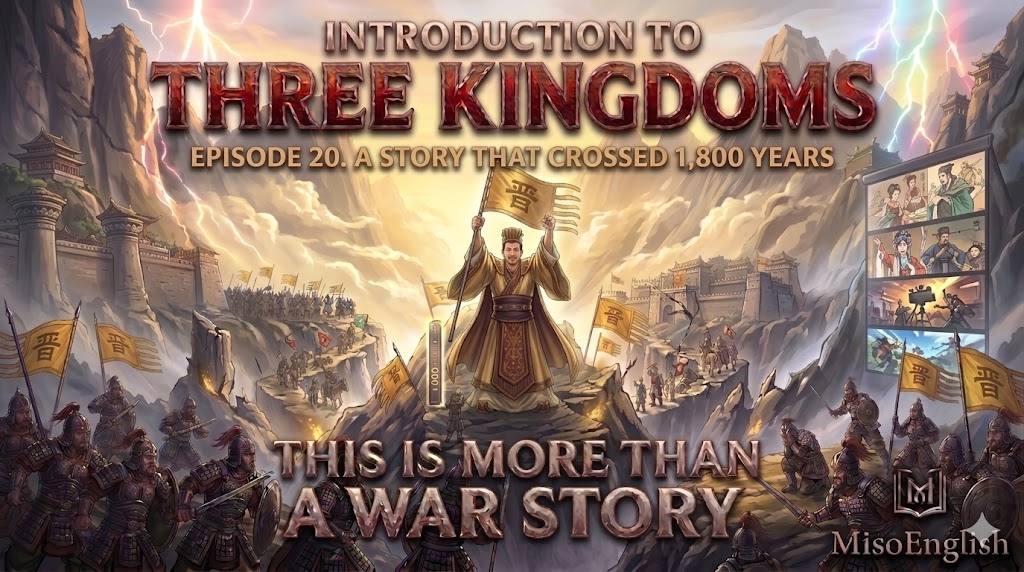
20편. 1,800년을 건너온 이야기 — 삼국지가 남긴 인물들, 전략, 그리고 오늘의 의미
드디어 마지막 편입니다. 예고편부터 시작해 19편까지 — 긴 여정이었어요. 삼국지는 280년, 진나라가 천하를 통일하면서 역사적으로는 끝이 났어요. 하지만 이 이야기는 그 후로도 1,800년 동안 살아남았습니다. 소설이 되고, 드라마가 되고, 게임이 되고, 영화가 됐어요. 왜일까요? 삼국지에는 시대를 초월하는 무언가가 있기 때문입니다. 마지막 편에서는 삼국지가 우리에게 남긴 것들을 함께 돌아봅니다.
삼국지가 만들어진 두 개의 층
삼국지를 이야기할 때 꼭 짚어야 할 게 있어요. 삼국지에는 두 개의 층이 있습니다.
하나는 정사 삼국지(正史三國志) — 3세기 역사가 **진수(陳壽)**가 쓴 실제 역사서예요. 사실에 근거한 기록이지만, 건조하고 간결합니다.
다른 하나는 삼국지연의(三國志演義) — 14세기 소설가 **나관중(羅貫中)**이 정사를 바탕으로 살을 붙여 쓴 소설이에요. 우리가 알고 있는 도원결의, 적벽대전의 화공, 공성계, 읍참마속 같은 극적인 장면들은 대부분 이 소설에서 나왔습니다.
이 시리즈에서도 두 가지를 함께 다뤘어요. 역사적 사실과 소설적 각색을 구분하면서도, 이야기의 흐름과 인물의 매력을 최대한 살리려 했습니다. 삼국지가 위대한 건 역사와 이야기가 절묘하게 섞여 있기 때문이에요.
삼국지의 인물들 — 지금 우리 곁에도 있다
삼국지가 1,800년을 살아남은 가장 큰 이유는 인물 때문이에요. 이 이야기에 등장하는 사람들은 옛날 중국 사람이 아니에요. 지금 우리 주변에서도 만날 수 있는 사람들입니다.
조조는 능력 있는 상사예요. 일 잘하고, 인재를 알아보고, 결과를 만들어내죠. 하지만 때로는 너무 냉혹해서 사람들이 두려워합니다. 회사에서 한 명쯤 있죠.
유비는 덕망 있는 리더예요. 실력보다 인품으로 사람을 모으고, 약자를 챙기고, 끝까지 포기하지 않습니다. 함께 일하고 싶은 사람이지만, 때로는 너무 이상적이어서 현실에서 힘들기도 해요.
제갈량은 완벽주의 참모예요. 모든 걸 혼자 다 하려 하고, 아무것도 믿고 맡기지 못하며, 결국 과로로 쓰러집니다. 능력은 최고지만, 번아웃의 화신이기도 해요.
관우는 의리파예요. 한번 맺은 인연은 죽어도 버리지 않고, 은혜는 반드시 갚습니다. 그 의리가 때로는 판단을 흐리게 하지만, 그래도 곁에 있으면 든든한 사람이죠.
손권은 실용주의자예요. 감정보다 이익을 먼저 따지고, 상황에 따라 유연하게 움직입니다. 화려하지는 않지만, 결국 가장 오래 살아남는 유형이에요.
사마의는 인내의 달인이에요. 때가 올 때까지 절대 서두르지 않고, 기다리고 또 기다립니다. 천재들이 다 사라진 후에 조용히 웃는 유형이죠.
어떤가요? 한 명쯤 아는 사람 같지 않으세요?
삼국지의 전략들 — 지금도 쓰인다
삼국지는 전략의 보고(寶庫)예요. 이 이야기에서 나온 전략들은 지금도 경영학, 정치학, 심리학에서 인용됩니다.
천하삼분지계 — 강한 적을 정면으로 상대하지 말고, 균형을 만들어 생존 공간을 확보하라. 약자가 강자를 상대하는 가장 현명한 방법이에요.
공성계 — 아무것도 없을 때 오히려 당당하게 나가라. 상대방의 의심을 역이용하는 심리전이죠.
칠종칠금 — 힘으로 굴복시키는 것보다 마음으로 복종시키는 게 오래 간다. 진정한 승리는 군사적 정복이 아니라 마음을 얻는 것이에요.
오소 기습 — 결정적인 순간에 적의 핵심을 치면, 열 배의 군대도 무너진다. 관도대전에서 조조가 원소를 이긴 방법이었죠.
화공 — 직접 싸우지 않고 상황을 만들어 적이 스스로 무너지게 하라. 적벽대전과 이릉대전, 두 번의 결정적인 전투 모두 불로 승부가 났어요.
이 전략들은 전쟁터에서만 유효한 게 아니에요. 비즈니스, 협상, 인간관계에서도 그대로 적용됩니다. 삼국지를 읽는 게 단순한 역사 공부가 아닌 이유가 여기 있어요.
삼국지가 묻는 것들
이 시리즈를 마무리하면서, 삼국지가 우리에게 던지는 질문들을 다시 생각해봐요.
리더십이란 무엇인가? 조조처럼 능력으로 이끄는 것인가, 유비처럼 인덕으로 이끄는 것인가? 정답은 없어요. 하지만 삼국지는 두 가지 방식 모두 한계가 있다는 걸 보여줍니다.
충성이란 무엇인가? 관우처럼 죽음도 두려워하지 않는 것인가, 아니면 제갈량처럼 약속을 이행하기 위해 불가능한 싸움을 계속하는 것인가? 삼국지의 충성은 아름답지만, 그 대가는 언제나 컸어요.
배신은 언제나 나쁜가? 여포는 두 번의 배신으로 역사에 오명을 남겼어요. 하지만 손권의 외교는 상황에 따라 동맹을 바꾸는 것이었죠. 같은 행동인데, 평가는 왜 다를까요?
역사는 누가 만드는가? 제갈량처럼 천재가 만드는 건가, 사마의처럼 끝까지 살아남는 자가 만드는 건가? 아니면 황건적의 난을 일으킨 수십만 민중처럼, 이름 없는 사람들이 만드는 건가?
삼국지는 이 모든 질문에 열려 있어요. 그래서 읽는 사람마다 다른 이야기를 발견하고, 시대마다 다른 의미로 읽히는 겁니다.
삼국지가 오늘 우리에게 말하는 것
삼국지는 결국 인간에 대한 이야기예요. 권력을 향한 욕망, 우정과 배신, 이상과 현실의 충돌, 운명 앞에서 인간이 어떻게 선택하는가 — 이 모든 것들이 담겨 있습니다.
1,800년 전 이야기인데도 지금 읽으면 생생한 이유는, 인간이 본질적으로 변하지 않았기 때문이에요. 우리도 여전히 조조 같은 상사를 만나고, 관우 같은 친구를 그리워하고, 제갈량처럼 혼자 모든 걸 짊어지다 지쳐가고, 사마의처럼 때를 기다리며 버텨냅니다.
삼국지를 읽고 나면 세상이 조금 달라 보여요. 사람이 달라 보이고, 상황이 달라 보이고, 선택이 달라 보입니다. 그게 1,800년 된 이 이야기가 지금도 읽히는 이유예요.
시리즈를 마치며
예고편부터 20편까지 — 긴 여정을 함께해 주셔서 감사합니다.
조조, 유비, 손권. 관우, 장비, 제갈량. 여포, 동탁, 사마의. 이 이름들이 이제 단순한 이름이 아니라, 살아 숨 쉬는 인물들로 느껴지신다면 — 이 시리즈는 목적을 다한 거예요.
삼국지는 끝났지만, 이 이야기를 읽은 여러분의 삼국지는 이제 시작이에요. 언젠가 소설 삼국지연의를 펼치거나, 드라마를 보거나, 게임을 하게 될 때 — 오늘 함께 나눈 이야기들이 떠오르길 바랍니다.
"천하대세, 합久必分 分久必合(天下大勢, 合久必分 分久必合) — 천하의 대세는, 오래 합쳐지면 반드시 나뉘고, 오래 나뉘면 반드시 합쳐진다."
삼국지연의의 첫 문장이자 마지막 메시지예요. 역사는 돌고 돕니다. 그리고 그 안에서 인간은 언제나 자신만의 이야기를 써 내려가죠.
삼국지 20편 시리즈, 완결입니다. 🎉
Episode 20. A Story That Crossed 1,800 Years — The People, the Strategies, and What the Three Kingdoms Means Today
We've made it to the final episode. From the preview all the way through Episode 19 — it's been a long journey. The Three Kingdoms ended in 280 AD, when the Jin Dynasty reunified China. But the story didn't end there. For 1,800 years, it kept living — as novels, dramas, films, and games. Why? Because the Three Kingdoms contains something that transcends time. In this final episode, we look back at what this story has left behind — and what it still has to say.
Two Layers of the Three Kingdoms
Before we go further, it's worth naming something clearly. The Three Kingdoms exists in two distinct layers.
The first is the Records of the Three Kingdoms (正史三國志) — a historical text written in the 3rd century by the historian Chen Shou (陳壽). Factual, reliable, and deliberately spare in its storytelling.
The second is the Romance of the Three Kingdoms (三國志演義) — a novel written in the 14th century by Luo Guanzhong (羅貫中), who took the history and filled it out with drama, psychology, and unforgettable scenes. The Oath of the Peach Garden, the fire at Red Cliffs, the Empty City Stratagem, the weeping execution of Ma Su — most of the iconic moments we've discussed come from the novel.
Throughout this series, we've kept both layers in view — separating historical fact from literary embellishment where it mattered, while preserving the narrative flow and the characters as they've come down to us. That balance is part of what makes the Three Kingdoms remarkable: history and storytelling so thoroughly interwoven that separating them entirely would leave you with less than either.
The Characters — They're Still Around Us
The deepest reason the Three Kingdoms has survived 1,800 years is its people. These aren't ancient Chinese figures sealed in a historical display case. They're people you can find in your life right now.
Cao Cao is the capable, results-driven boss. He gets things done, recognizes talent, and builds something real. But he's cold enough that people are afraid of him. There's one in almost every organization.
Liu Bei is the leader who leads through character. He attracts people not with power but with who he is — caring, principled, and relentless. You want to work for him. But his idealism sometimes runs into painful contact with reality.
Zhuge Liang is the brilliant, overworked strategist who can't bring himself to delegate. He does everything himself, carries everyone's weight, and burns out before his time. Peak competence, peak exhaustion.
Guan Yu is the person who never forgets a loyalty and never breaks a promise, even when it costs them everything. The friend you want beside you in a crisis — and sometimes a person whose sense of honor becomes its own blind spot.
Sun Quan is the pragmatist. He reads situations clearly, moves without sentiment, and adjusts his alliances to fit the circumstances. Not glamorous — but consistently still standing when the dust settles.
Sima Yi is the one who waits. Never rushed, never overextended, absorbing everything until the moment arrives. The person who is still there after the stars have all burned out.
Any of them sound familiar?
The Strategies — Still in Use
The Three Kingdoms is a treasury of strategic thinking that has been applied far beyond the battlefield — in business, politics, negotiation, and human relationships.
The Longzhong Plan — when you can't fight the strongest opponent directly, create a balance of power that buys you time and space. The survival strategy of the underdog.
The Empty City Stratagem — when you have nothing, project calm and confidence. Use the opponent's own suspicion as your weapon.
Seven Captures, Seven Releases — defeating someone militarily is temporary. Winning their genuine submission lasts. The deepest victories are won in the mind, not on the battlefield.
The Wuchao Raid — in the decisive moment, strike the enemy's critical vulnerability rather than their strength. A surgical blow at the right point can collapse an army ten times your size.
Fire Attack — don't fight the enemy directly. Create the conditions under which they destroy themselves. Red Cliffs and Yiling were both won with fire — and both times, the fire was as much strategic as physical.
None of these need a battlefield to apply. They work in boardrooms, negotiations, and everyday human dynamics. That's why reading the Three Kingdoms has never been purely a history lesson.
The Questions the Three Kingdoms Asks
As we close this series, the questions this story raises are worth sitting with one more time.
What is leadership? Cao Cao's answer was capability and will. Liu Bei's answer was moral authority and human warmth. Neither was wrong, and neither was enough on its own. The Three Kingdoms shows both answers — and the cost of each.
What is loyalty? Guan Yu's loyalty was absolute to the point of death. Zhuge Liang's was expressed through an impossible lifelong campaign. Both were real, and both were costly. The Three Kingdoms doesn't let you romanticize loyalty without showing what it demands.
Is betrayal always wrong? Lü Bu betrayed twice and is remembered as a traitor for all time. Sun Quan shifted alliances repeatedly and is remembered as a shrewd statesman. The same action, judged entirely differently. Why? The Three Kingdoms asks the question without giving a clean answer.
Who makes history? Is it geniuses like Zhuge Liang? Survivors like Sima Yi? Or the hundreds of thousands of ordinary people — the farmers who became Yellow Turbans, the soldiers who drowned at Red Cliffs — whose names history never recorded? The Three Kingdoms suggests it might be all of them at once.
What the Three Kingdoms Says to Us Today
At its core, the Three Kingdoms is a story about human beings. The hunger for power, the bonds of friendship, the collision of ideals with reality, the choices people make when everything is on the line — it's all here.
It feels immediate after 1,800 years because people haven't changed in the ways that matter. We still encounter Cao Cao-like figures at work. We still miss having a Guan Yu in our corner. We still burn ourselves out like Zhuge Liang, still wait for our moment like Sima Yi, still make oaths under peach trees — or their modern equivalents — and try our best to keep them.
After reading the Three Kingdoms, the world looks a little different. People look different. Situations look different. The choices we face look different. That's what a great story does — and that's why this one is still being read.
A Final Word
From the preview all the way to Episode 20 — thank you for making this journey.
Cao Cao, Liu Bei, Sun Quan. Guan Yu, Zhang Fei, Zhuge Liang. Lü Bu, Dong Zhuo, Sima Yi. If these names feel less like entries in a history book and more like people you've actually met — then this series has done what it set out to do.
The Three Kingdoms has ended. But your Three Kingdoms — the one you'll carry forward into the next novel you open, the next drama you watch, the next time you recognize one of these figures in someone you know — that one is just beginning.
The story ends where it began:
"The empire, long divided, must unite; long united, must divide. Thus it has ever been (天下大勢,合久必分,分久必合)."
The opening line of the Romance of the Three Kingdoms. And its final message. History moves in cycles. And inside those cycles, human beings keep writing their own stories — just as they always have.
The Three Kingdoms 20-Episode Series — Complete. 🎉
⚠️ 저작권 안내
본 블로그(MisoEnglish · slowblooms.tistory.com)의 모든 콘텐츠는 저작권법의 보호를 받습니다. 글, 예시 문장, 분석 내용 등 블로그에 게시된 모든 창작물은 저작자의 동의 없이 무단으로 복사, 복제, 배포, 2차 가공하는 행위를 금지합니다. 출처를 밝히지 않은 전재, SNS·커뮤니티·타 블로그 등에의 무단 게시, 상업적 이용은 모두 금지되며, 무단 불펌 적발 시 저작권법에 따라 법적 조치가 취해질 수 있습니다. 콘텐츠 사용 문의는 slowblooms.tistory.com으로 연락 주세요.
© MisoEnglish · slowblooms.tistory.com. All rights reserved.
━━━━━━━━━━━━━━━━━━━━━━━━━━━━━━━━
⚠️ Copyright Notice
All content published on this blog (MisoEnglish · slowblooms.tistory.com) is protected by copyright law. Copying, reproducing, distributing, or adapting any written posts, example sentences, or analyses without the explicit consent of the author is strictly prohibited. Unauthorised reposting on other blogs, social media, online communities, or any public platform — with or without modification — is not permitted, and may result in legal action under applicable copyright law. For content licensing enquiries, please contact us via slowblooms.tistory.com.
© MisoEnglish · slowblooms.tistory.com. All rights reserved.
'The Language Beyond Grammar' 카테고리의 다른 글
| 시즌 2 — 인물 심층편 1편. 조조, 난세의 진짜 얼굴 (0) | 2026.03.08 |
|---|---|
| 에필로그. 이야기가 끝난 자리에 — 삼국지를 덮으며 (1) | 2026.03.07 |
| 19편. 천하는 하나로 — 사마씨의 진나라 창업과 삼국의 종말 (0) | 2026.03.07 |
| 18편. 저무는 영웅들의 시대 — 촉과 오의 쇠퇴, 삼국의 황혼 (0) | 2026.03.07 |
| 17편. 인내가 천재를 이기다 — 사마의의 부상과 위나라 권력 이동 (0) | 2026.03.07 |


