
- 분류 전체보기 (575)

| 일 | 월 | 화 | 수 | 목 | 금 | 토 |
|---|---|---|---|---|---|---|
| 1 | 2 | 3 | 4 | 5 | 6 | |
| 7 | 8 | 9 | 10 | 11 | 12 | 13 |
| 14 | 15 | 16 | 17 | 18 | 19 | 20 |
| 21 | 22 | 23 | 24 | 25 | 26 | 27 |
| 28 | 29 | 30 | 31 |
- 영어철학
- SlowBlooms
- AirlineOpsEnglish
- 영문법
- everyday English
- misoenglish
- booking
- 영어접속사
- 영어시제
- 영어회화
- 언어의철학 #의미론 #화용론 #언어와사고 #언어의미학 #MisoEnglish #TheLanguageBeyondGrammar #영문학심화
- English for Korean Learners
- 영어발음
- English Speaking Practice
- 영어표현력
- 감성영어
- English in English
- 영어를살다
- 🌿 English with Heart
- Basic English Verbs
- GrammarWithSoul
- ticketing
- EnglishTense
- MichelleKim
- 영어공부법
- 영어공부
- 느리지만단단하게
- FareRules
- 영어문법
- pnr
- Today
- Total
MisoEnglish
스피킹 고수가 쓰는 필수 부사 16선 본문
이것만 알면 당신의 영어가 달라집니다
스피킹 고수가 쓰는 필수 부사 16선
원어민들이 말을 할 때, 문장의 뼈는 동사·명사 같은 기본 단어들이지만,
말의 감정·뉘앙스·강조를 책임지는 건 바로 부사(adverbs)입니다.
특히 아래에 소개하는 16개 부사는:
- 실제 네이티브들이 스피킹에서 매일같이 쓰는 표현이고
- 감정, 태도, 확신 정도, 정보의 출처 등을 한 번에 보여주는 핵심 도구라서
- 이 느낌만 잡아도 영어 말하기가 훨씬 자연스럽고 “고수”처럼 들립니다.
1. 필수 부사 16개 한눈에 정리
No. Adverb English Definition Korean Meaning Example (예시)
| 1 | Actually | Used to correct, clarify, or add surprising information. | 사실은, 실은, 실제로 | Actually, she called me this morning. (실은, 그녀가 오늘 아침에 내게 전화했어요.) |
| 2 | Hardly | Means almost not or very little. | 거의 ~하지 않다 | I hardly worked this weekend. (저는 이번 주말에 거의 일하지 않았어요.) |
| 3 | Honestly | Used to show sincerity or mild frustration. | 솔직히, 정말로 | Honestly, I don't know what to get her. (솔직히, 그녀에게 뭘 사줘야 할지 모르겠어요.) |
| 4 | Basically | In simple terms, the most important point, or for the most part. | 기본적으로, 대체로, 요점은 | Basically, he forgot to email them. (요점은, 그가 그들에게 이메일 보내는 것을 잊었어요.) |
| 5 | Literally | In a real, exact way, without exaggeration. | 글자 그대로, 정말로 | The handle literally fell off the door. (손잡이가 문에서 글자 그대로 떨어져 나갔어요.) |
| 6 | Seriously | Used to show importance, frustration, or disbelief. | 진심으로, 정말로, 심각하게 | Seriously, you need to subscribe. (진심으로, 구독해야 해요.) |
| 7 | Virtually | Means almost or nearly completely. | 거의, 사실상 | The place was virtually empty. (그곳은 거의 텅 비어 있었어요.) |
| 8 | Obviously | In a way that's easy to see or understand. | 명백히, 당연히 | Obviously, we need to fix this bug. (명백히, 우리는 이 버그를 고쳐야 해요.) |
| 9 | Especially | Means more than others; used for emphasis. | 특히, 특별히 | I love the movie, especially the ending. (저는 그 영화를 좋아해요, 특히 결말을요.) |
| 10 | Apparently | Based on what seems to be true, but is not verified. | 보아하니, 듣자 하니 | Apparently, the meeting was canceled. (듣자 하니, 회의가 취소되었다고 해요.) |
| 11 | Probably | More than a 50% chance; likely. | 아마도, 그럴 것 같다 | He probably forgot to update the file. (그는 아마 파일을 업데이트하는 것을 잊었을 거예요.) |
| 12 | Definitely | For sure, without question, 100% certainty. | 분명히, 틀림없이 | I'll definitely come to your party. (저는 당신 파티에 틀림없이 갈 거예요.) |
| 13 | Absolutely | Used for strong agreement or intensity of feeling/opinion. | 전적으로, 완전히, 물론이죠 | I absolutely agree with you. (저는 당신에게 전적으로 동의합니다.) |
| 14 | Frequently | Happening often or repeatedly. | 자주, 빈번하게 | My students frequently ask me questions. (제 학생들은 자주 질문을 합니다.) |
| 15 | Immediately | Right away, without delay; expresses urgency. | 즉시, 당장 | Immediately call the doctor if you feel unwell. (몸이 안 좋으면 즉시 의사에게 전화하세요.) |
| 16 | Eventually | In the end, after some time or delay. | 결국, 마침내 | Eventually, she found a new assistant. (결국, 그녀는 새 조수를 찾았습니다.) |
2. 네이티브 느낌 살리는 핵심 포인트
1) 확신 정도를 보여주는 부사들
- Probably: 아마 그럴 것 같아 (50% 이상이지만 확실하진 않음)
- Definitely: 거의 100% 확신, “꼭 그럴 거야”
- Absolutely: 강한 동의/감정, “완전 동의!”
He probably forgot. → 아마 잊었을 거야.
He definitely forgot. → 분명히 잊었어.
I absolutely agree. → 나 완전 공감해.
2) 태도·감정을 드러내는 부사들
- Honestly: 진심, 솔직함, 약간 답답한 느낌까지
- Seriously: “진짜로”, “장난 아니고”, 중요함·짜증·놀람 표현
- Actually: “사실은 말이지…”, 정보 정정/추가
Honestly, I'm tired of this.
Seriously, we can't work like this.
Actually, that's not what I meant.
3) 정보의 출처/확실성을 보여주는 부사들
- Apparently: 들은 말/겉보기에 그렇다는 느낌 (직접 확인 X)
- Obviously: 누구나 보면 알 것 같은 사실 강조
Apparently, he's moving to Canada.
Obviously, something is wrong.
3. 바로 써먹는 말하기 패턴 5개
- Honestly, + (생각/감정)
Honestly, I don't understand this rule.
Honestly, I'm a little worried. - Basically, + (요점 한 줄)
Basically, we need more time.
Basically, he didn't follow the instructions. - Actually, + (진짜 상황/정정)
Actually, I'm not from New York.
Actually, I’ve already finished it. - I’ll definitely + (약속/의지)
I'll definitely text you later.
I'll definitely watch that video. - Eventually, + (결과)
Eventually, you’ll get used to it.
Eventually, everything worked out.
4. 학습 TIP: 이 3단계로 연습해 보세요
- 영상을 보면서
오늘 포스트의 16개 부사가 나올 때마다 일시정지 → 따라 말하기 - 나만의 예문 만들기
각 부사마다 내 삶/내 일에 관련된 예문 1문장씩 만들어 보기 - 자주 쓰는 5개 먼저 집중 연습
예: actually, honestly, basically, probably, definitely
일상 대화에서 의도적으로 하루에 최소 3번씩 써 보기
아래는 영상에서 다룬 내용을 정리한 스피킹 필수 부사 16선입니다.
📌 팁: 아래 영상을 보면서, 아래 예문을 소리 내서 같이 따라 읽어 보세요!
오늘 함께 볼 영상 🎥
The 16 Most Common ADVERBS in English | English Vocabulary

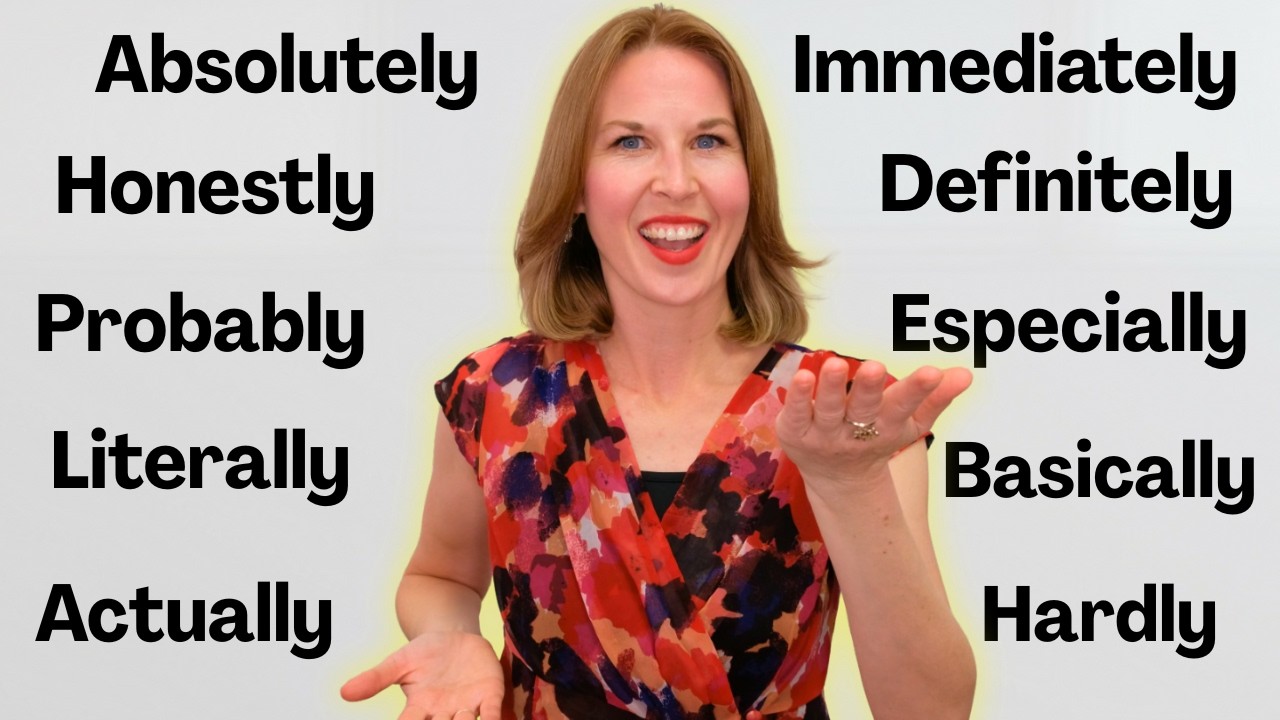

Here are the adverbs discussed in the video, along with their meanings and usage:
- Actually [00:15]
- Meaning: Used to correct, clarify, or add surprising information.
- Example: "Actually, I don't drink coffee anymore."
- Hardly [02:50]
- Meaning: Means almost not or very little.
- Note: Barely [03:51] has the same meaning and is synonymous.
- Example: "I hardly worked this weekend." (Meaning you worked very little, compared to worked hard which means a lot).
- Honestly [04:02]
- Meaning: Used to show sincerity or mild frustration. The tone of your voice often indicates which meaning is intended.
- Example: "Honestly, I don't know what to get my sister for her birthday."
- Basically [05:07]
- Meaning: Means in simple terms, the most important point, or for the most part.
- Example: "Basically, we need more time."
- Literally [06:18]
- Meaning: In a real, exact way, without exaggeration.
- Note: Native speakers often use it for emphasis in an exaggerated way that is not literally true (e.g., "I'm so hungry, I could literally eat everything in the fridge") [07:15].
- Example: "The handle literally fell off the door as I turned it."
- Seriously [08:00]
- Meaning: Used to show importance, frustration, or disbelief, depending on the context.
- Example: "Seriously, you need to subscribe to JForrest English."
- Virtually [08:44]
- Meaning: Means almost or nearly completely.
- Example: "Virtually everyone disagreed with the plan."
- Obviously [10:01]
- Meaning: In a way that is easy to see or understand.
- Note: The speaker mentions that it can sometimes be used sarcastically or with frustration [10:06].
- Example: "Obviously, we need to fix this bug before the client arrives."
- Especially [11:42]
- Meaning: Means more than others, used for emphasis.
- Example: "I love sushi, especially salmon rolls."
- Apparently [12:37]
- Meaning: Based on what seems to be true, but is not verified (not 100% positive).
- Example: "Apparently, the meeting was canceled."
- Probably [13:29]
- Meaning: Means more than a 50% chance; a guess.
- Example: "Probably, he forgot to update the Excel."
- Definitely [14:13]
- Meaning: For sure, without question, 100% certainty.
- Example: "I'll definitely come to your party."
- Absolutely [14:50]
- Meaning: Used for strong agreement or to show intensity of feeling or opinion; very similar to definitely.
- Example: "I absolutely agree with you."
- Frequently [15:15]
- Meaning: Happening often or repeatedly.
- Example: "My students frequently ask me for lessons on phrasal verbs."
- Immediately [15:59]
- Meaning: Right away, without delay; expresses a sense of urgency.
- Example: "Immediately call the doctor if you feel unwell."
- Eventually [16:39]
- Meaning: In the end, after some time or delay. It suggests that it took longer than expected.
- Example: "Eventually, she found a new assistant."
© MisoEnglish / Michelle Kim. This is original content written by the author. Unauthorized reproduction or full reposting is prohibited. You may quote short parts only with clear credit and a link to the original post. 이 글은 작성자가 직접 집필한 오리지널 콘텐츠입니다. 전체 복제·무단 재게시를 금하며, 일부 인용 시에는 반드시 출처(MisoEnglish)와 링크를 남겨 주세요.
'English Mechanism' 카테고리의 다른 글
| Almost vs Most, 비슷하지만 결정적으로 다른 두 단어 (0) | 2025.12.11 |
|---|---|
| Hard vs Hardly, 뜻이 완전히 달라지는 한 끗 차이 (0) | 2025.12.11 |
| Pros and Cons, 무슨 뜻일까? (3) | 2025.12.10 |
| 영어 단어 속의 “함께”: con-, com-, co- 접두사 제대로 이해하기 (1) | 2025.12.10 |
| 영어 단어가 ‘반대 의미’가 되는 순간: 부정 접두사 제대로 이해하기 (0) | 2025.12.10 |


