

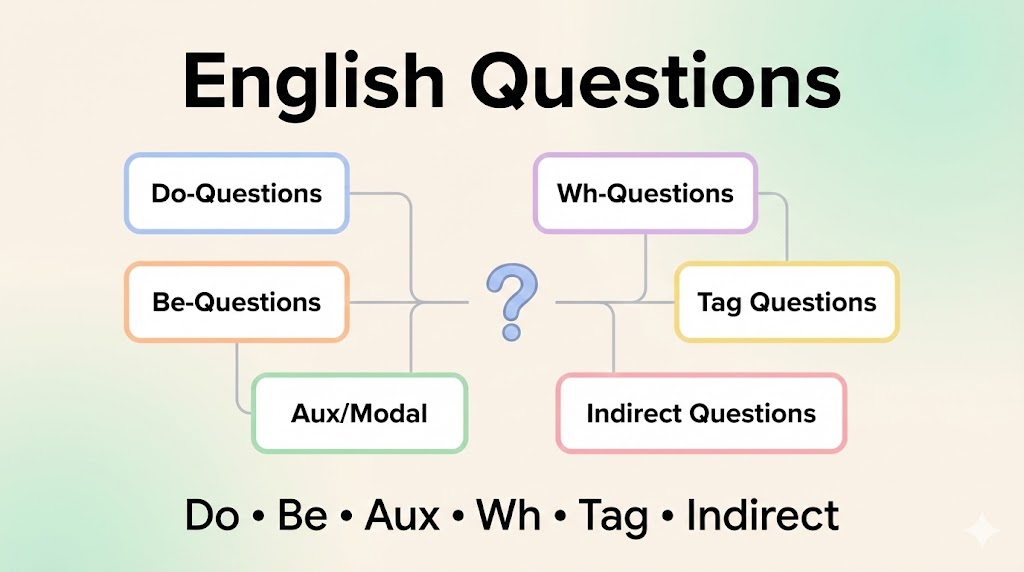
영어 의문문 종류 총정리: Do / Be / 조동사 / Wh / 부가 의문문 / 간접 의문문
EN: English questions follow one big rule: the auxiliary comes first (or we add do).
KR: 영어 의문문의 핵심 규칙은 하나예요: 조동사(또는 be)가 앞으로. 없으면 do를 넣는다.
목차 | Table of Contents
1) Yes/No 의문문: Do / Be / 조동사
A. Do 로 시작하는 의문문 (Do-support)
EN rule: If there is no auxiliary in a simple present/past sentence, we add do/does/did and invert.
KR: 문장에 조동사/be가 없고 시제가 단순 현재/과거면, 질문할 때 do/does/did를 “추가”합니다.
EN: You work here. → Do you work here?
KR: 너 여기서 일해. → 여기서 일해?
EN: She likes coffee. → Does she like coffee?
KR: 그녀는 커피를 좋아해. → 좋아해?
EN: They arrived. → Did they arrive?
KR: 도착했어. → 도착했어?
Point: does/did가 들어오면 본동사는 원형으로 돌아갑니다.
(Does she like…? / Did they arrive…?)
B. Be 동사 의문문
EN: She is tired. → Is she tired?
KR: 그녀 피곤해. → 피곤해?
EN: You are ready. → Are you ready?
KR: 준비됐어?
C. 조동사(Modal/Aux)로 시작하는 의문문
EN: You can help me. → Can you help me?
KR: 도와줄 수 있어?
EN: She has finished. → Has she finished?
KR: 끝냈어?
EN: They will come. → Will they come?
KR: 올까?
2) Wh-의문문: 의문사로 시작하는 질문
기본 공식
Wh-word + (aux/be/do) + subject + verb ... ?
KR: 의문사 + (조동사/be/do) + 주어 + 동사 …?
EN: Where do you live?
KR: 어디 살아?
EN: When did they arrive?
KR: 언제 도착했어?
EN: Which one do you want?
KR: 어떤 걸 원해?
★ 중요 예외: 의문사가 “주어”이면 do/조동사 도치가 안 될 때가 많아요
EN: Who called you? (주어=who) ✅
EN: Who did you call? (목적어=who) ✅
KR: “누가 전화했어?”는 who가 주어라서 Who called (도치 없음).
“네가 누구에게 전화했어?”는 who가 목적어라서 Who did you call (do 필요).
3) 부가 의문문 (Tag Questions)
EN rule: Statement + comma + short question tag (보통 반대 부정/긍정).
KR: 평서문 뒤에 “그치?/맞지?”를 짧게 붙이는 형태예요.
EN: You’re coming, aren’t you?
KR: 너 올 거지, 그렇지?
EN: She can drive, can’t she?
KR: 운전할 수 있지?
EN: They didn’t leave, did they?
KR: 안 갔지?
Tip: “I am…”의 부가 의문문은 보통 aren’t I?를 많이 써요.
EN: I’m late, aren’t I?
4) 간접 의문문 (Indirect Questions) — 공손함/격식의 핵심
핵심 규칙(매우 중요)
간접 의문문 안에서는 도치(inversion) 하지 않는다.
EN: In embedded questions, use statement word order.
Direct: Where do you live?
Indirect: Could you tell me where you live? ✅
KR: 어디 사세요? → 어디 사시는지 말씀해 주실래요?
Direct: What did he say?
Indirect: I wonder what he said. ✅
KR: 그가 뭐라고 했지?
Yes/No 간접 의문문: if / whether
EN: Do you know if/whether she’s coming?
KR: 그녀가 오는지 알아?
자주 하는 실수
❌ Could you tell me where do you live?
✅ Could you tell me where you live?
5) 최종 퀴즈 (화살표를 클릭하시면 정답이 있습니다.)
Q1) ( ) you like it? 빈칸에 do/are 중 뭐가 맞을까요?
Answer: Do you like it? (조동사/be가 없는 일반동사 문장이므로 do)
Q2) 간접 의문문으로 바르게 고치세요: “Tell me where do they live.”
Answer: Tell me where they live. ✅ (간접 의문문은 도치 X)
Q3) 두 문장 차이 설명: “Who called you?” vs “Who did you call?”
Answer: 첫 문장은 who가 주어라 도치/ do 불필요. 두 번째는 who가 목적어라 do 필요.
Q4) 부가 의문문 만들기: “She is your manager.”
Answer: She is your manager, isn’t she?
Q5) 정답 고르기: “Do you know (where is the gate / where the gate is)?”
Answer: Do you know where the gate is? ✅ (간접 의문문은 평서 어순)


