
- 분류 전체보기 (575)

| 일 | 월 | 화 | 수 | 목 | 금 | 토 |
|---|---|---|---|---|---|---|
| 1 | 2 | 3 | 4 | 5 | 6 | |
| 7 | 8 | 9 | 10 | 11 | 12 | 13 |
| 14 | 15 | 16 | 17 | 18 | 19 | 20 |
| 21 | 22 | 23 | 24 | 25 | 26 | 27 |
| 28 | 29 | 30 | 31 |
- ticketing
- everyday English
- booking
- 영어공부법
- 영어문법
- MichelleKim
- 영문법
- 영어시제
- 영어를살다
- 🌿 English with Heart
- English in English
- 영어접속사
- SlowBlooms
- 영어표현력
- 언어의철학 #의미론 #화용론 #언어와사고 #언어의미학 #MisoEnglish #TheLanguageBeyondGrammar #영문학심화
- pnr
- AirlineOpsEnglish
- GrammarWithSoul
- 영어철학
- misoenglish
- 감성영어
- FareRules
- English for Korean Learners
- EnglishTense
- 영어회화
- 느리지만단단하게
- 영어발음
- 영어공부
- Basic English Verbs
- English Speaking Practice
- Today
- Total
MisoEnglish
수동태는 왜 타동사에서만 될까? 본문
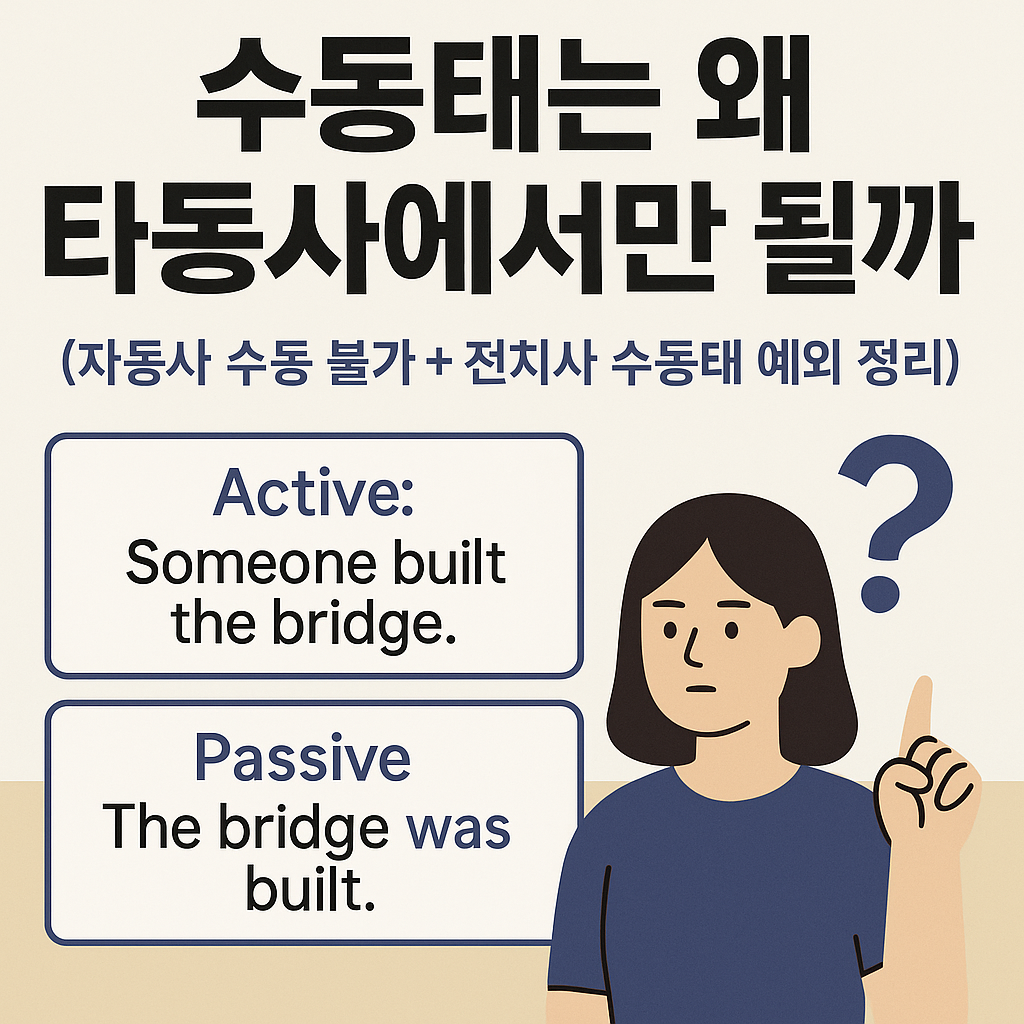
수동태는 왜 타동사에서만 될까?
(자동사 수동 불가 + 전치사 수동태 예외 정리)
수동태(passive voice)는 “누가 했는지(행위자)”보다 “무엇이 어떻게 되었는지(대상)”를 앞세우는 표현입니다. 그런데 중요한 원칙이 하나 있어요.
1) 핵심 원칙: 수동태는 ‘타동사(transitive verb)’에서만 가능
원칙적으로 수동태는 목적어를 가지는 동사(타동사)에서만 만들 수 있어요. 이유는 간단합니다. 수동태는 능동태의 목적어를 주어로 올리는 구조이기 때문이에요.
Active (능동): Someone built the bridge. (목적어 있음)
Passive (수동): The bridge was built. ✅
2) 자동사(intransitive)는 보통 수동태 불가
자동사(intransitive verb)는 목적어가 없어서 “올릴 대상”이 없으니 보통 수동태가 불가능해요.
- He arrived. (목적어 없음) →
He was arrived❌ - The accident happened. →
The accident was happened❌
✅ 대신 이런 자동사들은 수동태로 만들기보다, 상황에 맞는 다른 동사(타동사)로 바꿔 쓰는 게 자연스러워요.
A problem occurred → A problem was reported / found / identified.
The accident happened → The accident was caused by … (원인 강조)
3) 예외처럼 보이지만 가능한 케이스 (중요!)
3-1) 전치사 수동태 (Prepositional Passive)
동사가 자동사처럼 보여도, 전치사 뒤에 목적어가 있으면 수동태가 가능합니다. (목적어가 동사 바로 뒤에 없을 뿐, 전치사 뒤에 존재하는 구조!)
- People talked about the issue. → The issue was talked about. ✅
- They looked after the child. → The child was looked after. ✅
핵심 정리
목적어가 “동사 바로 뒤”에 없을 뿐, about / after 뒤에 목적어가 존재하므로 수동태가 되는 것입니다.
3-2) “문형은 자동사처럼 보이지만” 의미상 목적어가 있는 구동사/전치사구
- This bed has been slept in. ✅ (누군가 이 침대에서 잤다)
- The topic was spoken about. ✅
3-3) 상태수동(stative passive)은 ‘수동태’라기보다 ‘상태 표현’
be + p.p. 형태지만 “누가 했다”보다는 “상태”를 말하는 경우가 많아요.
- be married / be gone / be finished / be located
- The shop is located downtown. (위치해 있다 = 상태)
- The work is finished. (끝난 상태)
4) 수동태 가능/불가 동사 & 예문 표
4-1) 원칙: 목적어가 있으면 수동 가능 (타동사)
| 동사 | 능동 예문 | 수동 예문 |
|---|---|---|
| build | They built a bridge. | A bridge was built. |
| make | People make cars. | Cars are made. |
| complete | She completed the report. | The report was completed. |
| announce | They will announce the results. | The results will be announced. |
| discuss | They are discussing the issue. | The issue is being discussed. |
| mention | He didn’t mention the change. | The change wasn’t mentioned. |
| decide | They decided on the plan. | A decision was made about the plan. (더 자연스러움) |
✅ 포인트: 목적어가 있으니, 그걸 주어로 올려 수동태가 됩니다.
4-2) 기본적으로 수동태 불가 (자동사: 목적어 없음)
| 동사 | 올바른 문장 | 수동태 |
|---|---|---|
| happen | The accident happened. | ❌ 불가 (✗ was happened) |
| occur | A problem occurred. | ❌ 불가 (✗ was occurred) |
| arrive | He arrived. | ❌ 불가 (✗ was arrived) |
| go | She went home. | ❌ 불가 |
| come | They came early. | ❌ 불가 |
| die | He died yesterday. | ❌ 불가 (✗ was died) |
| appear | A message appeared. | ❌ 불가 (✗ was appeared) |
| exist | Such rules exist. | ❌ 불가 (✗ are existed) |
4-3) 자동사처럼 보이지만 수동 가능 (전치사 수동태)
| 표현 | 능동 | 수동 |
|---|---|---|
| talk about | People talked about the issue. | The issue was talked about. |
| speak of/about | They spoke about the plan. | The plan was spoken about. |
| look after | She looked after the child. | The child was looked after. |
| listen to | Everyone listened to the speech. | The speech was listened to. (가능하지만 다소 딱딱/덜 흔함) |
| laugh at | They laughed at him. | He was laughed at. |
5) 한 줄 결론
✅ 원칙: 수동태는 타동사(목적어 있는 동사)에서만 가능
✅ 확장: 자동사처럼 보여도 전치사 뒤에 목적어가 있으면 수동 가능 (전치사 수동태)
💬 미니 퀴즈 — 수동태 가능/불가 판별 5문항
아래 문장들을 수동태로 바꿀 수 있는지 판단해보세요!
댓글로 ①~⑤ (가능/불가) + 이유 한 줄 남겨주시면 더 재밌게 공부할 수 있어요 😊
- Someone stole my phone.
- The accident happened last night.
- People talked about the issue.
- He arrived at the airport at 6.
- Everyone laughed at him.
✅ 정답 보기 (클릭)
① 가능 → My phone was stolen.
(stole = 타동사, 목적어(my phone) 있음)
② 불가 → happen은 자동사라 목적어가 없어 수동태 불가
(✗ The accident was happened)
③ 가능 → The issue was talked about.
(전치사 about 뒤에 목적어가 있어서 전치사 수동태 가능)
④ 불가 → arrive는 자동사라 수동태 불가
(✗ He was arrived)
⑤ 가능 → He was laughed at.
(전치사 at 뒤 목적어가 존재하는 구조 → 전치사 수동태 가능)
✨ 보너스 질문: ③, ⑤처럼 전치사 수동태가 가능한 이유를 한 문장으로 설명해보세요!
'English Mechanism' 카테고리의 다른 글
| '복합관계사(-ever)' 5분 만에 완벽 정리! (0) | 2025.12.15 |
|---|---|
| 부정 대명사 완전정리 (헷갈리는 포인트까지) (0) | 2025.12.15 |
| 수동태란? - 기본부터 특수 수동태까지 (0) | 2025.12.15 |
| Almost vs Most, 비슷하지만 결정적으로 다른 두 단어 (0) | 2025.12.11 |
| Hard vs Hardly, 뜻이 완전히 달라지는 한 끗 차이 (0) | 2025.12.11 |


