
- 분류 전체보기 (580)

| 일 | 월 | 화 | 수 | 목 | 금 | 토 |
|---|---|---|---|---|---|---|
| 1 | 2 | 3 | 4 | 5 | 6 | |
| 7 | 8 | 9 | 10 | 11 | 12 | 13 |
| 14 | 15 | 16 | 17 | 18 | 19 | 20 |
| 21 | 22 | 23 | 24 | 25 | 26 | 27 |
| 28 | 29 | 30 | 31 |
- 언어의철학 #의미론 #화용론 #언어와사고 #언어의미학 #MisoEnglish #TheLanguageBeyondGrammar #영문학심화
- 영어표현력
- English Speaking Practice
- everyday English
- 감성영어
- 느리지만단단하게
- English for Korean Learners
- English in English
- 영어를살다
- 영어표현
- 영어공부법
- AirlineOpsEnglish
- SlowBlooms
- booking
- 영어접속사
- 생활영어
- 영어공부
- 영어회화
- 영어시제
- MichelleKim
- misoenglish
- GrammarWithSoul
- FareRules
- pnr
- 영어발음
- 영문법
- Basic English Verbs
- ticketing
- 영어문법
- 🌿 English with Heart
- Today
- Total
MisoEnglish
영어의 리듬 – 자연스럽게 말하는 법 본문
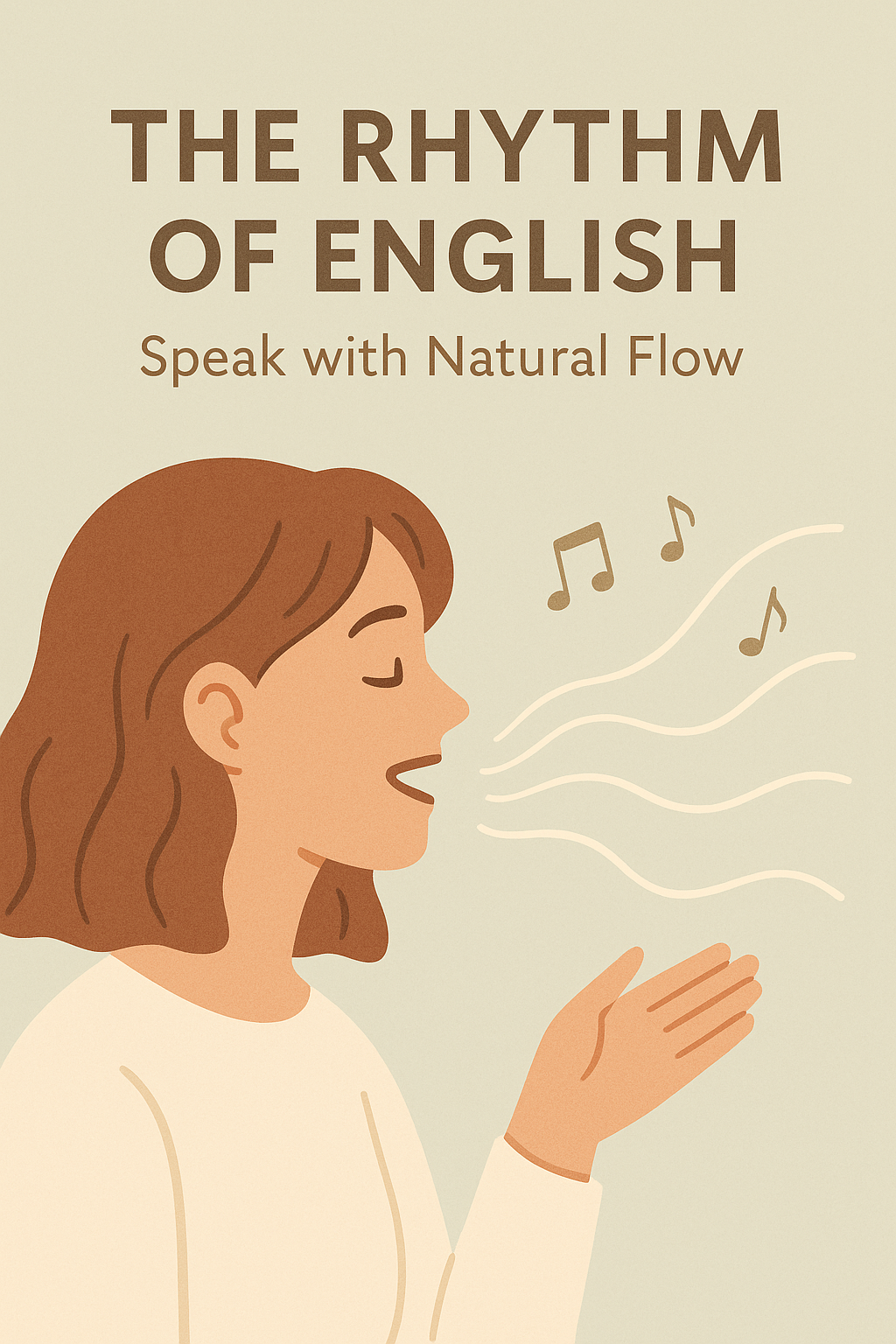
🎵 The Rhythm of English
Speak with Natural Flow
영어의 리듬 – 자연스럽게 말하는 법
Most English learners focus on vocabulary and grammar,
but forget that English is music — full of rhythm, stress, and flow.
To sound natural, you must feel English, not just speak it.
많은 영어 학습자들이 단어와 문법에 집중하지만,
사실 영어는 음악처럼 리듬과 강세, 흐름으로 이루어진 언어예요.
자연스럽게 들리려면, 단순히 말하는 게 아니라 영어의 리듬을 ‘느껴야’ 합니다.
1. English Is a Stress-Timed Language
영어는 ‘강세박자 언어’이다
Unlike Korean, which gives equal time to each syllable,
English gives more time and energy to important words — content words —
and quickly glides over small connecting words.
한국어는 모든 음절이 거의 같은 길이로 발음되지만,
영어는 핵심 단어에 힘을 주고, 덜 중요한 단어는 빠르게 지나갑니다.
Example:
“I WANT to go to the STORE.”
→ “to” and “the” are light and quick,
while “WANT” and “STORE” carry the rhythm.
이게 바로 영어의 리듬 — 강세의 차이로 흐름이 만들어지는 비밀이에요.
2. Feel the Beat: Content vs. Function Words
박자를 느껴라: 내용어와 기능어의 차이
Content Words (의미 단어) – 힘을 주어 발음
→ Nouns, Verbs, Adjectives, Adverbs
예: I LIKE beautiful MUSIC.
Function Words (기능 단어) – 가볍게 연결
→ Articles, Prepositions, Pronouns, Conjunctions
예: I want to go to the park.
Try reading both aloud — feel the difference in energy and timing.
3. Speak in Groups, Not Words
단어가 아니라 ‘묶음’으로 말하라
Native speakers don’t speak word by word — they group them naturally.
“What are you doing?” → “Whatcha doin?”
“Did you eat yet?” → “Jeet yet?”
이런 자연스러운 흐름을 익히려면,
단어 하나하나보다 ‘묶음(chunk)’의 리듬을 연습하세요.
💡 팁: 한 문장을 2~3개의 박자 덩어리로 나눠보세요.
“I really / like your / new idea.”
4. Listen Like You’re Listening to a Song
노래 듣듯이 들어라
Don’t just hear the words — listen for the beat.
영어는 음악과 같아요. 단어보다 리듬과 강약의 패턴을 들어보세요.
영화나 드라마의 한 장면을 반복해서 들으며,
어디에 힘이 들어가는지, 어디서 속도가 바뀌는지 느껴보세요.
Try: The Intern, La La Land, or Friends
영화 속 대화는 실제 리듬 감각을 익히기에 최고예요.
5. Practice with Movement
몸으로 연습하라
리듬을 느끼려면 몸이 함께 움직여야 합니다.
- 문장을 말하면서 손으로 리듬을 쳐보세요.
- 박자에 맞춰 천천히 읽다가 점점 빠르게 해보세요.
리듬은 머리가 아니라 몸으로 익히는 감각이에요.
6. The Daily “Rhythm & Flow” Routine
매일 5분 리듬 훈련 루틴
1️⃣ Listen to a short clip (1 min)
2️⃣ Shadow it with focus on rhythm (2 min)
3️⃣ Speak freely using the same rhythm (2 min)
이 루틴을 매일 반복하면
단어 중심의 말하기에서 ‘리듬 있는 영어’로 변신하게 됩니다. 🌿
Final Thought
Fluency isn’t speed — it’s rhythm.
When you find your rhythm, your English flows like a melody.
유창함은 속도가 아니라 리듬감이에요.
당신만의 박자를 찾는 순간,
영어는 음악처럼 자연스럽게 흘러갑니다.
© MisoEnglish / Michelle Kim.
This is original content written by the author.
Unauthorized reproduction or full reposting is prohibited.
You may quote short parts only with clear credit and a link to the original post.
이 글은 작성자가 직접 집필한 오리지널 콘텐츠입니다.
전체 복제·무단 재게시를 금하며,
일부 인용 시에는 반드시 출처(MisoEnglish)와 링크를 남겨 주세요.
'Living English' 카테고리의 다른 글
| 인터넷 핵심 용어 총정리 (영어·한국어) (0) | 2025.11.02 |
|---|---|
| 인터넷에서 자주 쓰는 은어·약어 모음 (0) | 2025.11.02 |
| 생각에서 말하기로 – 영어 회화를 자연스럽게 하는 법 (0) | 2025.10.31 |
| 입보다 귀를 먼저 훈련하라 – 영어 발음 향상의 진짜 비밀 (0) | 2025.10.31 |
| Vocabulary Deep Dive: 50 Essential Collocations & Word Families (0) | 2025.10.21 |


