
- 분류 전체보기 (580)

| 일 | 월 | 화 | 수 | 목 | 금 | 토 |
|---|---|---|---|---|---|---|
| 1 | 2 | 3 | 4 | 5 | 6 | |
| 7 | 8 | 9 | 10 | 11 | 12 | 13 |
| 14 | 15 | 16 | 17 | 18 | 19 | 20 |
| 21 | 22 | 23 | 24 | 25 | 26 | 27 |
| 28 | 29 | 30 | 31 |
- 🌿 English with Heart
- English Speaking Practice
- booking
- 영어공부
- 생활영어
- 영어를살다
- 영어문법
- 영어회화
- MichelleKim
- ticketing
- 감성영어
- English for Korean Learners
- 언어의철학 #의미론 #화용론 #언어와사고 #언어의미학 #MisoEnglish #TheLanguageBeyondGrammar #영문학심화
- 영어공부법
- AirlineOpsEnglish
- 느리지만단단하게
- 영어표현
- everyday English
- Basic English Verbs
- FareRules
- misoenglish
- 영어접속사
- 영어시제
- GrammarWithSoul
- 영문법
- pnr
- 영어표현력
- SlowBlooms
- English in English
- 영어발음
- Today
- Total
MisoEnglish
Chapter 1. What Is BE? — 존재의 언어 본문
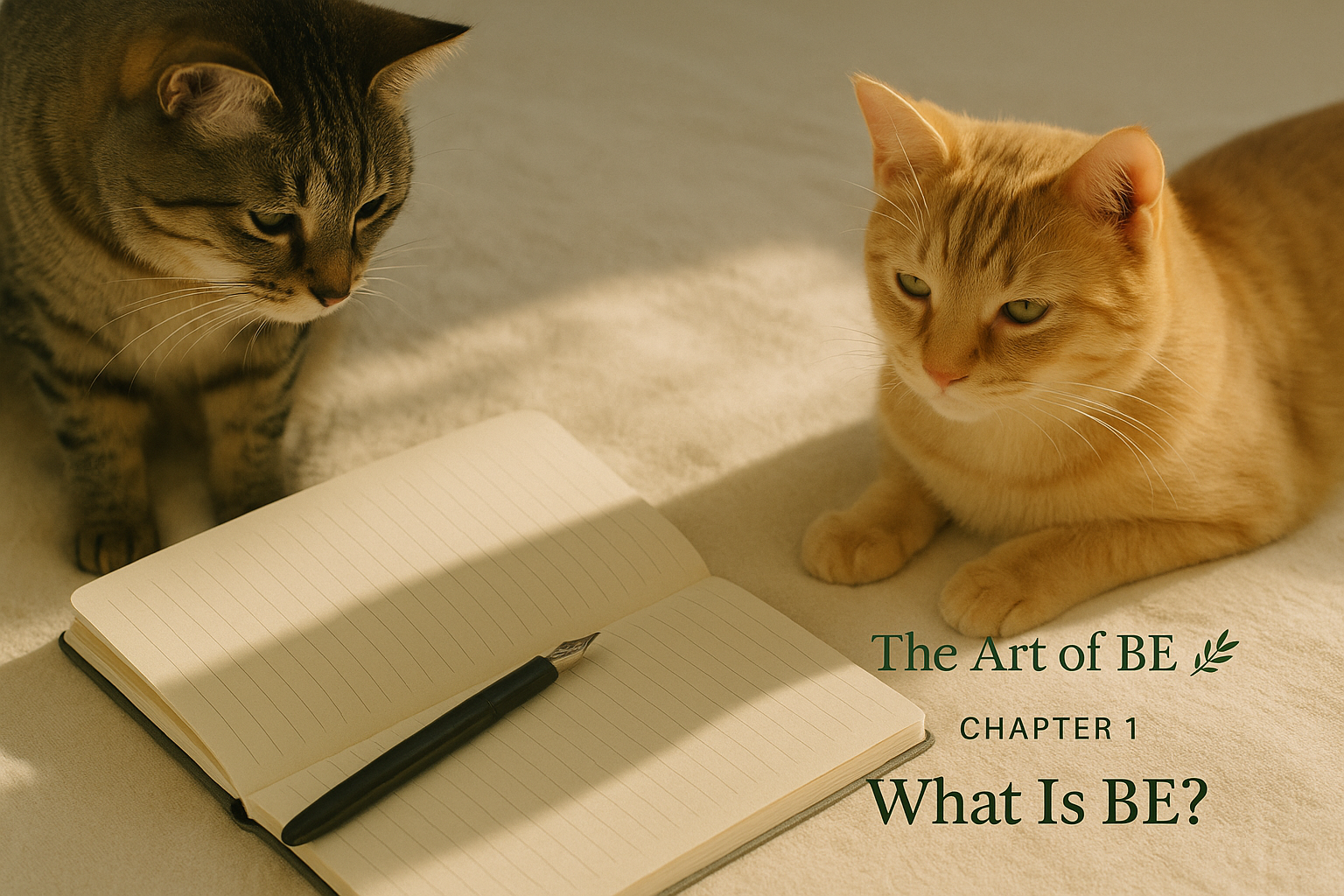
The Art of BE — 존재의 언어 배우기
Chapter 1. What Is BE? — 존재의 언어
What does “BE” really mean?
The word “be” may look simple —
just two letters.
But it’s one of the deepest words in the English language.
“Be” means to exist, to live, to happen, to remain.
It is the word of being, the essence of existence itself.
When you say I am,
you are not just speaking English.
You are declaring your existence.
“I am.” — 나는 있다.
단 두 단어지만, 세상에서 가장 강한 선언입니다.
영어의 모든 문장은 결국 존재(being) 에 대한 이야기로 이어집니다.
Be is the heart of English
Every English sentence needs a verb —
and be is the most basic, most essential one.
It connects a subject (주어) to a state (상태),
a person to an identity,
and an idea to a truth.
I am happy. — 나는 행복하다.
You are beautiful. — 너는 아름답다.
We are here. — 우리는 여기에 있다.
Each sentence is not about doing,
but about being.
Be동사는 행동(action)이 아니라 존재(state)를 말합니다.
The Origin of “Be” — 존재의 뿌리
The English word “be” comes from Old English “beon” and “wesan.”
These ancient roots meant to exist, to stay, to become.
From these came today’s am, is, are, was, were, been, being.
So every time you say is or was,
you are using one of the oldest words in the English language —
a word that has survived for over a thousand years.
영어의 “be동사”는 가장 오래된 언어의 씨앗 중 하나입니다.
시간이 흘러도 변하지 않는 이유는,
존재 자체를 표현하는 단어이기 때문입니다.
Be in Life
When you whisper to yourself I am enough,
that small sentence becomes a shield —
a reminder that your being itself is precious.
Likewise, “be” appears in daily life not just as grammar,
but as a philosophy.
Be yourself. — 너 자신이 되어라.
Be kind. — 친절해라.
Be patient. — 인내해라.
In each of these,
“be” is not commanding an action —
it’s inviting you to become something.
✨ Closing Reflection
When you start to understand “be,”
you start to understand English itself.
Because English, at its heart,
is not about doing,
but about being.
영어의 핵심은 행동이 아니라 ‘존재’입니다.
Be동사는 그 모든 존재의 출발점이자,
우리가 스스로를 표현하는 가장 순수한 언어입니다. 🌿
© MisoEnglish / Michelle Kim.
This is original content written by the author.
Unauthorized reproduction or full reposting is prohibited.
You may quote short parts only with clear credit and a link to the original post.
이 글은 작성자가 직접 집필한 오리지널 콘텐츠입니다.
전체 복제·무단 재게시를 금하며,
일부 인용 시에는 반드시 출처(MisoEnglish)와 링크를 남겨 주세요.
'English Mechanism' 카테고리의 다른 글
| Chapter 3. BE + Complement — 존재의 그림 완성하기 (0) | 2025.10.20 |
|---|---|
| Chapter 2. Forms of BE — 변화하는 존재의 형태 (0) | 2025.10.20 |
| The Art of BE — 존재의 언어 배우기 (0) | 2025.10.20 |
| 🌈 Essential Verb Series #8 — COME (오다·돌아오다·초대하다) (0) | 2025.10.19 |
| 🚶♀️ Essential Verb Series #7 — GO (움직이다·성장하다·탐험하다) (0) | 2025.10.19 |


