
- 분류 전체보기 (580)

| 일 | 월 | 화 | 수 | 목 | 금 | 토 |
|---|---|---|---|---|---|---|
| 1 | 2 | 3 | 4 | 5 | 6 | |
| 7 | 8 | 9 | 10 | 11 | 12 | 13 |
| 14 | 15 | 16 | 17 | 18 | 19 | 20 |
| 21 | 22 | 23 | 24 | 25 | 26 | 27 |
| 28 | 29 | 30 | 31 |
- 영어를살다
- 영문법
- 영어공부법
- 영어시제
- 영어회화
- AirlineOpsEnglish
- SlowBlooms
- GrammarWithSoul
- English Speaking Practice
- 영어문법
- 영어접속사
- 영어표현
- 언어의철학 #의미론 #화용론 #언어와사고 #언어의미학 #MisoEnglish #TheLanguageBeyondGrammar #영문학심화
- ticketing
- misoenglish
- English for Korean Learners
- FareRules
- Basic English Verbs
- everyday English
- booking
- pnr
- 영어발음
- English in English
- 감성영어
- 느리지만단단하게
- 생활영어
- 영어공부
- 영어표현력
- 🌿 English with Heart
- MichelleKim
- Today
- Total
MisoEnglish
🩺 Health & Body Vocabulary - 200단어 본문
🩺 Health & Body — Set 1: Body Parts & Senses (1–80)
🧍♀️ Health & Body Series — Set 1: Body Parts & Senses
Start with the basics of your body — from head to toe and the five senses. These words are the foundation for talking about health, pain, and feelings. ✨
🌿 이번 세트에서는
머리부터 발끝까지 주요 신체 부위와 오감, 몸 상태를 표현하는 기초 단어를 배워봅니다.
이후에 나올 “질병·병원·운동” 표현의 기초가 되는 어휘들이에요.
| No. | Word | English Meaning | 뜻 (Korean) |
|---|---|---|---|
| 1 | body | the whole physical form of a person | 몸, 신체 |
| 2 | head | the top part of the body with the face and brain | 머리 |
| 3 | face | the front part of the head with eyes, nose, and mouth | 얼굴 |
| 4 | forehead | the part of the face above the eyebrows | 이마 |
| 5 | eyebrow | the line of hair above the eye | 눈썹 |
| 6 | eye | a part of the body used for seeing | 눈 |
| 7 | eyelid | the skin that covers the eye when you close it | 눈꺼풀 |
| 8 | eyelash | the small hairs on the edge of the eyelid | 속눈썹 |
| 9 | ear | the part of the body used for hearing | 귀 |
| 10 | cheek | the soft part of the face below the eye | 볼, 뺨 |
| 11 | nose | the part of the face used for smelling and breathing | 코 |
| 12 | mouth | the opening in the face used for eating and speaking | 입 |
| 13 | lip | the soft edge of the mouth | 입술 |
| 14 | tooth | a hard white structure in the mouth | 이, 치아 |
| 15 | tongue | the soft part in the mouth used for tasting and speaking | 혀 |
| 16 | chin | the bottom part of the face below the mouth | 턱 |
| 17 | neck | the part that connects the head to the body | 목 |
| 18 | shoulder | the joint where the arm joins the body | 어깨 |
| 19 | arm | the part of the body from the shoulder to the hand | 팔 |
| 20 | elbow | the joint in the middle of the arm | 팔꿈치 |
| 21 | wrist | the joint between the hand and the arm | 손목 |
| 22 | hand | the part of the arm used for holding things | 손 |
| 23 | palm | the inside surface of the hand | 손바닥 |
| 24 | finger | one of the five long parts of the hand | 손가락 |
| 25 | thumb | the short, thick first finger of the hand | 엄지손가락 |
| 26 | nail | the hard surface at the end of a finger or toe | 손톱, 발톱 |
| 27 | chest | the front part of the body between the neck and stomach | 가슴 |
| 28 | back | the rear part of the body from neck to waist | 등 |
| 29 | waist | the middle part of the body above the hips | 허리 |
| 30 | hip | the side of the body below the waist | 골반 옆쪽 (허리 아래~다리 위) |
| 31 | buttocks | the round parts at the back where you sit | 엉덩이 |
| 32 | leg | the part of the body from the hip to the foot | 다리 |
| 33 | thigh | the upper part of the leg | 허벅지 |
| 34 | knee | the joint in the middle of the leg | 무릎 |
| 35 | calf | the back part of the lower leg | 종아리 |
| 36 | ankle | the joint between the leg and the foot | 발목 |
| 37 | foot | the part of the body at the end of the leg | 발 |
| 38 | heel | the back part of the foot below the ankle | 발뒤꿈치 |
| 39 | toe | one of the five small parts at the end of the foot | 발가락 |
| 40 | skin | the outer covering of the body | 피부 |
| 41 | bone | the hard part that forms the skeleton | 뼈 |
| 42 | muscle | the soft tissue that moves parts of the body | 근육 |
| 43 | heart | the organ that pumps blood through the body | 심장 |
| 44 | lung | an organ used for breathing air | 폐 |
| 45 | stomach | the organ where food is digested | 위, 배 |
| 46 | intestines | the long tubes that digest food after the stomach | 장, 창자 |
| 47 | brain | the organ inside the head that controls the body | 뇌 |
| 48 | nerve | a thin fiber that carries messages in the body | 신경 |
| 49 | spine | the line of bones down the middle of the back | 척추, 등뼈 |
| 50 | joint | a place where two bones meet | 관절 |
| 51 | blood | the red liquid that flows through the body | 피, 혈액 |
| 52 | vein | a tube that carries blood back to the heart | 정맥 |
| 53 | artery | a tube that carries blood away from the heart | 동맥 |
| 54 | liver | an organ that cleans the blood | 간 |
| 55 | kidney | an organ that removes waste from the blood | 신장, 콩팥 |
| 56 | throat | the passage inside the neck behind the mouth | 목구멍, 인후 |
| 57 | rib | one of the curved bones that protect the chest | 갈비뼈 |
| 58 | belly | the front part of the body below the chest | 배 |
| 59 | belly button | the small mark in the middle of the belly | 배꼽 |
| 60 | hair | the thin strands growing on the head or body | 머리카락, 털 |
| 61 | scalp | the skin on the top of the head under the hair | 두피 |
| 62 | temple | the flat area on the side of the head | 관자놀이 |
| 63 | jaw | the bone that moves when you open your mouth | 턱뼈, 턱 |
| 64 | gums | the soft tissue around the teeth | 잇몸 |
| 65 | pupil | the black center of the eye | 동공 |
| 66 | iris | the colored ring around the pupil | 홍채 |
| 67 | sense | the ability of the body to feel or notice things | 감각 |
| 68 | sight | the sense of seeing | 시각, 보는 감각 |
| 69 | hearing | the sense of sound | 청각, 듣는 감각 |
| 70 | smell | the sense that lets you detect odors | 후각, 냄새 맡는 감각 |
| 71 | taste | the sense that lets you notice flavors | 미각, 맛보는 감각 |
| 72 | touch | the sense that feels pressure, heat, or pain | 촉각, 만지는 감각 |
| 73 | pain | an unpleasant physical feeling | 통증, 아픔 |
| 74 | ache | a continuous, mild kind of pain | 쑤시는 통증, ~이 아픔 |
| 75 | sore | hurting and uncomfortable to touch or move | 아픈, 쓰린 |
| 76 | numb | unable to feel because of cold or pressure | 저린, 감각이 없는 |
| 77 | dizzy | feeling like you might fall or the room is spinning | 어지러운 |
| 78 | tired | feeling that you need rest | 피곤한, 피로한 |
| 79 | weak | not strong, with little power or energy | 약한, 기운이 없는 |
| 80 | healthy | in good physical condition | 건강한 |
🩺 Health & Body — Set 2: Health & Illness (81–140)
💊 Set 2: Health & Illness
Learn the key words to describe health conditions, symptoms, and common illnesses. These are essential for daily life and medical conversations. 🏥
🌿 이번 세트에서는
감기, 통증, 질병, 신체 상태 등 건강 관련 기본 단어를 배워봅니다.
병원이나 약국, 여행 중에도 유용하게 사용할 수 있어요.
| No. | Word | English Meaning | 뜻 (Korean) |
|---|---|---|---|
| 81 | health | the state of being well or free from illness | 건강 |
| 82 | illness | a state of being sick or unwell | 질병, 아픔 |
| 83 | disease | a serious illness that affects the body | 질병, 병 |
| 84 | sickness | the state of feeling ill | 아픔, 병듦 |
| 85 | cold | a common illness with sneezing and coughing | 감기 |
| 86 | flu | a short form of “influenza,” a viral illness with fever | 독감 |
| 87 | fever | a high body temperature due to illness | 열 |
| 88 | cough | to force air out of your lungs with a short sound | 기침 |
| 89 | sneeze | to blow air suddenly through your nose | 재채기하다 |
| 90 | runny nose | when liquid comes out of your nose | 콧물이 나는 |
| 91 | sore throat | pain or dryness in the throat | 목이 아픈 |
| 92 | headache | pain in the head | 두통 |
| 93 | toothache | pain in a tooth | 치통 |
| 94 | stomachache | pain in the stomach | 복통, 배 아픔 |
| 95 | backache | pain in the back | 허리 통증 |
| 96 | earache | pain in the ear | 귀 통증 |
| 97 | feverish | feeling like you have a fever | 열이 나는 |
| 98 | chills | feeling cold and shivering | 오한 |
| 99 | fatigue | extreme tiredness | 피로 |
| 100 | nausea | a feeling that you want to vomit | 메스꺼움 |
| 101 | vomit | to bring food up from the stomach through the mouth | 토하다 |
| 102 | diarrhea | an illness where you pass waste too often | 설사 |
| 103 | constipation | difficulty in passing waste | 변비 |
| 104 | infection | an illness caused by bacteria or viruses | 감염 |
| 105 | virus | a tiny organism that causes disease | 바이러스 |
| 106 | bacteria | small living things that can cause infection | 박테리아, 세균 |
| 107 | inflammation | swelling and redness in part of the body | 염증 |
| 108 | allergy | a bad reaction to certain foods or substances | 알레르기 |
| 109 | rash | red spots on the skin | 발진 |
| 110 | bruise | a dark mark on the skin from a hit or fall | 멍 |
| 111 | cut | an injury made by something sharp | 베인 상처 |
| 112 | wound | a serious injury where the skin is broken | 상처, 부상 |
| 113 | burn | injury caused by heat or fire | 화상 |
| 114 | scar | a mark left on the skin after a wound heals | 흉터 |
| 115 | bleeding | losing blood from a wound | 출혈 |
| 116 | sprain | an injury to a joint or muscle | 삠, 염좌 |
| 117 | fracture | a broken bone | 골절 |
| 118 | injury | damage to the body | 부상 |
| 119 | symptom | a sign that shows you are ill | 증상 |
| 120 | treatment | medical care for an illness | 치료 |
| 121 | medicine | a drug used to treat illness | 약 |
| 122 | pill | a small solid form of medicine | 알약 |
| 123 | tablet | a flat, round pill | 정제, 알약 |
| 124 | capsule | a small container of medicine swallowed whole | 캡슐 약 |
| 125 | syrup | liquid medicine, often sweet | 시럽 약 |
| 126 | ointment | a smooth cream for skin problems | 연고 |
| 127 | bandage | a strip used to cover a wound | 붕대 |
| 128 | first aid | help given to an injured person before a doctor arrives | 응급처치 |
| 129 | emergency | a sudden and dangerous situation | 응급상황 |
| 130 | clinic | a small medical center for treatment | 의원, 진료소 |
| 131 | hospital | a place where sick people are treated | 병원 |
| 132 | doctor | a person trained to treat illnesses | 의사 |
| 133 | nurse | a person who helps doctors and cares for patients | 간호사 |
| 134 | patient | a person who is receiving medical care | 환자 |
| 135 | checkup | a regular medical examination | 건강검진 |
| 136 | operation | a medical procedure performed by a surgeon | 수술 |
| 137 | recovery | the process of becoming healthy again | 회복 |
| 138 | painkiller | a medicine that reduces pain | 진통제 |
| 139 | antibiotic | a medicine that kills bacteria | 항생제 |
| 140 | vitamin | a substance important for good health | 비타민 |
🩺 Health & Body — Set 3: Hospital, Care & Wellness (141–200)
🏥 Set 3: Hospital, Care & Wellness
From hospital visits and medicine to exercise and mental health — learn the words you need to talk about taking care of your body and mind. ✨
🌿 이번 세트에서는
병원 진료, 약, 검사, 보험, 재활, 운동과 웰빙, 멘탈 헬스까지 “건강 관리”에 꼭 필요한 표현들을 정리합니다.
| No. | Word / Phrase | English Meaning | 뜻 (Korean) |
|---|---|---|---|
| 141 | doctor's appointment | a planned time to see a doctor | 진료 예약, 병원 예약 |
| 142 | health insurance | a system that pays some medical costs | 건강 보험 |
| 143 | medical record | a file with a patient’s health history | 의료 기록, 진료 기록 |
| 144 | emergency room | a hospital area for urgent care | 응급실 |
| 145 | ambulance | a vehicle that carries sick or injured people | 구급차 |
| 146 | paramedic | a medical worker who gives emergency care | 구급대원, 응급 의료요원 |
| 147 | stretcher | a light frame used to carry injured people | 들것 |
| 148 | wheelchair | a chair with wheels for people who cannot walk | 휠체어 |
| 149 | hospital room | a room where a patient stays in a hospital | 병실 |
| 150 | ward | a large room or area for many patients | 병동 |
| 151 | intensive care unit | a special hospital area for very sick patients | 중환자실, ICU |
| 152 | operating room | a room where doctors perform surgery | 수술실 |
| 153 | anesthesia | a drug that removes pain during surgery | 마취 |
| 154 | injection | medicine given with a needle | 주사 |
| 155 | vaccination | a shot to protect against a disease | 백신 접종, 예방 접종 |
| 156 | thermometer | a device used to measure body temperature | 체온계 |
| 157 | blood pressure | the force of blood against the walls of arteries | 혈압 |
| 158 | blood test | a lab test that uses a sample of blood | 혈액 검사 |
| 159 | X-ray | a picture of bones or organs using special rays | 엑스레이, X선 검사 |
| 160 | ultrasound | an image made using sound waves | 초음파 검사 |
| 161 | test result | the outcome of a medical test | 검사 결과 |
| 162 | follow-up visit | a later visit to check progress | 경과 확인 방문, 추후 진료 |
| 163 | prescription | a doctor’s written order for medicine | 처방전 |
| 164 | pharmacy | a place where medicine is prepared and sold | 약국 |
| 165 | pharmacist | a person who prepares and gives out medicine | 약사 |
| 166 | dosage | the amount of medicine to take at one time | 복용량, 용량 |
| 167 | side effect | an unexpected or unwanted effect of medicine | 부작용 |
| 168 | over-the-counter medicine | medicine you can buy without a prescription | 일반의약품, 처방전 없이 사는 약 |
| 169 | prescription medicine | medicine that needs a doctor’s order | 처방약 |
| 170 | drug allergy | a bad reaction to a type of medicine | 약 알레르기 |
| 171 | health screening | tests done to check overall health | 건강검진, 건강 스크리닝 |
| 172 | health condition | the current state of a person’s health | 건강 상태 |
| 173 | chronic disease | a long-lasting illness | 만성 질환 |
| 174 | contagious | able to spread from person to person | 전염성 있는 |
| 175 | injury prevention | steps taken to avoid getting hurt | 부상 예방 |
| 176 | rehabilitation | treatment to help someone recover abilities | 재활 |
| 177 | physical therapy | exercise treatment to improve movement | 물리치료 |
| 178 | caregiver | a person who takes care of someone ill | 보호자, 간병인 |
| 179 | self-care | actions you take to maintain your own health | 자가 관리, 셀프 케어 |
| 180 | rest | time spent relaxing and not working | 휴식 |
| 181 | exercise | physical activity to stay healthy | 운동하다; 운동 |
| 182 | workout | a period of planned exercise | 운동 세션, 운동하기 |
| 183 | stretching | exercises that lengthen muscles | 스트레칭 |
| 184 | warm-up | light exercise before harder activity | 준비 운동 |
| 185 | cool-down | easy movement after exercise to relax muscles | 마무리 운동 |
| 186 | fitness | the state of being physically healthy and strong | 체력, 피트니스 |
| 187 | balanced diet | eating different foods in healthy amounts | 균형 잡힌 식단 |
| 188 | nutrition | the process of taking in food for health | 영양 |
| 189 | calorie | a unit that measures energy in food | 칼로리 |
| 190 | low-fat | containing little fat | 저지방의 |
| 191 | sugar-free | containing no sugar | 무가당, 설탕이 없는 |
| 192 | hydrate | to give the body enough water | 수분을 보충하다 |
| 193 | dehydration | a state of not having enough water in the body | 탈수 |
| 194 | sleep | a natural rest of body and mind | 잠, 수면 |
| 195 | insomnia | difficulty falling or staying asleep | 불면증 |
| 196 | stress | mental or physical tension from pressure | 스트레스 |
| 197 | mental health | the state of a person’s mind and emotions | 정신 건강 |
| 198 | counseling | talking with a professional for guidance | 상담 |
| 199 | therapy | treatment for mental or physical problems | 치료, 테라피 |
| 200 | meditation | a quiet practice to calm the mind | 명상 |
**** 한국인이 잘못 알고 있는 힙의 개념****
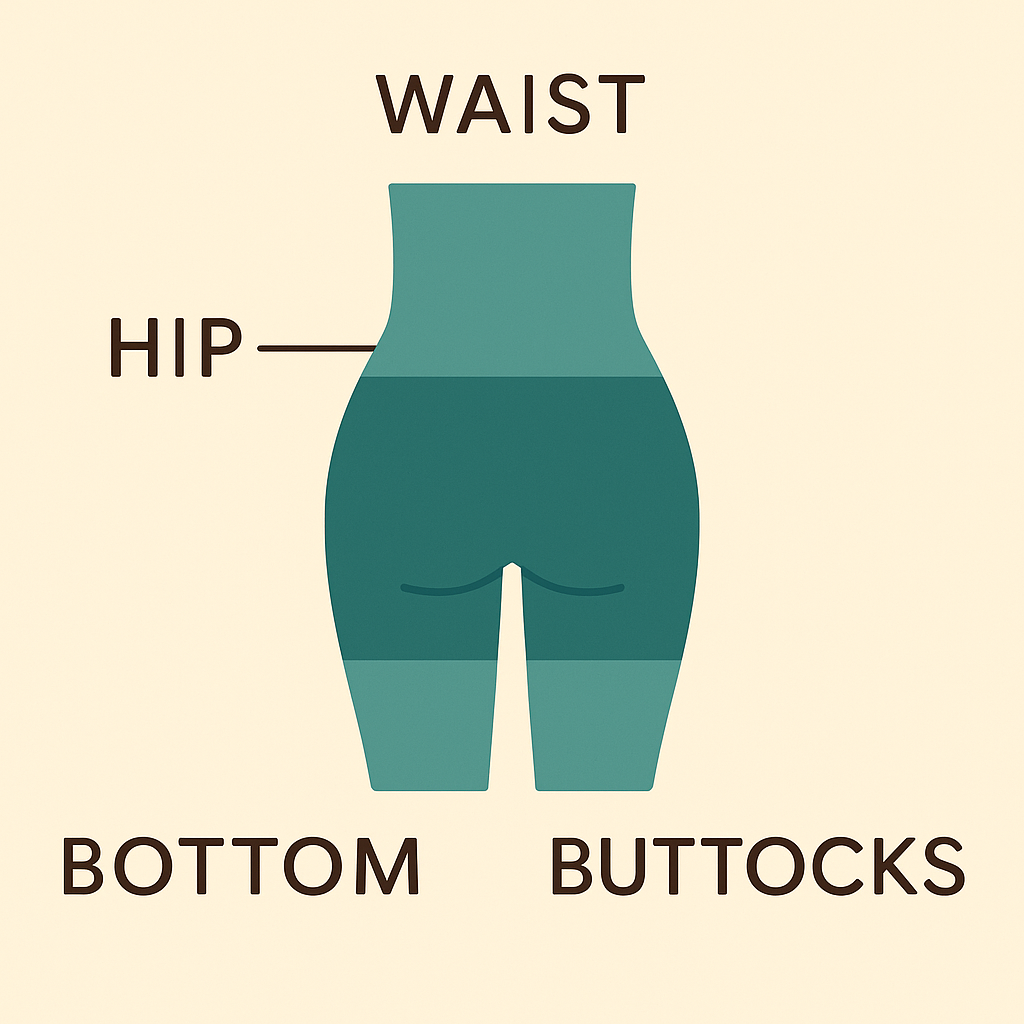
💠 1. Hip
🔹 위치: 허리 바로 아래, 다리의 윗부분 (엉덩이 옆쪽)
🔹 뜻: “엉덩이 부위의 옆면”, 즉 골반 부위를 가리켜요.
🔹 예시:
- I put my hands on my hips. → 나는 양손을 허리에 얹었다.
- She wore jeans that fit tightly around her hips. → 그녀는 엉덩이 쪽에 꼭 맞는 청바지를 입었다.
⚙️ 즉, hip = 골반 / 허리 아래 옆선 부분이에요.
영어에서 “허리에 손을 얹다”라고 말할 때도 hips를 써요,
왜냐하면 실제 손이 닿는 위치가 허리보다 약간 아래쪽이기 때문이에요.
💠 2. Bottom
🔹 위치: 엉덩이 전체의 아랫부분, 앉을 때 닿는 부분
🔹 뜻: “엉덩이” 또는 “엉덩이 전체의 하단”
🔹 예시:
- The baby fell on his bottom. → 아기가 엉덩방아를 찧었다.
- Sit down on your bottom. → 엉덩이로 앉으세요.
⚙️ 즉, bottom = 엉덩이 그 자체 (앉는 부분)
좀 더 일상적이고 부드러운 표현이에요.
의학적으로나 해부학적으로는 “buttocks”라고 하지만,
일상에서는 bottom이 더 공손하고 자연스러워요.
💡 비교 요약
| hip | 허리 바로 아래, 옆쪽 (골반) | 중립적, 옷이나 동작 설명할 때 | “Hands on hips.” |
| bottom | 엉덩이 아래쪽 (앉는 부분) | 일상적, 부드러운 말 | “He sat on his bottom.” |
| buttocks | 엉덩이 양쪽 전체 | 의학적·격식적 표현 | “He injured his buttocks.” |
🇰🇷 한국어 감각:
“힙(hip)” = 엉덩이 (전체적인 느낌)
“힙한 스타일”이라는 표현처럼, hip을 **‘엉덩이 라인’ + ‘세련된 이미지’**로 섞어서 인식하죠.
그래서 ‘힙업(hip-up)’ 같은 단어가 생긴 것도 이 감각이에요.
그런데 영어에서 “hip”은 엄밀히 말하면 엉덩이의 ‘옆면’,
즉 골반부에 더 가깝습니다.
🇺🇸 영어권 감각:
| hip | 골반 옆쪽 (허리 아래~다리 위) | 엉덩이 전체 | 옆 (side) |
| buttocks / bottom | 앉는 부위 (엉덩이 살 부분) | 엉덩이 일부 | 뒤 (back / seat area) |
💬 영어 원어민 입장에서는
“hip”은 fit around the hips (허리 아래 옆선이 잘 맞다)
“bottom”은 sit on your bottom (엉덩이로 앉다)
이런 식으로 ‘옆 vs 아래’ 감각이 분명해요.
🪷 예시로 느껴보기
- My jeans are tight around my hips.
→ 내 청바지가 엉덩이 옆라인에 꽉 끼어요. (골반 쪽) - My bottom hurts after sitting too long.
→ 오래 앉아 있어서 엉덩이 아랫부분이 아파요. - She injured her hip in a car accident.
→ 그녀는 교통사고로 골반 부위를 다쳤어요.
(엉덩이 살이 아니라, 실제 hip joint 부분)
📍즉, 한국어의 “힙”은 영어의 “hip”보다 넓고 아래쪽까지 포함하는 개념이에요.
그래서 영어에서는 ‘엉덩이 살 부분’을 말할 때 hip보다 bottom / buttocks가 훨씬 자연스럽죠.
'Living English' 카테고리의 다른 글
| 🎉 Entertainment & Hobbies Vocabulary - 150단어 (0) | 2025.11.13 |
|---|---|
| 🐶 Animals & Nature Vocabulary - 150단어 (1) | 2025.11.13 |
| 👩🏫 School & Education Vocabulary - 200단어 (0) | 2025.11.12 |
| 🏢 Office & Work Vocabulary - 250단어 (0) | 2025.11.12 |
| 🚗 Transportation Basics Vocabulary - 300단어 (0) | 2025.11.12 |


