영어 단어를 잘 기억하려면
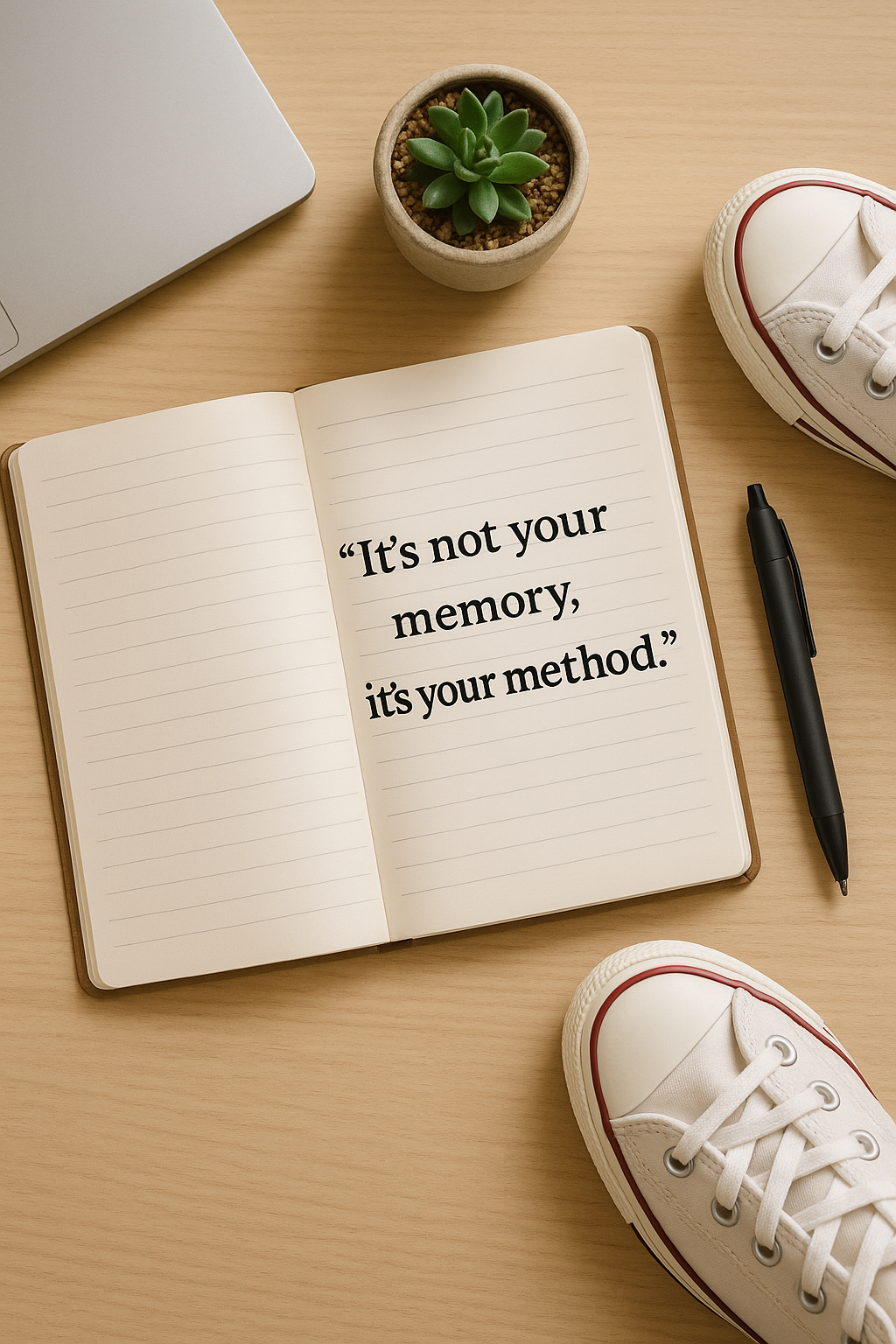
How to Remember English Vocabulary Permanently
— It’s Not Your Memory, It’s Your Method —
✍️ by Michelle Kim (MisoEnglish)
“You don’t forget because your memory is bad —
you forget because your method is wrong.” 🌱
“당신이 단어를 잊는 이유는 기억력이 나빠서가 아니라,
방법이 잘못되었기 때문입니다.” 🌱
Many English learners say,
“I always forget what I study. My memory is terrible.”
But that’s not true.
You don’t forget because your memory is weak — you forget because your method is wrong.
많은 영어 학습자들이 말합니다.
“외워도 자꾸 잊어버려요. 기억력이 나쁜가 봐요.”
하지만 진실은 다릅니다.
잊는 이유는 기억력이 아니라 방법 때문입니다.
The human brain doesn’t remember lists — it remembers meaning, emotion, and experience.
When words are studied mechanically, they fade like footprints in the rain.
But when learned through images, feelings, and stories,
they become part of your life — permanent and alive.
인간의 뇌는 단순히 단어 목록을 기억하지 않습니다.
뇌는 의미, 감정, 경험을 기억합니다.
기계적으로 외운 단어는 빗속의 발자국처럼 사라지지만,
이미지와 감정, 이야기로 배운 단어는 당신의 일부가 되어 살아남습니다.
🪞 1. Don’t Translate — Think in English
When you translate every word into your native language, you stay outside the language, looking through a glass wall.
You can see English, but you can’t feel it.
단어를 모두 모국어로 번역하면, 당신은 영어의 ‘밖’에서 유리벽 너머로 언어를 바라보게 됩니다.
보이지만, 느낄 수는 없습니다.
Instead, use English-to-English dictionaries and think in English.
When you learn happy, don’t think “기쁜,” but “feeling good or pleased.”
Even one sentence thought directly in English will make your mind step into the language itself.
대신 영영사전을 사용하고, 영어 안에서 생각하는 습관을 들이세요.
happy 를 “기쁜”이 아니라 “feeling good or pleased”로 이해해 보세요.
단 한 문장이라도 영어로 직접 생각하는 순간, 당신의 사고가 영어 안으로 들어갑니다.
💬 You understand best when you stop translating and start feeling.
💬 번역을 멈추고 느끼기 시작할 때, 비로소 이해가 깊어집니다.
🌊 2. Learn Deeply, Not Widely
You don’t need to memorize fifty new words a day.
The more you cram, the faster you forget.
It’s better to learn five words deeply than fifty words lightly.
하루에 50개의 단어를 억지로 외울 필요는 없습니다.
많이 외울수록 빨리 잊힙니다.
적게 배우더라도 깊이 배우는 것이 훨씬 오래갑니다.
Spend a day with a word — listen to its sound, explore its emotion, use it in sentences.
When you understand a word from all angles, it becomes part of your thinking.
하루에 단 하나라도, 그 단어와 함께 살아보세요.
그 소리를 듣고, 감정을 느끼고, 문장 속에 써보세요.
단어를 여러 각도에서 느낄 때, 그것은 당신의 사고 일부가 됩니다.
🌿 Depth builds memory; quantity builds confusion.
🌿 깊이는 기억을 만들고, 양은 혼란을 만듭니다.
✏️ 3. Draw, Imagine, and Feel the Word
Don’t just repeat words with your mouth — use your senses.
Draw a small picture or imagine a scene.
When you learn whisper, imagine two people talking softly in a quiet room.
When you learn mountain, feel yourself climbing beneath a wide sky.
단어를 입으로만 반복하지 말고 오감을 사용하세요.
작은 그림을 그리거나 장면을 상상해 보세요.
whisper 를 배울 때는 조용히 속삭이는 두 사람을,
mountain 을 배울 때는 푸른 하늘 아래 산을 오르는 자신을 떠올리세요.
🎨 You’re not memorizing — you’re creating a memory.
🎨 당신은 외우는 것이 아니라 기억을 만들고 있습니다.
🏠 4. Connect Words to Real Life
Words don’t live in textbooks — they live in your stories.
When you learn challenge, recall the time you faced one.
When you learn grateful, whisper it before bed.
단어는 교과서 속에서가 아니라, 당신의 이야기 속에서 살아갑니다.
challenge 를 배울 때는 도전했던 순간을,
grateful 을 배울 때는 잠들기 전 감사한 마음을 떠올리세요.
Every real connection turns vocabulary into emotion — and emotion never fades.
진짜 경험과 연결된 단어는 감정이 되고, 감정은 결코 사라지지 않습니다.
👟 5. Use It — Don’t Just Display It
A memorized word is like a new pair of shoes.
If you only keep it in your closet, it’ll never become yours.
At first, new shoes feel stiff, but the more you wear them, the softer they become.
외운 단어는 새 신발과 같습니다.
신발장에 전시만 해두면 결코 당신의 것이 되지 않습니다.
처음엔 어색하지만, 자꾸 신을수록 내 발에 맞고 편해집니다.
Language works the same way.
A word you never use stays foreign,
but once you speak, write, and think it — it starts to fit you.
언어도 마찬가지입니다.
사용하지 않으면 낯설지만, 말하고 쓰고 생각할수록 자연스럽게 당신의 일부가 됩니다.
👟 Don’t collect English — live in it.
👟 영어를 모으지 말고, 그 안에서 살아보세요.
⏳ 6. Repeat with Rhythm, Not with Pressure
A word remembered once will fade if never revisited.
But when you meet it again — after a day, a week, a month — it becomes stronger each time.
단어는 한 번 외웠다고 끝이 아닙니다.
하루, 일주일, 한 달 뒤에 다시 만날 때마다
그 기억은 점점 더 단단해집니다.
Like hearing an old song and remembering every lyric,
you’ll find words returning when you give them time.
오랜만에 들은 노래의 가사가 입에서 자연스레 흘러나오듯,
시간을 주면 단어도 자연히 돌아옵니다.
⏰ Memory loves rhythm, not stress.
⏰ 기억은 강요가 아니라 리듬을 좋아합니다.
🕊️ 7. Build Relationships, Not Lists
Learning words isn’t about collecting data — it’s about forming relationships.
Each word has a tone, a personality, a feeling.
The more you meet it — seeing, saying, writing — the closer it becomes.
단어 학습은 데이터를 쌓는 일이 아니라 관계를 맺는 일입니다.
단어마다 성격과 온도가 있습니다.
자주 만나고, 써보고, 말할수록 그 단어는 친구가 됩니다.
💛 Words are not data to store; they are friends to know.
💛 단어는 저장할 데이터가 아니라, 알아가야 할 친구입니다.
🪴 8. Make English Part of Your Story
Don’t study English as someone else’s language — make it your storyteller.
Write about your life, your memories, your emotions in English.
When words describe your world, they stay forever.
영어를 남의 언어로 대하지 말고, 당신의 이야기꾼으로 만드세요.
당신의 삶과 감정을 영어로 써보세요.
단어가 당신의 세계를 표현할 때, 그것은 영원히 사라지지 않습니다.
✨ The English you live will always outlast the English you memorize.
✨ 사는 영어는 외운 영어보다 오래갑니다.
🎧 9. Learn with Joy, Not Obligation
When learning feels heavy, memory closes its door.
But when you enjoy it — through music, movies, journaling, or conversation —
your mind opens naturally.
학습이 의무로 느껴질 때, 기억은 닫힙니다.
하지만 즐거움 속에서 배우면, 뇌는 자연스럽게 열립니다.
노래, 영화, 대화, 글쓰기 속에서 영어를 즐기세요.
🌸 The brain keeps what it loves.
🌸 뇌는 즐거운 것을 오래 기억합니다.
☀️ 10. Stay Positive and Curious
Your thoughts shape your learning.
If you say, “English is hard,” your brain prepares for struggle.
But if you say, “English is interesting,” your brain prepares to learn.
생각은 학습을 지배합니다.
“영어는 어려워.”라고 말하면 뇌는 긴장하고,
“영어는 흥미로워.”라고 말하면 뇌는 탐구를 준비합니다.
💭 Your thoughts are the soil — your words will grow where positivity is planted.
💭 생각은 토양입니다. 긍정의 씨앗을 심으면 언어는 그 위에 자랍니다.
🌙 11. Rest Well to Remember Well
Memory doesn’t grow only when you study —
it strengthens when you rest.
기억은 공부할 때만 자라지 않습니다.
휴식할 때 정리되고, 잠을 잘 때 저장됩니다.
During sleep, your brain quietly organizes what you learned and keeps it safe.
Good sleep isn’t laziness — it’s part of learning.
잠자는 동안 뇌는 배운 내용을 정리하고 분류합니다.
충분한 수면은 게으름이 아니라 학습의 일부입니다.
🌿 Sleep is not forgetting — it’s remembering in silence.
🌿 잠은 잊는 시간이 아니라, 조용히 기억하는 시간입니다.
✨ Final Thought
Learning English is not a race of memory.
It’s a journey of connection — between you and the language,
between words and your life,
between focus and rest.
영어 공부는 암기의 경주가 아니라 연결의 여정입니다.
당신과 언어의 연결, 단어와 삶의 연결, 집중과 쉼의 연결입니다.
If you study with curiosity, joy, and enough sleep,
English will stop being a subject —
it will become a part of who you are. 🌿
호기심과 즐거움, 그리고 충분한 휴식으로 영어를 배우면
영어는 더 이상 공부 과목이 아니라
당신의 일부가 됩니다. 🌿
© MisoEnglish / Michelle Kim. This is original content written by the author. Unauthorized reproduction or full reposting is prohibited. You may quote short parts only with clear credit and a link to the original post.
이 글은 작성자가 직접 집필한 오리지널 콘텐츠입니다. 전체 복제·무단 재게시를 금하며, 일부 인용 시에는 반드시 출처(MisoEnglish)와 링크를 남겨 주세요.