English Mechanism
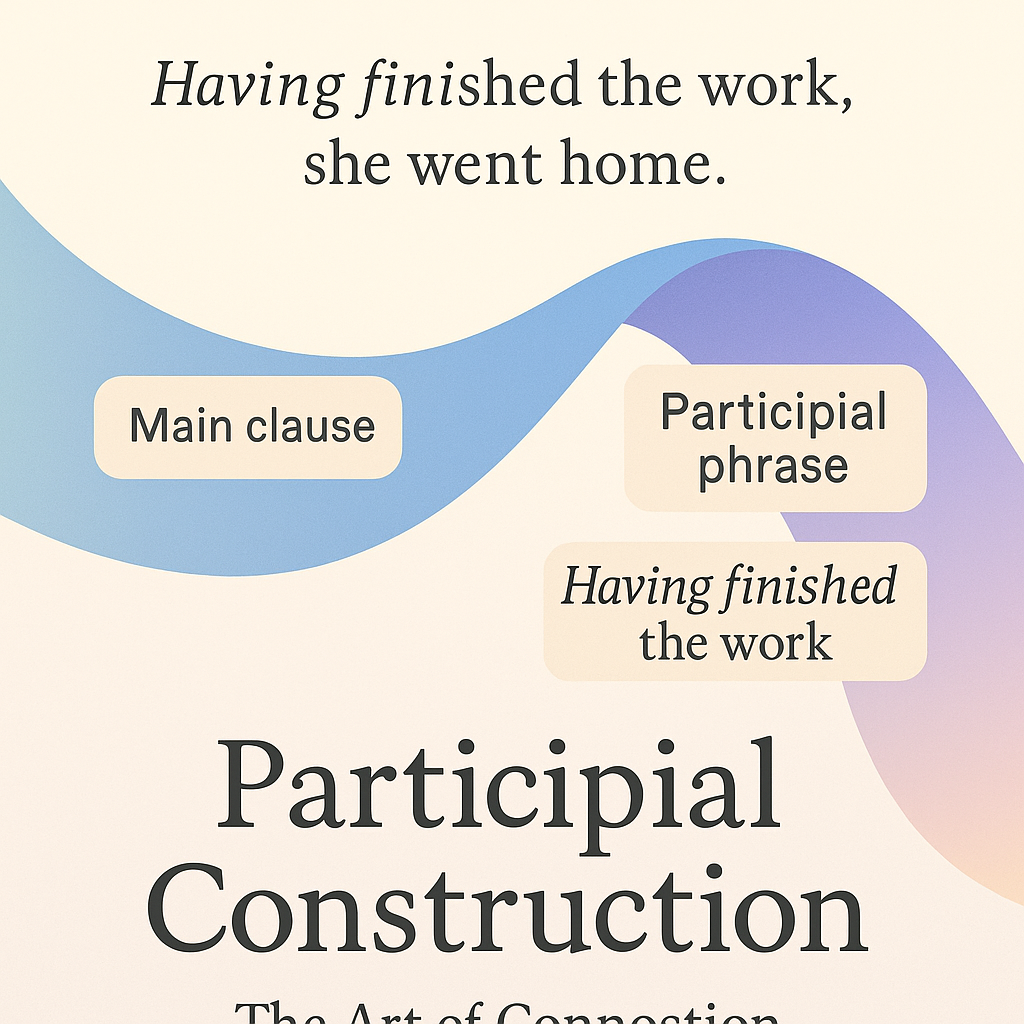
Part 11. 분사구문 (Participial Construction)
slowblooms
2025. 11. 1. 12:47
Part 11. 분사구문 (Participial Construction)
부사절을 간결하게 바꾸는 표현의 기술
1. 분사구문이란?
분사구문(Participial Construction)은
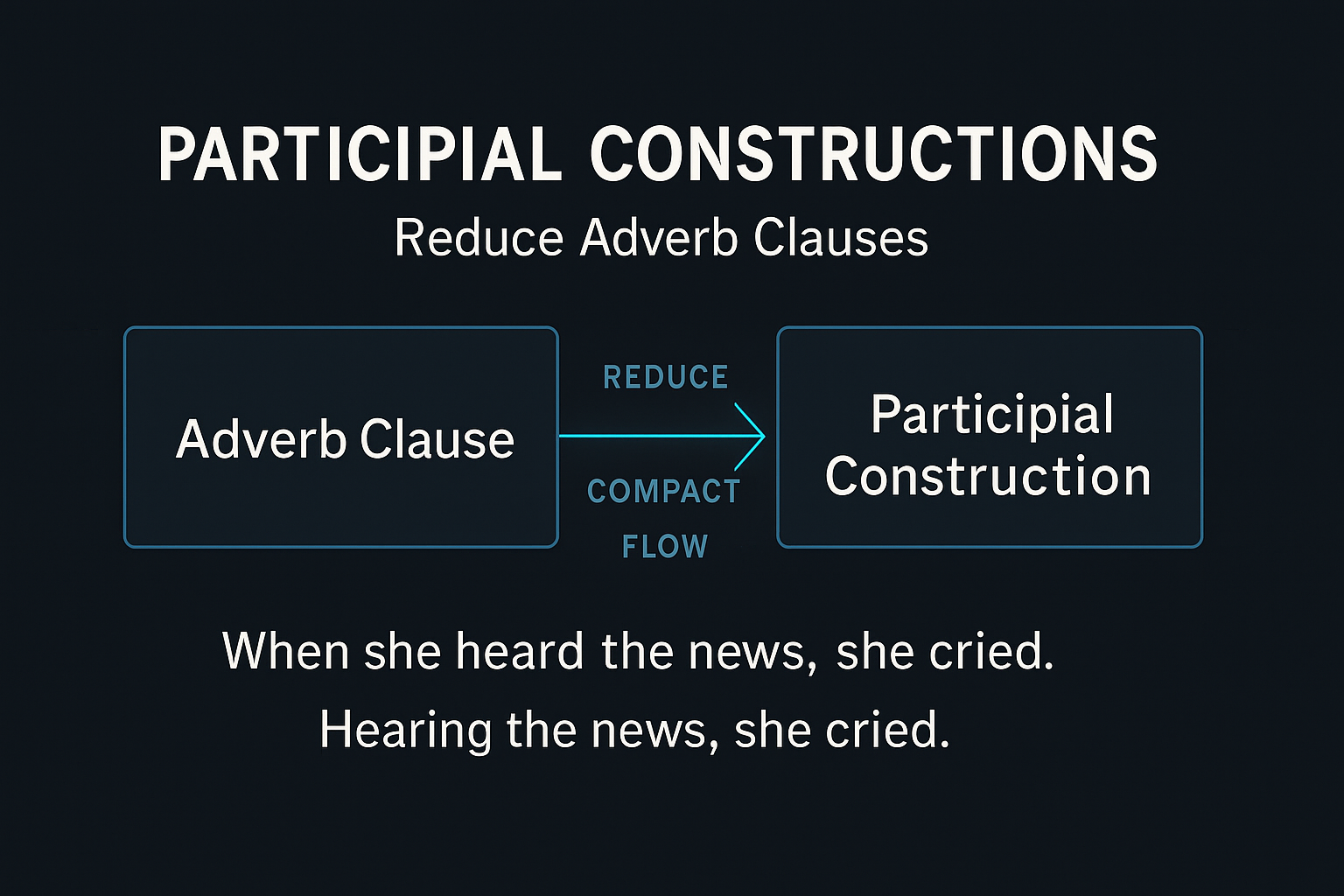
when, because, if 같은 부사절을
더 짧고 자연스럽게 줄여 쓰는 문장 구조입니다.
예를 들어,
- When she heard the news, she cried.
- → Hearing the news, she cried.
즉, 대개 접속사를 생략하고,
부사절의 주어가 주절과 같으면 주어를 생략한 뒤
동사를 분사(-ing / p.p) 형태로 바꿔 간결하게 만드는 방식이에요.
2. 분사구문의 기본 구조
(Having) + V-ing / p.p + , + 주절
| 형태 | 예문 | 대표 의미 |
|---|---|---|
| 현재분사(-ing) | Hearing the news, she cried. | 동시 / 이유 / 조건 / 시간 |
| 과거분사(p.p) | Seen from the hill, the city looked beautiful. | 수동 / 완료 / 조건 |
| Having + p.p | Having finished the work, he went home. | 먼저 끝난 동작(완료) |
핵심 원리:
분사구문은 주절과 부사절의 주어가 같을 때만 가능합니다.
3. 분사구문으로 줄일 수 있는 부사절 유형
| 부사절 의미 | 원래 문장 | 분사구문 |
|---|---|---|
| 시간 (When) | When she entered the room, everyone stood up. | Entering the room, everyone stood up. |
| 이유 (Because) | Because he felt tired, he went to bed early. | Feeling tired, he went to bed early. |
| 조건 (If) | If used carefully, the knife is safe. | Used carefully, the knife is safe. |
| 양보 (Though) | Though injured, he continued to play. | Injured, he continued to play. |
| 원인/결과 | The weather being fine, we went hiking. | The weather being fine, we went hiking. |
분사구문은 접속사의 의미를 문맥 흐름으로 자연스럽게 전달합니다.
✅ 접속사 생략/유지 기준
접속사를 꼭 빼야만 분사구문이 되는 건 아니에요.
• 의미가 한 가지로 또렷하면 → 접속사 생략 가능
Feeling tired, he went to bed early. (이유가 자연스러움)
• 의미가 모호할 수 있으면 → 접속사 남겨서 의미 고정
When / While feeling tired, he went to bed early.
(시간인지 이유인지 헷갈릴 때 안전한 방식)
접속사를 꼭 빼야만 분사구문이 되는 건 아니에요.
• 의미가 한 가지로 또렷하면 → 접속사 생략 가능
Feeling tired, he went to bed early. (이유가 자연스러움)
• 의미가 모호할 수 있으면 → 접속사 남겨서 의미 고정
When / While feeling tired, he went to bed early.
(시간인지 이유인지 헷갈릴 때 안전한 방식)
4. 현재분사 vs 과거분사 분사구문
| 형태 | 의미 | 예문 |
|---|---|---|
| 현재분사 (-ing) | 주어가 직접 행동 (능동) | Feeling nervous, she took a deep breath. |
| 과거분사 (p.p) | 주어가 행동을 당함 / 상태 (수동) | Surprised by the result, she smiled. |
정리하면,
“행동의 주체가 나면 → -ing”
“행동의 대상이 나면 → p.p”
✅ 3초 체크법
1) 내가 “한다” → -ing
2) 내가 “당한다/되어 있다” → p.p
3) p.p가 감정/평가 느낌이면 거의 OK
(surprised, disappointed, exhausted, satisfied…)
1) 내가 “한다” → -ing
2) 내가 “당한다/되어 있다” → p.p
3) p.p가 감정/평가 느낌이면 거의 OK
(surprised, disappointed, exhausted, satisfied…)
5. 완료분사구문 — 시간 순서 강조
어떤 동작이 먼저 끝난 뒤 다른 일이 일어날 때 씁니다.
- Having finished the report, she went home.
(보고서를 끝낸 후에 집에 갔다.)
✅ Having + p.p는 ‘후에’뿐 아니라 ‘이유’도 됩니다.
• 시간(후에):
Having finished the test, he left.
(시험을 끝낸 후 나갔다.)
• 이유(이미 ~했으므로):
Having lived abroad for years, she speaks fluently.
(해외에서 오래 살아봤기 때문에 유창하다.)
• 시간(후에):
Having finished the test, he left.
(시험을 끝낸 후 나갔다.)
• 이유(이미 ~했으므로):
Having lived abroad for years, she speaks fluently.
(해외에서 오래 살아봤기 때문에 유창하다.)
즉,
Having + p.p = “~한 후에 / 이미 ~했으므로”의 느낌이에요.
6. 분사구문의 의미별 정리
| 의미 | 예문 | 해석 |
|---|---|---|
| 시간 | Hearing the bell, he went out. | 종소리를 듣자마자 나갔다. |
| 이유 | Feeling cold, she closed the window. | 추워서 창문을 닫았다. |
| 조건 | Used properly, this tool is safe. | 제대로 사용하면 안전하다. |
| 양보 | Tired as he was, he kept studying. | 피곤했지만 계속 공부했다. |
| 원인/결과 | The weather being fine, we went out. | 날씨가 좋아서 나갔다. |
7. 주어가 다를 때의 분사구문 — 독립분사구문
가끔 주절과 부사절의 주어가 다를 때는
그 주어를 함께 남겨두는 독립분사구문(Absolute Construction)을 씁니다.
- The weather being fine, we went on a picnic.
(날씨가 좋아서 우리는 소풍을 갔다.) - His hands shaking, he opened the letter.
(손이 떨리는 상태로 그는 편지를 열었다.)
✅ being은 언제 빼고 언제 남길까?
• 수동/상태가 뚜렷하면 → being 생략 가능
When it was finished → Finished, they left.
• 의미가 애매해질 수 있으면 → being 유지가 더 자연스러움
The weather being fine, …
(배경/상황을 분명히 보여줌)
• 수동/상태가 뚜렷하면 → being 생략 가능
When it was finished → Finished, they left.
• 의미가 애매해질 수 있으면 → being 유지가 더 자연스러움
The weather being fine, …
(배경/상황을 분명히 보여줌)
8. 분사구문 변환 연습
| 원래 문장 | 분사구문으로 변환 |
|---|---|
| When he heard the news, he cried. | Hearing the news, he cried. |
| Because she was tired, she went home. | Feeling tired, she went home. |
| If you are given another chance, you can win. | Given another chance, you can win. |
| When the work was finished, they left. | The work finished, they left. |
| After she had taken a shower, she went to bed. | Having taken a shower, she went to bed. |
변환 팁
① 주어가 같으면 생략
② 동사를 분사형으로 변경
③ 접속사는 의미가 명확하면 삭제 / 헷갈리면 유지
9. 자주 쓰이는 분사구문 표현 모음
| 표현 | 의미 |
|---|---|
| Generally speaking | 일반적으로 말해서 |
| Frankly speaking | 솔직히 말하자면 |
| Considering ~ | ~을 고려하면 |
| Judging from ~ | ~으로 판단하건대 |
| Strictly speaking | 엄밀히 말하면 |
| Assuming that ~ | ~라고 가정하면 |
| Provided (that) ~ | ~라는 조건하에 |
이 표현들은 분사구문이 굳어진 관용형이라 에세이/스피치/문어체에서 자주 등장합니다.
10. 분사구문을 잘 쓰기 위한 감각
- ✅ 주절과 부사절의 주어가 같아야 한다.
- ✅ 의미상 시간·이유·조건·결과를 구분할 수 있어야 한다.
- ✅ 문장 전체의 리듬이 자연스러워야 한다.
⚠️ 대표 실수 1위: 주어 불일치(dangling participle)
분사구문의 주어는 반드시 주절의 주어와 같아야 합니다.
❌ Walking down the street, the building caught my eye.
(걷는 주체가 building이 되어 버림)
✅ Walking down the street, I noticed the building.
분사구문의 주어는 반드시 주절의 주어와 같아야 합니다.
❌ Walking down the street, the building caught my eye.
(걷는 주체가 building이 되어 버림)
✅ Walking down the street, I noticed the building.
예:
Feeling confident, she began to speak.
(짧은 분사구문이 시간/감정/이유 흐름을 자연스럽게 연결)
✨ 11. 핵심 요약
| 포인트 | 설명 | 예문 |
|---|---|---|
| 정의 | 부사절을 분사형으로 간결하게 표현 | Hearing the news, she cried. |
| 주어 일치 | 주절과 부사절의 주어가 같아야 함 | Feeling tired, she went to bed. |
| 형태 | (Having) + V-ing / p.p | Having finished the work, he rested. |
| 의미 | 시간 / 이유 / 조건 / 결과 / 양보 | Used properly, it’s safe. |
| 독립분사구문 | 주어가 다를 때 주어 포함 | The weather being fine, we went out. |
✅ 관계절 축약과의 차이(한 줄만 기억!)
• 관계절 축약은 명사 수식(형용사 역할)
The man who is standing there → The man standing there
• 분사구문은 문장 전체 수식(부사 역할)
When I stood there → Standing there, I…
• 관계절 축약은 명사 수식(형용사 역할)
The man who is standing there → The man standing there
• 분사구문은 문장 전체 수식(부사 역할)
When I stood there → Standing there, I…
12. 결론 – 영어 문장을 “리듬으로” 만드는 기술
분사구문은 단순 규칙 암기가 아니라
문장을 부드럽게 이어주는 리듬의 기술입니다.
짧은 말로 시간·이유·조건·감정이 한 번에 연결되죠.
Having learned the rules, you can now play freely.
(규칙을 배웠으니 이제 자유롭게 놀 수 있다.)
한 문장 속에 시간의 흐름 + 경험 + 자신감이 동시에 들어갑니다.
📌 Cross Reference
분사구문은 “부사절 축약”이고,
관계절 축약은 “형용사절(관계절) 축약”입니다.
두 축약 메커니즘을 함께 보면 영어 문장이 줄어드는 원리가 한 번에 잡혀요.
→ 관계절 & 관계대명사 완전체(1편): 357
분사구문은 “부사절 축약”이고,
관계절 축약은 “형용사절(관계절) 축약”입니다.
두 축약 메커니즘을 함께 보면 영어 문장이 줄어드는 원리가 한 번에 잡혀요.
→ 관계절 & 관계대명사 완전체(1편): 357