🌸 오감으로 배우는 법
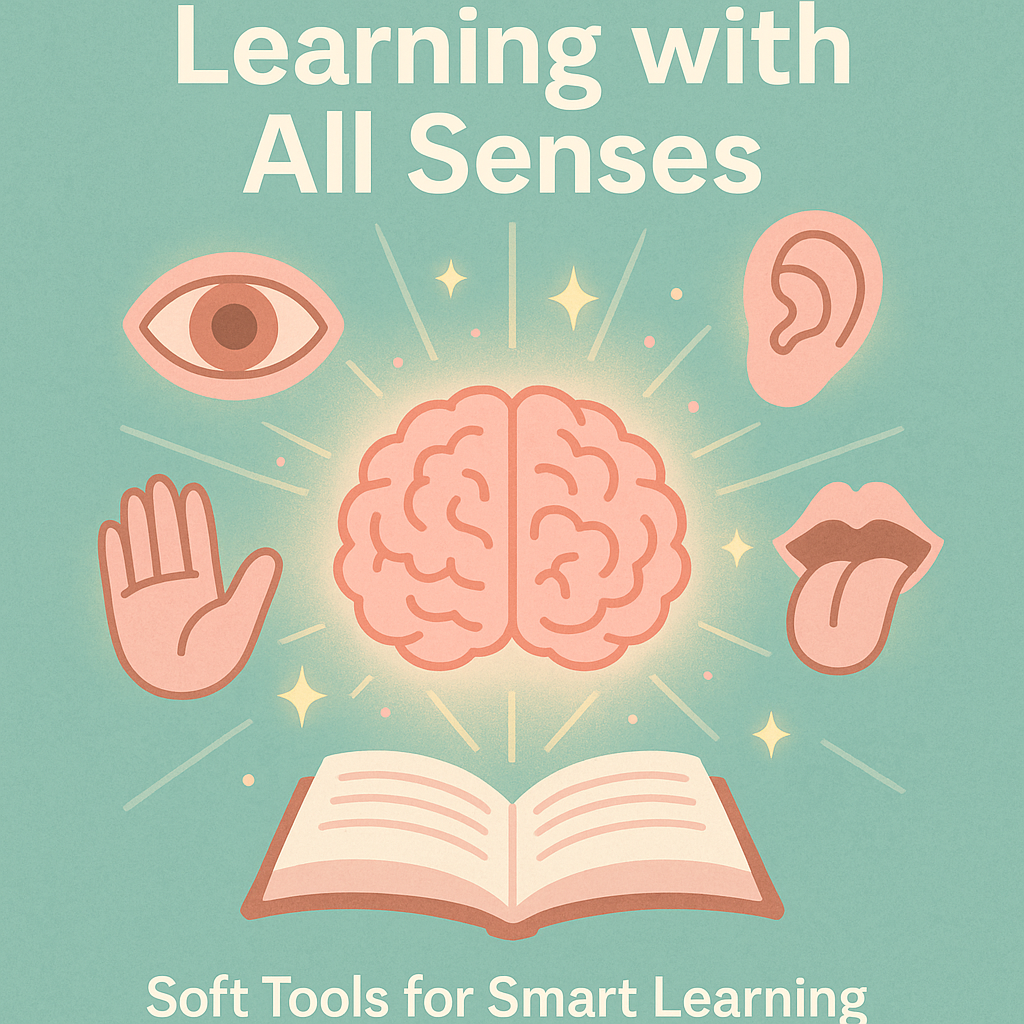
🌸 Learning with All Senses
(오감으로 배우는 법)
✍️ Introduction
When we think of learning, we often imagine reading, listening, or repeating.
But true learning doesn’t just happen in the head — it happens through the body.
Our senses — sight, sound, touch, taste, and smell — work together to anchor memory and emotion into experience.
우리는 흔히 ‘공부’를 눈으로 읽고, 귀로 듣는 일이라고 생각합니다.
하지만 진짜 배움은 머리 속이 아니라 몸 전체에서 일어나는 과정이에요.
시각, 청각, 촉각, 미각, 후각 — 이 오감이 함께 작동할 때,
기억은 더 오래, 더 깊이 남습니다.
💬 “The more senses you use, the deeper you learn.”
(감각이 많을수록, 배움은 더 깊어진다.)
🧠 1. The Brain Loves Multi-Sensory Learning
Our brain doesn’t process information in isolated parts — it builds connections.
When you engage multiple senses, your brain creates more neural pathways,
making learning more memorable and meaningful.
뇌는 정보를 ‘부분’으로 처리하지 않습니다.
대신 여러 감각이 동시에 작동할 때,
시냅스 간 연결(신경망) 이 훨씬 풍부하게 형성됩니다.
그래서 단순히 눈으로 읽는 것보다
👀 보고 + 👂 듣고 + ✍️ 손으로 쓰는 것이 훨씬 오래 기억되는 이유예요.
🧩 “Multi-sensory learning is like giving your brain multiple anchors for one idea.”
(복합감각 학습은 하나의 개념을 여러 갈고리로 기억하는 것과 같다.)
🌷 2. How the Five Senses Strengthen Memory
▪ Sight (시각)
Visual images and colors stimulate the brain’s occipital lobe.
That’s why visual learners often remember better with diagrams, videos, or even color-coded notes.
시각 정보는 후두엽을 자극해 기억의 저장 효율을 높입니다.
색상이나 이미지로 정보를 정리하면 뇌는 ‘그림’처럼 기억합니다.
▪ Sound (청각)
Repetition through listening activates auditory memory.
That’s why listening and shadowing in English practice help with rhythm and pronunciation.
소리를 통한 반복은 청각 기억을 강화시킵니다.
영어 공부에서 듣기와 쉐도잉이 효과적인 이유죠.
▪ Touch (촉각)
Writing, underlining, or even gesturing while learning connects the brain’s motor cortex with cognitive processing.
직접 손으로 쓰거나 표시하는 행동은 운동 피질을 자극해 기억을 더 오래 남깁니다.
▪ Smell & Taste (후각과 미각)
Though subtle, scent and taste are deeply linked with the limbic system — emotion and memory.
A particular smell or flavor can instantly bring back memories or moods associated with learning.
후각과 미각은 감정과 기억을 담당하는 변연계와 가장 밀접하게 연결되어 있습니다.
그래서 향기나 맛은 학습 분위기를 기억으로 각인시키는 데 도움이 됩니다.
🌸 “We remember what we feel, not just what we read.”
(우리는 읽은 것을 아니라, ‘느낀 것’을 기억한다.)
🌱 3. Educational Meaning (교육학적 시사점)
▪ ① Combine senses intentionally
When studying English, read aloud (sound), write notes (touch), and visualize (sight).
감각을 의도적으로 통합하세요 — 눈으로 보고, 입으로 말하고, 손으로 써보세요.
▪ ② Environment matters
Soft lighting, calm music, and pleasant scents can make learning more inviting.
공부 공간의 향기, 조명, 소리도 뇌의 집중과 기억에 큰 영향을 미칩니다.
▪ ③ Emotional sensory link
Attach emotion to sensory input — for example, remembering an English word through a personal story or image.
감정이 실린 감각 정보는 훨씬 오래 지속됩니다.
💭 MisoEnglish Reflection
Learning is not only about the mind — it’s about the whole self.
When your eyes, ears, hands, and even emotions work together,
learning becomes more than information — it becomes experience.
배움은 머리로만 하는 것이 아닙니다.
눈, 귀, 손, 그리고 감정이 함께할 때,
배움은 지식이 아니라 경험이 됩니다.
So next time you study English,
try reading out loud, writing by hand, and visualizing the meaning.
Let your five senses speak the language. 🌿
© MisoEnglish / Michelle Kim.
This is original content written by the author.
Unauthorized reproduction or full reposting is prohibited.
You may quote short parts only with clear credit and a link to the original post.
이 글은 작성자가 직접 집필한 오리지널 콘텐츠입니다.
전체 복제·무단 재게시를 금하며,
일부 인용 시에는 반드시 출처(MisoEnglish)와 링크를 남겨 주세요.