
- 분류 전체보기 (581)

| 일 | 월 | 화 | 수 | 목 | 금 | 토 |
|---|---|---|---|---|---|---|
| 1 | 2 | 3 | 4 | 5 | 6 | |
| 7 | 8 | 9 | 10 | 11 | 12 | 13 |
| 14 | 15 | 16 | 17 | 18 | 19 | 20 |
| 21 | 22 | 23 | 24 | 25 | 26 | 27 |
| 28 | 29 | 30 | 31 |
- 감성영어
- 영어를살다
- 영어공부
- everyday English
- 영어공부법
- pnr
- 영어접속사
- 영어표현
- misoenglish
- English Speaking Practice
- 🌿 English with Heart
- 느리지만단단하게
- FareRules
- English in English
- ticketing
- MichelleKim
- 생활영어
- 영어회화
- 영문법
- 영어문법
- SlowBlooms
- 영어표현력
- 영어발음
- English for Korean Learners
- Basic English Verbs
- AirlineOpsEnglish
- GrammarWithSoul
- 언어의철학 #의미론 #화용론 #언어와사고 #언어의미학 #MisoEnglish #TheLanguageBeyondGrammar #영문학심화
- 영어시제
- booking
- Today
- Total
MisoEnglish
🌿 영어학습의 성공 심리학 - Think in English, Not in Korean 본문
🌿 영어학습의 성공 심리학 - Think in English, Not in Korean
slowblooms 2025. 10. 22. 07:55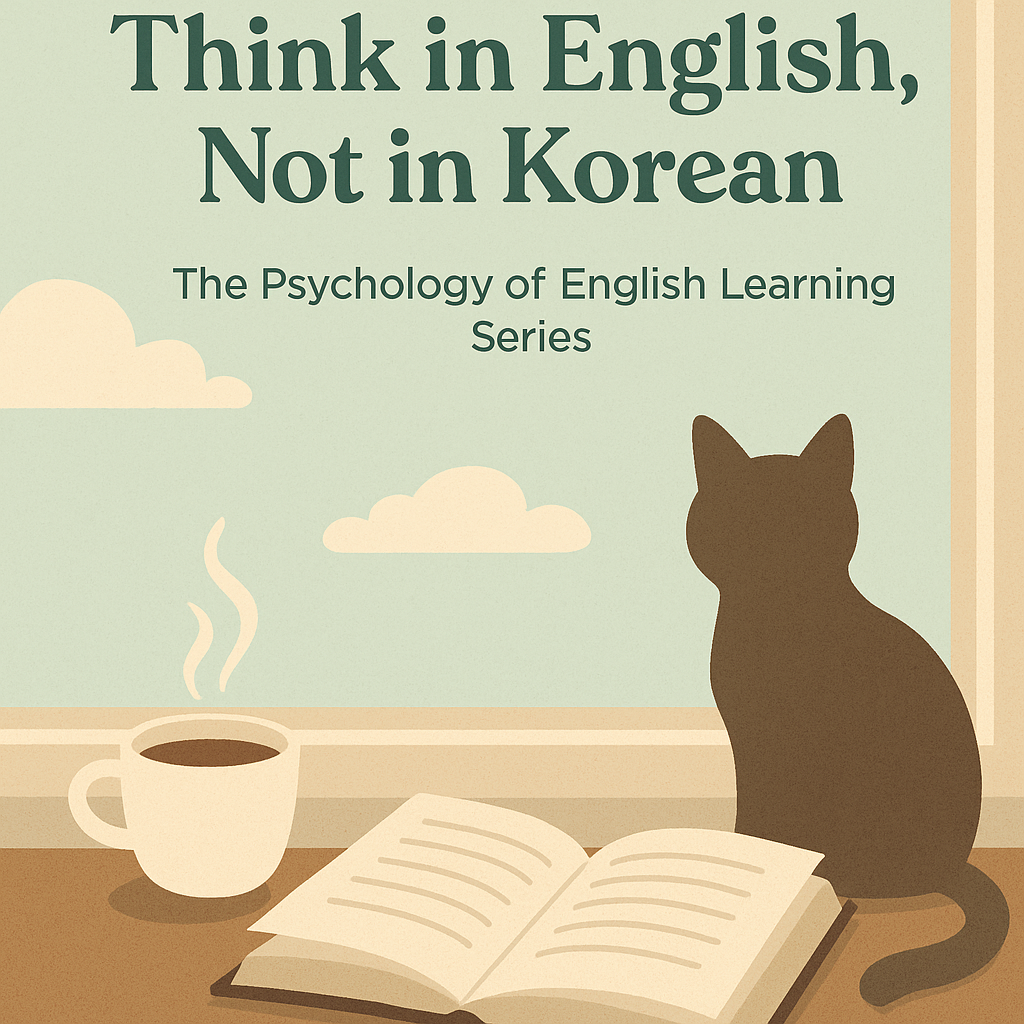
🌿 Think in English, Not in Korean
The Psychology of English Learning Series
When we speak our native language,
words come before thoughts — they flow naturally.
But when we try to speak English,
thoughts come first, and words lag behind.
That’s because we’re thinking in Korean, not in English.
It’s like trying to drive with one foot on the gas
and the other on the brake —
you’ll move, but never freely.
To become fluent, we must change not just our language,
but the way we think.
💭 The hidden trap of translation
Most learners live in translation mode.
They think in Korean, then search for English words,
and by the time they speak — the moment is gone.
Translation slows your tongue,
kills your confidence, and steals your emotion.
Why?
Because translation is backward.
You’re trying to fit one language into the structure of another.
But English and Korean see the world differently.
In English, we say “I miss you.”
In Korean, we say “보고 싶어요.” — “I want to see you.”
Both mean the same, but they feel different.
That small difference is what makes each language alive.
🌱 To think in English means…
It doesn’t mean you must “translate faster.”
It means you stop translating.
Thinking in English starts with simple awareness.
When you see something, name it in English.
When you feel something, express it in English.
When you talk to yourself, whisper it in English.
You don’t need to be perfect —
you just need to be present in English.
Like learning to dream in another language,
thinking in English happens slowly, quietly —
but one day, you’ll notice your thoughts have changed shape.
🗣️ Practice moments
- When you drink coffee: “This smells amazing.”
- When you’re tired: “I need five more minutes.”
- When it’s raining: “Perfect weather for staying in.”
- When you make a mistake: “It’s okay, I’m learning.”
These small shifts are not grammar lessons —
they’re mindset lessons.
They turn English from a foreign visitor
into a familiar friend.
💫 The psychology behind thinking in English
Language and thought are partners.
When your thoughts start forming in English,
your emotions adjust, your timing changes,
and your confidence blossoms.
You stop chasing words —
they start chasing you.
That’s when you realize:
fluency isn’t about speaking faster,
it’s about thinking differently.
🌿 Final Thought
When you think in Korean, you speak with your brain.
When you think in English, you speak with your heart.
So don’t force it.
Just let English live inside your thoughts,
one small sentence at a time.
Because the day you begin to think in English,
is the day English becomes part of who you are. 🌱
영어식 사고
우리가 모국어로 말할 때는
생각보다 말이 먼저 흘러나옵니다.
그런데 영어로 말하려고 하면,
생각이 먼저 떠오르고, 말이 뒤따릅니다.
그 이유는 우리가 영어가 아니라 한국어로 생각하기 때문이에요.
이건 마치,
가속 페달과 브레이크를 동시에 밟고 운전하는 것과 같습니다.
움직이긴 하지만, 결코 자유롭지 않죠.
진짜 유창함은
‘언어’를 바꾸는 것이 아니라
‘생각의 언어’를 바꾸는 데서 시작됩니다.
💭 번역의 함정
많은 학습자들이 ‘번역 모드’에 갇혀 있습니다.
한국어로 먼저 생각하고,
그걸 영어로 옮기려다 보면
순간은 이미 지나가 버립니다.
번역은 말의 속도를 늦추고,
자신감을 잃게 만들며,
감정을 흐리게 합니다.
왜냐하면 번역은 역방향이기 때문이에요.
한 언어의 구조를 다른 언어에 억지로 끼워 넣으려 하기 때문입니다.
예를 들어,
영어로는 “I miss you.”
한국어로는 “보고 싶어요.”
뜻은 같지만, 감정의 결이 다릅니다.
이 미묘한 차이가 바로 언어의 생명입니다.
🌱 영어로 생각한다는 건…
그건 “더 빨리 번역한다”는 뜻이 아닙니다.
번역을 멈춘다는 뜻이에요.
영어로 생각하기는 작은 인식에서 시작됩니다.
무언가를 볼 때, 영어로 이름 붙이고
무언가를 느낄 때, 영어로 표현하고
혼잣말을 할 때, 영어로 속삭이세요.
완벽할 필요 없습니다.
중요한 건 지금 이 순간 영어 속에 존재하는 것입니다.
그러다 어느 날,
당신의 생각이 조금 달라져 있음을 발견하게 될 거예요.
그게 바로 영어로 ‘생각하기’의 시작입니다.
🌿 마무리
한국어로 생각할 때는 머리로 말하지만,
영어로 생각할 때는 마음으로 말하게 됩니다.
억지로 하려 하지 말고,
하루 한 문장씩, 천천히 영어를 생각 속에 들이세요.
영어로 생각하기 시작한 그날부터,
영어는 더 이상 외국어가 아니라
당신의 일부가 됩니다. 🌿
© MisoEnglish / Michelle Kim. This is original content written by the author. Unauthorized reproduction or full reposting is prohibited. You may quote short parts only with clear credit and a link to the original post. 이 글은 작성자가 직접 집필한 오리지널 콘텐츠입니다. 전체 복제·무단 재게시를 금하며, 일부 인용 시에는 반드시 출처(MisoEnglish)와 링크를 남겨 주세요.
'English Mechanism > English Blueprint' 카테고리의 다른 글
| 🌿 영어학습의 성공 심리학 - Your Accent Is Your Story (0) | 2025.10.22 |
|---|---|
| 🌿 영어학습의 성공 심리학 - Confidence Before Perfection (0) | 2025.10.22 |
| 🌿 영어학습의 성공 심리학 - Don’t Study English, Live It (0) | 2025.10.22 |
| 🌿 영어학습의 성공 심리학 - Train Your Mouth, Not Your Brain (0) | 2025.10.22 |
| What Matters Most in Learning English (0) | 2025.10.21 |


